Not every good fragrance is a good clubbing fragrance. That is where a lot of people go wrong when they start choosing fragrance for a night out.
A scent can smell impressive on paper, feel polished at the counter, and still work well in daytime settings without doing much wrong. Nightlife changes that, as clubs are warmer, louder, and more crowded, and there is much more movement in the room, including your own. All of that affects how a fragrance wears. A scent that feels fresh and balanced earlier in the day can fade much faster than expected once the space fills up.
So, the real question is not just which perfume smells nice. It is which one still makes sense two or three hours in.
That is the filter worth using when you are deciding what to wear at night.
What makes a fragrance right for clubbing?
For a night out, fragrance has a job to do. It needs to get noticed, but not in a cheap way. It needs to last, but not turn heavy and stale after an hour. And ideally, it should feel like it belongs to the setting rather than fighting it.
In most cases, that comes down to fragrance structure far more than hype or bottle image.
Why do projection and longevity matter more at night?
That is mainly because nightlife is not very forgiving to scents with weak structure or poor staying power.
Top notes always matter. They are what people catch first. But they are also the quickest to go. The Perfume Society notes that top notes often last only around five to fifteen minutes, while the middle notes carry much more of the fragrance and the base is where the heavier, longer-lasting materials usually sit.
In plain terms, this means a fragrance built only around sparkle will often let you down at night. It may smell bright at first, then thin out before the evening really gets going.
That is why clubbing scents usually need more backbone, not necessarily more sweetness or more volume, but simply more depth underneath the opening.
What kind of scent presence actually works in a crowded room?
What usually works better is something smoother and more controlled than many people expect.
A lot of buyers still assume “night fragrance” means big, loud, and overly sweet. Sometimes that works. A lot of times it does not. In close indoor spaces, the better choice is often a scent that opens clearly, settles into something warmer, and keeps a steady presence rather than shouting the whole time.
That is where woods, amber, musk, patchouli, spice, and resinous notes tend to earn their place. They hold the line better. They do not vanish the moment the top notes burn off. And they feel more at home after dark. The Perfume Society describes base notes as the heavier part of the pyramid, often woody or resinous, while citrus tends to sit higher up and evaporate faster.
How do you stand out without overdoing it?
Most of the time, you stand out by choosing a better-built fragrance rather than by spraying more of it. That is the simplest way to put it.
A fragrance with a strong dry-down does more for you than ten extra sprays of something that only smells good in the first five minutes. Buyers who have worn fragrance for a while usually learn this the hard way. The room does not remember your opening. It remembers what stayed.
Which fragrance notes work best for a night out?
This is where the choice gets easier. Once you stop looking at bottles as a whole and start looking at note families, the buying logic becomes much clearer.
And honestly, that is how most experienced buyers judge fragrance anyway.
Why do amber, vanilla, musk, and woods keep showing up in night scents?
They keep showing up because they perform reliably in evening settings.
Amber brings warmth and depth. Vanilla can soften the edges and make a fragrance feel fuller. Musk gives body. Woods do a lot of the heavy lifting in the dry-down. Together, those materials usually create the kind of scent trail people expect from an evening fragrance: present, smooth, and a little more grounded than daytime freshies.
That does not mean every clubbing scent needs to be dark. It just means it usually needs some weight somewhere.
When do spicy, leathery, or aromatic notes make more sense?
They make more sense when you want a fragrance with more character and a stronger point of view.
Spice can make a fragrance feel warmer and more alive. Leather-style accords often read drier, moodier, and a little more mature. Aromatics do something different. They sharpen the profile and stop it from getting too dense too early.
So, if the look is polished, darker, more deliberate, woody-spicy or leathery profiles often make sense. If the style is cleaner and easier, aromatic notes over a proper base tend to land better.
Can fresh notes still work for clubbing?
Yes, they can, but they usually do not work well on their own.
Fresh bergamot, citrus, green apple, herbal openings, even light florals, can all work well at night. But they usually need support. Without a stronger heart or base, they are often just the first ten minutes of the story.
That is the part casual buyers miss. They buy the opening. Then they blame the fragrance when it does exactly what its structure suggested from the start.
How should you choose a clubbing fragrance based on your style?
This part usually matters more than any “best of” list a buyer might read.
A fragrance can be technically good and still feel wrong on the person wearing it. Buyers know this in other categories. The same idea applies here. Product-market fit matters in fragrance too, even at an individual level.
What suits a darker, more confident night look?
That usually means choosing something built on a firmer and more grounded base.
Woody amber, oud-led profiles, dry spice, sandalwood, patchouli, and sometimes even a touch of leather usually fit that direction best. These kinds of scents feel more anchored. They do not float around looking for an identity. They come in with one already.
That tends to work well if the setting is later, dressier, or more mood-driven.
What works better for someone who wants a cleaner, easier profile?
Then fresher openings with a proper base usually win.
Bergamot, green apple, lavender, cardamom, and sometimes a bit of geranium or extra citrus on top usually fit that kind of fresher profile well. Then something warmer and more stable underneath. Vetiver helps. Amber helps. Patchouli helps when it is used with some restraint.
This kind of construction gives you flexibility. It is easier to wear from drinks to dinner to the club without feeling like you changed personas halfway through the night.
What about sweeter or more playful scents?
They can absolutely work, but they usually need better balance and more control.
A little sweetness can make a fragrance feel inviting. Too much can make it feel sticky, especially in heat. That is why the stronger sweet clubbing scents usually do better when they are balanced by woods, musk, spice, or something dry enough to cut through the sugar.
What usually works best there is something with a steady base and moderate projection.
Does the venue change what you should wear?
It should, and it should probably matter more than many buyers assume.
The same fragrance does not behave the same way in a packed club, an open rooftop bar, and an outdoor party. Buyers who think about category fit will usually think about this too.
What works best in packed indoor clubs?
What usually works best there is something with a steady base and moderate projection.
Warm woods, amber, musk, patchouli, and spice are generally safer here because they keep their shape in warm, dense air. They do not need a dramatic opening to survive the room.
What should you wear to rooftop bars or lounges?
What usually works best there is something with a steady base and moderate projection.
A cleaner aromatic opening often feels more natural in open air or semi-open venues. But even here, the base still matters. If there is nothing underneath the freshness, the scent can feel gone before the second drink.
What changes on hotter nights?
Heat tends to make every part of a fragrance feel louder than it did at first spray. That is not always helpful, especially with sweeter or denser compositions.
Dense sweet fragrances can get thick fast when the skin warms up. Fresher openings with smooth musky or woody bases usually wear better in those conditions. Pulse-point application also matters more than people think. The Perfume Society recommends applying fragrance to warmer areas like the wrists, neck, and behind the ears because the heat helps diffuse the scent, and it also notes that moisturized skin tends to hold fragrance better.
How can you tell whether a fragrance will last through the night?
You cannot know everything from a product page. But you can make a pretty good call if you know what to look for.
Concentration is one part of it. According to The Perfume Society’s general guide, parfum typically sits around 15% to 25% concentration, while eau de parfum often falls around 8% to 15%, with lighter formats lower still.
That is still not the whole story, because composition matters just as much.A higher concentration fresh scent can still feel lighter than a well-built woody one.
So the better question is not just “What strength is it?” but “What is doing the work in the base?”
And if you are testing in person, skin matters. The Perfume Society recommends trying fragrance on your own skin, not just a blotter, because body chemistry changes how the scent unfolds over time.
Which two Meiqi fragrances fit this brief best?
For this article, two Meiqi options make sense for two different reasons.
That is not because they cover every taste, because they clearly do not, but because together they show two useful buying directions: one darker and more night-specific, and the other more versatile and commercially broad.
Meiqi’s own company profile positions the brand around 15 years of fragrance manufacturing, a 20,000-square-meter production base, more than 3,000 fragrance formulas, exports to over 60 countries, and 126 quality control checkpoints. From a buyer’s standpoint, those details matter less as marketing lines and more as signals of scale, consistency, and product-development depth.
Meiqi Al Layi: the clearer pick for darker, woodier nights
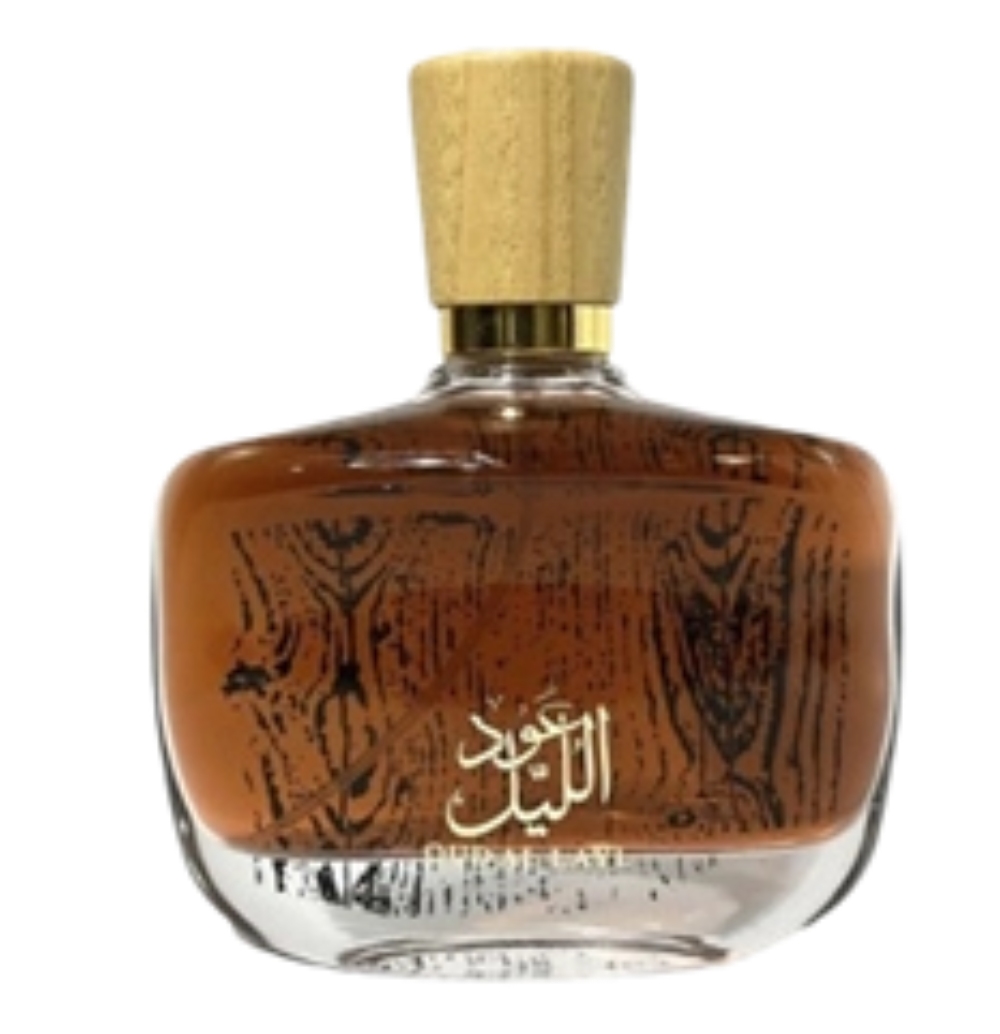
If the brief is “more depth, more mood, less generic freshness,” Meiqi Al Layi is the easier call.
The product page gives it a sensible night profile: bergamot and lemon zest up top, rose, jasmine, and light oud through the heart, then sandalwood, vanilla, and deep agarwood in the base. It is listed at 12% to 18% concentration, with wear claimed at 8 to 12 hours on skin and up to 24 hours on fabric.
What matters here is not just the note list itself, but the overall shape of the fragrance.
This is a fragrance that starts bright enough to feel accessible, then drops into woods and a darker base where the real personality sits. For club use, that makes sense. It gives you an opening people notice and a base that can still carry into late hours.
Meiqi Signature Blend: the more flexible, easier-to-place option
If the buyer wants something less intense and easier to position across different occasions, Meiqi Signature Blend is the better fit.
Meiqi describes it with bergamot and green apple on top, lavender, cardamom, and geranium in the middle, and vetiver, patchouli, and amber in the base. The page lists 18% perfume oil and claims 10 to 14 hours of wear on skin and 48+ hours on fabrics. It is also framed as a unisex EDP-style option with stronger value positioning.
From a commercial angle, this is the more versatile SKU in the lineup.
From a wearer’s angle, it is the easier night-out choice if you want something that can move from casual evening plans into a club without feeling too heavy or too formal. It has a cleaner opening, a warmer finish, and the kind of broad usability that usually sells for a reason.
Conclusion
The best clubbing fragrance is rarely the one making the biggest promise on the shelf.
It is the one that still feels right once the night has actually started.
That usually means looking past the opening, paying attention to the base, and being honest about the setting. Some buyers want something darker and more magnetic. Some want something cleaner and easier to place. Both can work. But they do not work for the same person, or in the same room, or for the same kind of night.
That is really the whole point of choosing carefully in the first place.
If you want the moodier option, Al Layi makes sense. If you want the more flexible one, Signature Blend is easier to wear and easier to position. Either way, the smarter buy is usually the fragrance with a clear structure, not the one with the loudest first impression.