The ability to consistently produce fragrances in 2026 will depend on a perfect balance between refined craftsmanship and a more controlled process.
Technological Advancements Transforming the Perfume Production Process
Perfume production has changed a lot with the new technology of digital tools, automation, and green technologies.
Automation and Smart Manufacturing in Perfume Production
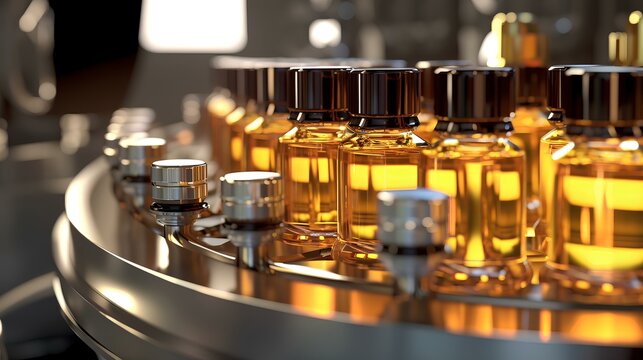
From sampling and creation to the final production of fragrances, modern perfume manufacturing is highly automated. Perfume blends are mixed with the utmost precision by automated mixing systems, which guarantee constant quality by ensuring the correct mixing ratio of the individual ingredients with a tolerance in the tenths of a decimal place.
With the addition of smart sensors, perfume manufacturers can also now monitor and take into account all of the influencing environmental variables such as temperature, air humidity, and air pressure and thus blend the perfume under the optimum conditions. In addition to the quality guarantee, automated blending also has the advantage of saving on waste that would arise from human errors.
Digitalization and Data Integration in Perfume Manufacturing
Digital transformation enables real-time monitoring throughout production. The tracking of batches in all phases of production can now be monitored in real-time with cloud-based systems. This allows for optimal use of production capacity. With predictive analytics, production can be prepared in the best possible way for future demand, and bottlenecks can be prevented in time.
An integrated data platform also connects the formulation labs with the production sites. Creative teams and technical engineers work smoothly together. And the entire perfume production process is more transparent.
Sustainable Practices Driving Efficiency in Perfume Manufacturing
Sustainability is now an integral component of the manufacturing strategy of leading perfume manufacturers. By implementing environmentally friendly practices, producers can develop more efficient manufacturing processes while minimizing their environmental impact.
Eco-Friendly Ingredient Sourcing and Processing
Perfumers today are selecting sustainable fragrance raw materials of high quality and employing the methods of green chemistry to minimize the use of hazardous solvents in the extraction and synthesis of these materials. Moreover, sustainable perfumery involves establishing ethical sourcing relationships with suppliers that allow for full tracking of all materials from field to factory to ensure transparency and verification to fulfill the promises of and demands of today’s consumers.
Energy-Efficient Production Systems
Many perfume factories nowadays are powered by renewable energy such as solar or wind power. The distillation process in perfumery can release a lot of heat, which can be recovered in other parts of the factory. Also, perfume factories make use of efficient water management systems in which the water used for extraction and cleaning is being reused. This way the usage of resources and also the costs are being reduced.
Innovations in Formulation and Testing Techniques
The development of perfumes is a time of great innovation, and cutting-edge technology is currently being used to test perfumes at great speed while maintaining their fragrance.
Advanced Extraction Methods for Fragrance Components
New technologies for extraction of essential oils have been developed recently. Supercritical CO₂ extraction allows for the obtaining of very pure essential oils with minimal amounts of residue or solvent left in the oil. Enzyme-assisted extraction of essential oils from natural botanicals increases their yields while keeping the most fragile aroma components whole. The newest type of extraction plants are so-called hybrid extraction lines, which combine traditional steam distillation with modern pressure-stable extraction rooms.
First, the fragrance formula is turned into a diluted perfume mixture with high concentrations of essential oils that are mixed with alcohol and – in some cases – with water. For long-lasting perfumes, stabilizers are added to the perfume mixture. In the following weeks to months, the diluted perfume mixture is allowed to age. During this time, the fragrance develops and reaches its full strength. To prevent the perfume from getting too warm, it is cooled. Finally, the perfume is filtered to remove all impurities.
Accelerated Testing and Quality Assurance Technologies
AI-driven olfactory analysis can now even predict how a fragrance will smell after some time and under different storage conditions. New automated sensory testing tools are able to replicate human assessments, even better than before, with higher repeatability for identical products in different batches. Above all, though, the innovative, rapid chromatographic methods for fragrance evaluation have significantly reduced the evaluation phases while retaining their analytical accuracy—enabling a quicker launch of products on the market without any reduction in quality.
The Role of Customization and Flexibility in Modern Perfume Production
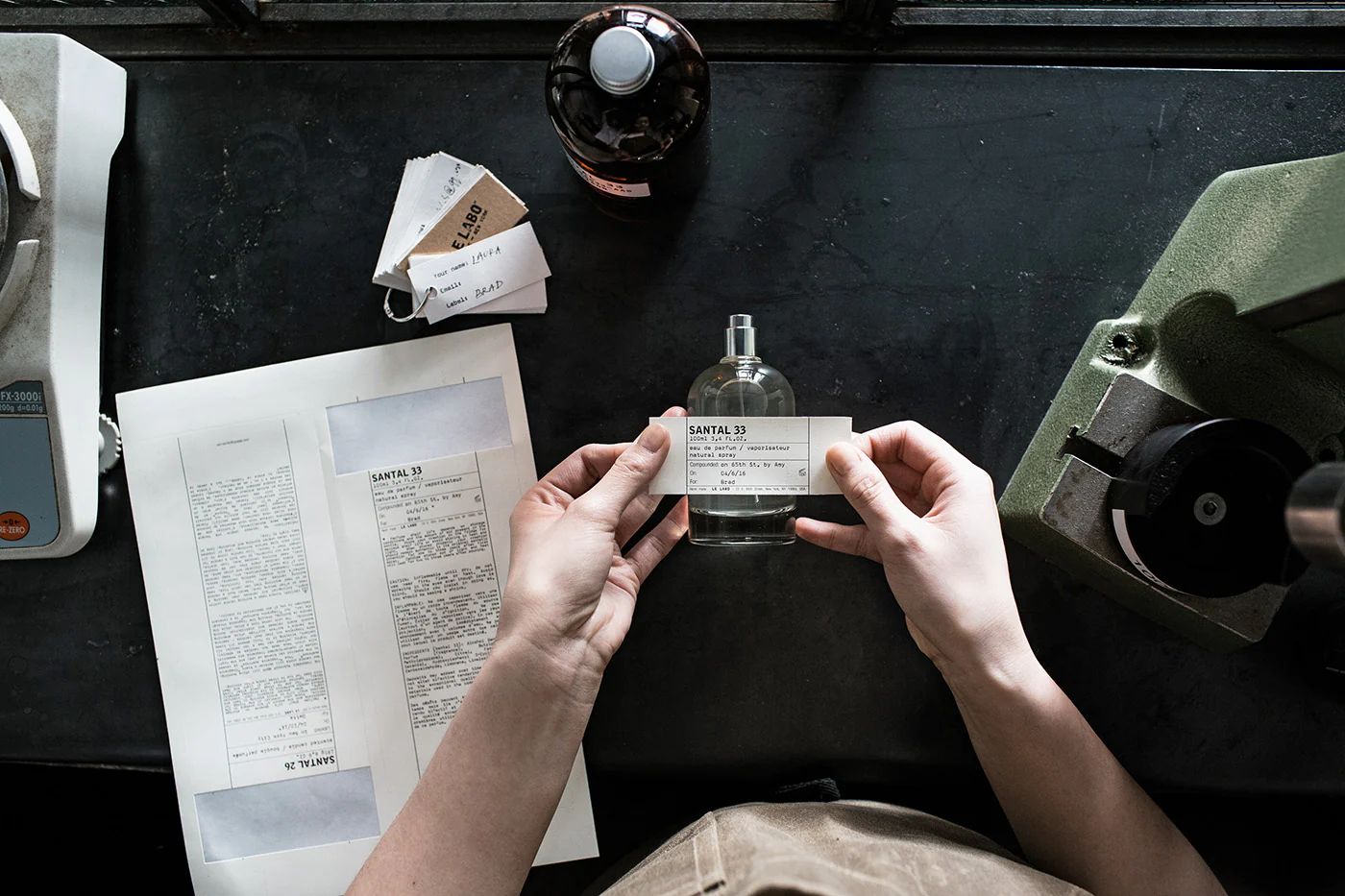
Consumer preferences in perfumes are becoming more and more diversified. So, flexibility is becoming a key success factor for manufacturers of perfumes.
Modular Production Lines for Diverse Product Portfolios
Manufacturers’ modular equipment supports fast changeovers between fragrance formulas and bottle formats, allowing both small-batch artisanal perfumes and high-volume commercial production with efficient scheduling and minimal downtime. Manufacturers engaged in OEM partnerships benefit particularly from this flexibility.
An OEM/ODM partner such as Meiqi can support brands that need flexible perfume development. From custom formula development and sample testing to production and packaging, its service helps connect fragrance design with final product delivery.
Digital Prototyping and Virtual Fragrance Development
Virtual modeling of scent combinations allows testing of potential fragrances before their physical development, saving time and resources. The digital twins of factories and production sites enable engineers to optimally plan the processes in advance and fine-tune them on site. By greatly reducing the prototyping phase, virtual reality and digital platforms developed in collaboration can also facilitate the rapid launch of new perfumes on the market.
The Impact of Supply Chain Optimization on Perfume Manufacturing Efficiency
Efficient supply chains are critical to maintaining a competitive edge in a global market for fragrances, where time to market is a key factor in determining profits.
Instead of coordinating raw material purchasing with production on an ad-hoc basis, companies are increasingly using integrated logistics systems to synchronize purchasing and production in real time, using a central digital platform to plan and manage both activities. AI-based forecasting systems also can predict and prevent shortages and overstocking by combining historical data with up-to-the-minute sales data to calculate demand on an ongoing basis.
By making supply chains more transparent, companies can build more collaborative relationships with suppliers, manufacturers, distributors, and retailers. This is key to ensuring that there is always sufficient stock of the fragrance all over the world and that all stages of the production process are carried out in keeping with the company’s ethical purchasing policy.
Another aspect of distribution that is currently being refined is smart packaging solutions. For example, by using RFID-enabled labels, shipments all over the world can be tracked in real time. Lightweight recyclable packaging materials also reduce distribution costs and emissions in logistics.
FAQ
Q1: How has automation improved the perfume production process by being more consistent?
A1: Automation enables control with accuracy of the proportions of the raw materials, the mixing time, and other environmental factors such as temperature and humidity in order to produce each batch of perfume on a large or small scale with the same consistency.
Q2: What are the most common sustainable initiatives that perfume manufacturers are undertaking today?
A2: Using renewable energy; implementing green chemistry that replaces solvents with more sustainable alternatives; implementing sustainable sourcing practices to ensure the traceability of raw materials; and recycling water throughout manufacturing processes.
Q3: How do OEM services enhance customization options for new brands?
A3: OEM services such as those offered by Meiqi enable our clients to create their very own unique fragrances. This is made possible by using their modular production lines to create any volume of fragrance, whether it be small or large, while maintaining the highest quality throughout the entire process from the creation of the fragrance to the packaging.
Q4: Why is digitalization critical for future-ready perfume manufacturing?
A4: With digitalization it is possible to monitor in real time a supply chain, to make predictions on the basis of data in order to manage resources in the best possible way, to create virtual prototypes during the R&D phase, and to work in the cloud in collaboration with all parties involved.