Over the past few years, social media platforms have completely transformed how people discover and buy fragrances. We see influencers unboxing stunning glass flacons and consumers happily spending hundreds of dollars on a single signature scent. However, while buyers fall in love with the final aromatic experience, very few people ever get to see the actual factory floor. Turning a fragrant dream into a physical retail item involves strict chemistry, massive industrial machinery, and incredibly precise timelines. For brand founders and business owners, knowing the real perfume production cycle is the difference between a successful market launch and a costly inventory disaster. Let us walk through the exact, step-by-step journey of how raw botanical concepts transform into shelf-ready luxury goods inside a modern facility.
The Initial Spark and Scent Formulation
Before any liquid hits the main assembly line, there is a quiet, deliberate period of creation. This specific stage blends art directly with chemistry, translating abstract brand ideas into tangible scent profiles that will appeal to target markets.
Sourcing Raw Materials and Essential Oils
The foundation of any great fragrance lies in its raw ingredients. A master perfumer sits at an organ—a specialized desk holding hundreds of small bottles—to begin drafting the formula. They pull from a library of over 3,000 distinct olfactory notes, mixing natural plant extracts with safe synthetic molecules. Naturals bring rich, unpredictable depth, while synthetics provide stability and create scents that cannot be extracted from nature, like sea salt or fresh rain. Finding the right balance takes dozens of trial runs. The actual perfume making process at this stage requires a deep understanding of how different molecular weights evaporate over time, forming the classic top, heart, and base notes.
The Aging and Maceration Period
Once the perfumer finalizes the concentrate, the mixture cannot be bottled immediately. It needs time to rest and combine. Workers mix the pure fragrance oils with high-grade perfumer’s alcohol (usually at a 96 percent concentration) and a small amount of distilled water. This blend then goes into large stainless steel or glass vats to sit in a dark, temperature-controlled room. This resting phase, called maceration, typically lasts anywhere from 4 to 8 weeks. During this time, the alcohol acts as a solvent, breaking down the raw materials and allowing the different chemical compounds to bond together smoothly. Without this critical waiting period, the final spray would smell harsh, metallic, and disjointed.
Scaling Up Inside a Professional Facility
Moving from a tiny laboratory beaker to massive industrial vats requires strict precision and serious engineering. A capable partner steps in right here to scale the delicate formula without losing its original character, maintaining exact ratios across thousands of gallons.
– Chilling and Filtration: After the maceration period ends, the liquid often contains small, cloudy particles from natural waxes and resins. To fix this, workers drop the temperature of the vats to around -5 degrees Celsius. The cold forces these impurities to clump together. The liquid is then pushed through heavy-duty industrial filters. What comes out the other side is a crystal-clear, bright liquid that will not clog a delicate spray nozzle.
– Quality Management Systems: When evaluating a perfume factory, you must look at their testing standards. A professional facility operates a dedicated quality control department with standardized inspection processes. Workers use specialized equipment to test the specific gravity, refractive index, and color stability of every single batch. They check if the scent profile matches the original laboratory sample perfectly. If a batch is slightly off, it gets rejected before it ever reaches a glass bottle.
– Production Timeliness: High-quality perfume manufacturing is not just about making a good liquid; it is about hitting market deadlines. A solid manufacturing partner has insight into current market trends and the capacity to complete the production cycle quickly. They must produce tens of thousands of units within a specific timeframe to support a brand’s front-end marketing campaigns and holiday sales pushes.
The Intricate Steps of Liquid Packaging
Once the bulk liquid passes all required quality tests, it moves directly to the physical packaging phase. This specific segment demands high-speed machinery and incredibly careful handling by workers to prevent contamination, minimize waste, and protect the glass vessels.
Precision Machinery on the Line
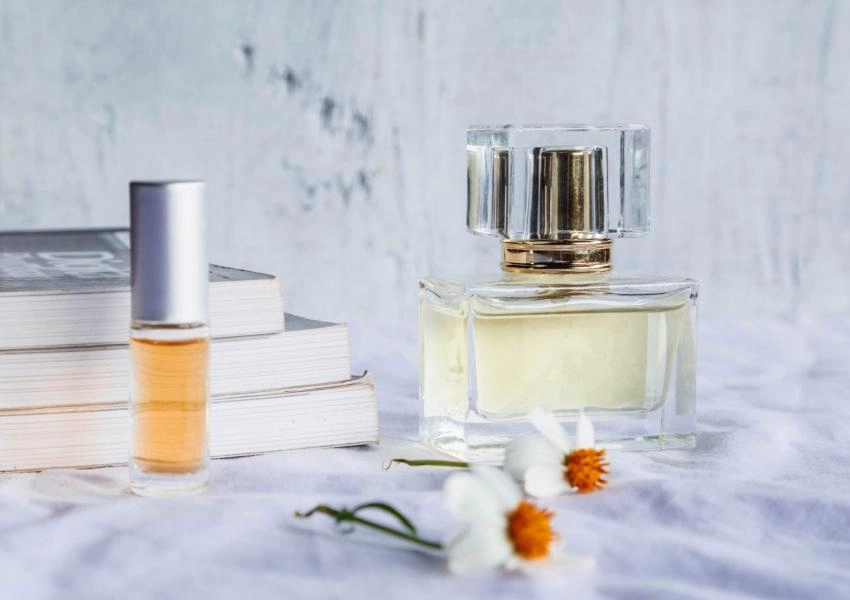
The actual perfume bottling phase happens on a highly synchronized conveyor belt. First, automated nozzles descend into empty glass bottles. These machines use vacuum-level filling technology to make sure every single bottle contains the exact same amount of liquid, down to the millimeter. Next comes the crimping station. A machine tightly seals the metal spray pump onto the glass neck. If the crimp is too loose, the alcohol will evaporate and leak during shipping; if it is too tight, the glass neck will crack under the pressure. Modern lines handle this delicate balance at speeds of 40 to 60 bottles per minute.
Final Casing and Visual Inspection
After the pump is secured, machines press the decorative collar and cap into place. The bottle then moves to the boxing station. Workers or robotic arms place the bottle into its custom cardboard box, add protective inserts, and wrap the box in tight, heat-sealed cellophane. This stage looks completely different depending on the target audience. For instance, creating a heavy, ornate popular middle eastern perfume requires totally different bottle shapes and manual handling compared to a sleek, minimalist popular unisex perfume. We also see this packaging diversity in botanical products like the eastern herbs fragrance women’s perfume, where the outer box must visually reflect the natural plant ingredients inside. Every detail matters for the final unboxing experience.
Choosing the Right Partner for Your Brand
You might possess a brilliant scent idea, but actually bringing it to the retail shelf involves heavy logistics and capital. Finding a manufacturer who deeply understands both your creative vision and strict commercial timelines becomes your most critical business decision.
• Understanding perfume ODM/OEM Business Models: A mature factory offers flexible cooperation methods to fit different client needs. We usually see three main scenarios. In Scenario 1, the factory provides the bottles, samples, designs the packaging, and handles all filling to form the finished product. This is a true turnkey solution.
• Client-Led Supply Chains: In Scenario 2, the client brings a physical scent sample, the factory matches it, and then either party provides the packaging materials before moving to production. Scenario 3 is for brands that already have their own perfumers. The client simply ships drums of pure essential oils, custom bottles, and boxes to the facility, and the factory strictly handles the assembly and packaging work.
• Value-Added Services: Beyond just mixing liquids, top-tier partners offer brand management advice, trademark assistance, and warehousing logistics. Having a one-stop service from design to logistics saves founders massive amounts of time and stress.
• Taking the Next Step: Whether you want to start a niche indie brand or scale up an existing mass-market line, having a reliable manufacturing base changes everything. You can learn more about full supply chain capabilities by visiting the Meiqi homepage, or reach out directly to discuss your project details on our contact us page.
Conclusion
Developing a fragrance from a concept and putting it in a bottle is a very complex process and requires a lot of attention. Creating a fragrance is a mix of artistic chemistry in the formula and precise mathematical processes in the maceration and filtration phases. After that, it is a matter of speed during the packaging phase. The world of perfumes is extremely competitive; therefore, it is crucial to deliver a perfect experience to the consumer from the very first spray to the cellophane wrapping. We can take the pressure off our brand owners and allow them to focus on their marketing and sales campaigns, knowing that their product is being made with the utmost care and that they have full transparency into the production process at our factory. Contact us now at 932218963@qq.com.