The bottle has been sitting in a drawer. The colour looks a little darker. Is it bad? Maybe, maybe not. Common signs that perfume may have gone bad or expired include a new unpleasant smell, unusual cloudiness, a marked colour change, or an unexpected skin reaction. A warm windowsill, a leaky cap, and the bottle’s storage history also matter more than the number of years on the calendar.
Give the bottle a quiet inspection. Smell it away from the skin. Look at the liquid in daylight. Think about where it has lived. If the clues do not agree, leave it unused until the picture is clearer.
Start With a Blotter, Not a Wrist
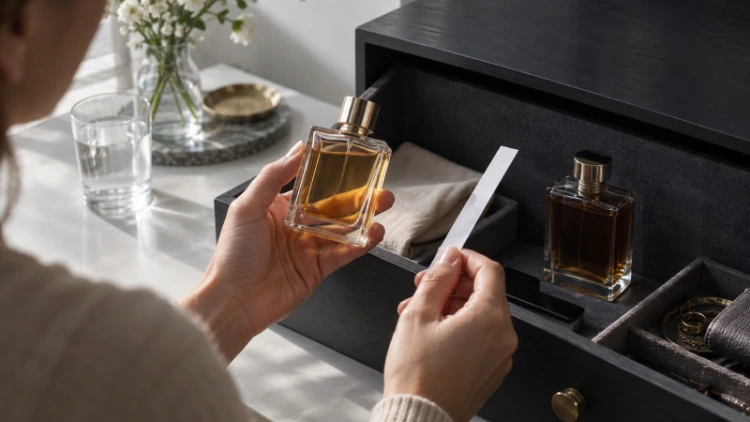
Use a blotter or a clean disposable tissue in a room without candles, cooking smells, or strong laundry products. One small spray is enough. Let the strip sit for a moment.
What comes up? Sour, vinegary, metallic, dusty, flat, or strangely sharp notes can signal a change. Sometimes the opening loses its sparkle and the whole fragrance feels thin. Citrus and green effects make this shift easy to notice, though every formula behaves differently.
Do not mistake a normal dry-down for spoilage. Top notes fade by design. A bright citrus perfume may become woody, musky, or ambery. That is expected when the later stage still feels recognisable and pleasant. The warning is a new unpleasant character, not simply a quieter opening.
“It smells different” is useful, but incomplete. Different in what way? Less fresh? More sour? Dusty? Write down the first honest description. It is better evidence than a vague feeling ten minutes later.
Check the Liquid in Neutral Light
Move the bottle away from a yellow bathroom bulb. Coloured glass can alter the view, too. Daylight is easier to trust. An old photograph, a matching bottle, or the colour shown on reliable packaging can provide a reference.
A gradual deepening is not automatically a problem. Vanilla, resins, and other naturally coloured materials may darken as a bottle ages. Dark liquid becomes more concerning when the smell has changed as well, or when the texture looks unusual.
Cloudiness, floating pieces, sediment, or a thick appearance deserves a pause. A tiny bubble right after spraying is ordinary. Haze that remains through the bottle is another matter. Do not shake it hard to make the colour look even. Extra air makes the cause harder to work out.
Let the Skin Have the Final Say for Now
Did the perfume used to feel comfortable and now sting? Is there itching, redness, or a bump? Wash the area gently and stop testing that spot. The reaction might come from another cosmetic, a damaged skin barrier, or sensitivity to an ingredient. It does not prove that the juice has spoiled. It does show that wearing it again is a poor experiment.
When the scent looks and smells normal after long storage, a small patch test on an inconspicuous area may add information. That is a cautious check, not a promise of safety. Anyone with a history of fragrance reactions should follow personal medical advice.
Widespread hives, swelling, breathing difficulty, or severe pain needs prompt medical help. A perfume bottle can wait.
Remember the Storage Spot
Where did the bottle spend the last summer? A windowsill, parked car, or steamy bathroom gives it more heat, light, moisture, and temperature change than a cool dark drawer. Repeated exposure to air matters as well. A tightly closed bottle kept in its box has more protection from evaporation and light.
The cap can tell a story. A loose cap allows alcohol and aroma to escape slowly. A damaged atomizer may leak or leave residue in the neck. Wipe the outside of the nozzle. Do not poke a pin or tool into it.
Stable storage beats extreme storage. A refrigerator is not automatically kinder. A cold bottle carried into a warm room can collect condensation, and repeated swings are not gentle. Cool, dry, dark, and fairly steady is the practical target.
Use Codes Only as Background
A batch code may identify a production period. An open-jar symbol gives a general period after opening for the cosmetic product. Neither one records the life of this particular bottle. The code cannot say whether the perfume spent a month in a hot car.
Unofficial code websites may hold incomplete brand data or use different assumptions. Check the manufacturer’s packaging where possible. Contact the brand if the history matters. A guessed date should never overrule an obvious sour smell or a skin reaction.
Darkened vanilla is not automatically expired. A clear bottle is not automatically fine. The useful decision comes from smell, appearance, storage, and skin response together.
Keep It, Set It Aside, or Let It Go
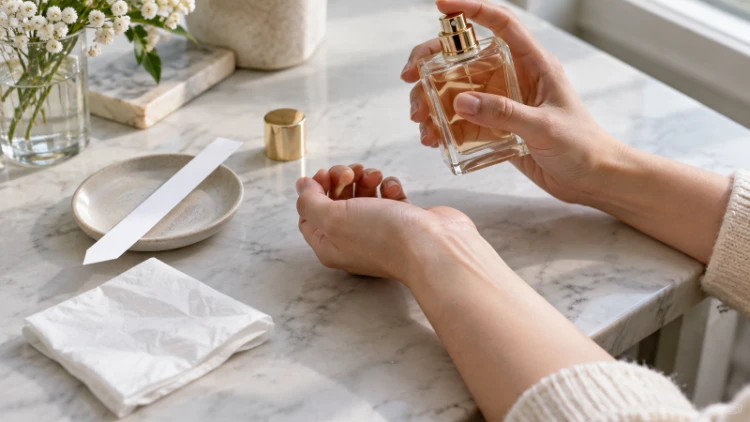
Smell familiar? Liquid consistent? Skin comfortable? Continued use may be reasonable with better storage. Close the cap promptly and move the bottle away from heat, sunlight, and humidity.
Only the colour changed while the scent stayed pleasant? Record that observation and watch the bottle. Sour smell, cloudy liquid, or a skin reaction? Isolate it from everyday products. Do not share it while the condition is uncertain.
Once the perfume is clearly spoiled, discard it. Do not add water, alcohol, oil, or another fragrance in an attempt to restore the original formula, because these changes may affect its stability and skin tolerance. For damaged glass, check local disposal guidance and keep the bottle away from children and pets.
The MEIQI perfume collection helps compare note descriptions, but a product page cannot reveal the history of one individual bottle. A new bottle still deserves sensible storage and a gradual skin test.
Make a Cleaner Comparison
Memory gets fuzzy when a perfume is worn only a few times a year. A clean blotter, an unopened sample, or a photo from the early days gives a steadier reference. Same room, similar temperature, if possible. Food, candles, and scented laundry can fool the nose. Keep the comparison brief and repeatable.
Test the opening and later stage separately. A little less brightness may simply be age. A sour or metallic turn is a stronger warning. Give extra weight to a history of direct sun, hot cars, or a damp bathroom.
Keep a short note: where the bottle was stored, when the change appeared, and whether the difference showed on paper, skin, or both. That record is useful when comparing a replacement or contacting the brand.
Consider two bottles found after several summers. One is darker, yet its vanilla remains warm and familiar and a small test causes no discomfort. The other looks clear but smells sour after living beside a window, and it leaves the skin itchy. The calendar does not make them equivalent. Their condition does.
If you want to compare fragrance profiles, concentrations, or performance for your next perfume project, contact MEIQI to discuss your requirements.
FAQs
Q1: How can someone tell if perfume has expired?
A1: Look for a marked change in smell, unusual cloudiness or sediment, a strong colour shift, or unexpected irritation. Storage history adds useful context.
Q2: What does bad perfume smell like?
A2: A spoiled perfume may smell sour, vinegary, metallic, dusty, flat, or sharply different from its original profile. Normal dry-down should remain recognisable and pleasant.
Q3: Is darkened perfume always spoiled?
A3: No. Vanilla, resins, and other coloured materials can deepen naturally. Darkening is more concerning when it appears with an unpleasant smell or changed texture.