A new bottle can be disappointing for an unexpected reason: the first spray smells sharper than the fragrance remembered from a shop. When perfume smells like alcohol, it is tempting to blame a weak formula or assume the bottle is fake. Yet a nose held close to a wet spray is judging something different from the scent left after that liquid has settled.
The useful distinction is between an initial alcohol impression and a smell that remains unusual through wear. A familiar perfume that suddenly changes also deserves a different check from a newly opened bottle. Before replacing it, notice when the sharpness appears, where the fragrance is being smelled, and what follows it.
What Alcohol Does Inside a Perfume
Many spray perfumes contain ethanol as part of their solvent system. It helps dissolve fragrance materials and carry them in a liquid that can be distributed through an atomizer. Alcohol in perfume is therefore not simply a cheap filler, and its presence alone does not explain whether a fragrance is well made.
Ingredient labeling may use Alcohol or Alcohol Denat. Denatured alcohol has been made unsuitable for drinking; the term does not, by itself, mean that the finished perfume has spoiled. Formula suitability still depends on the complete composition and its intended use, rather than one unfamiliar ingredient name.
This is separate from a perfume with rum, whisky, or cognac notes. Those descriptions refer to a deliberately composed scent impression. An opening that reminds someone of a cocktail and a brief solvent-like sensation are not necessarily the same experience. A note description cannot identify the alcohol content of a bottle.
Why the First Spray Can Feel Sharper
Immediately after spraying, the liquid and nearby air contain a concentrated burst of volatile material. Moving the wrist straight under the nose can make that burst seem more prominent than it does at ordinary wearing distance. Spraying repeatedly onto the same small area adds another variable: the area stays wet while the dose keeps increasing.
A shop sample may have been smelled after walking away from the counter. The new bottle may be tested seconds after spraying in a smaller room. That difference can change the comparison before anything about the actual formula has changed. Compare the same product in similar conditions before drawing a conclusion.
Concentration names offer only limited help here. Eau de parfum is not a promise of an alcohol-free opening, nor is eau de toilette proof of poor quality. Fragrance materials, solvent balance, atomizer output, and testing conditions all contribute to the first impression. Choosing the highest concentration will not automatically produce the softest opening.
Check What Remains After the Wet Spray Settles
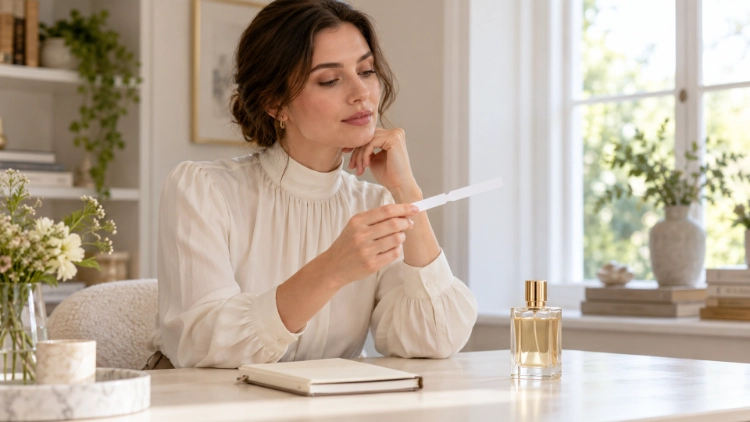
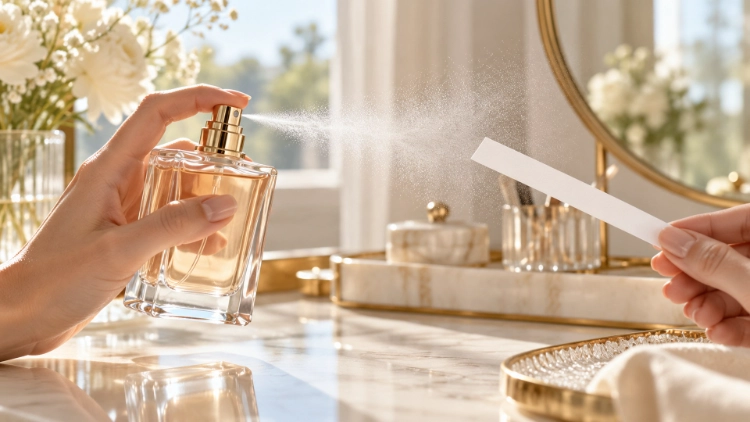
Use one clean blotter for a simple first comparison. Apply the perfume as directed, set the bottle aside, and let the wet area settle before assessing it again. Keep the strip away from the spray cloud. The aim is to notice a change in character, not to keep inhaling closely until the nose becomes tired.
Record plain observations: sharp at first, then citrus; still harsh later; recognizable but weaker than expected. These descriptions are more useful than calling everything an alcohol smell. A bitter citrus peel, peppery note, or dry woody material can also seem sharp, although identifying a particular ingredient by smell alone is unreliable.
Where a reference sample is available, compare the exact same version on separate strips. Keep application and timing similar. Comparing a fresh spray against a strip left overnight can make a normal difference look like a fault. If skin testing is appropriate, use the product directions and avoid irritated skin; stop if discomfort occurs.
There is no single waiting time that proves every perfume is acceptable. An initial sensation that recedes and gives way to a coherent fragrance is different from an unfamiliar odor that dominates every later check. Repeatedly adding sprays makes that distinction harder to judge.
When a Changed Smell Deserves a Closer Look
An old bottle that has developed an unpleasant smell needs a short history. Was it left near a window, carried in a hot car, or stored with a loose closure? Has the appearance changed alongside the odor? These observations help explain what happened, but none is a standalone home test for product safety or authenticity.
For a newly purchased bottle, retain the packaging, order information, and batch markings. Tell the seller whether the issue affects only the opening or continues after the perfume settles. Include whether the same effect appears on a clean blotter. A specific description gives the seller something to investigate without requiring the customer to diagnose the formula.
Do not add water, oil, or another fragrance to soften the opening. Leaving the bottle uncapped is also a poor experiment: it exposes the contents and changes the conditions being assessed. If a product causes irritation, stop using it rather than trying to make the smell more acceptable through dilution.
Compare the Formula, Not Just Its Strength
Once an actual fault has been considered, a persistent dislike may simply concern the fragrance style. The MEIQI perfume collection gives several directions to compare. Narrow those by the preferred opening and later scent instead of treating every fresh, woody, or amber perfume as interchangeable.
For instance, Signature Blend combines bergamot and apple with lavender, cardamom, vetiver, patchouli, and amber in an alcohol-based eau de parfum. Its fresh-to-warm progression provides a concrete sampling brief. It does not establish how gentle the first spray will feel to every wearer.
For a new fragrance project, MEIQI supports sampling and refinement before the product details are approved. Feedback should distinguish solvent-like sharpness from unwanted citrus bitterness or woody dryness; asking only for a stronger perfume leaves those differences unresolved.
To discuss an opening profile and sample requirements, share the sample reference, application method, and the stage at which the smell becomes uncomfortable. That makes a fragrance discussion more precise than a general request to remove the alcohol smell.
Conclusion
When perfume smells like alcohol, the first question is when that impression occurs. Compare the settled fragrance under consistent conditions, keep unexpected changes separate from personal preference, and contact the seller when a concern persists. Altering the bottle at home removes useful evidence rather than resolving the original question.
FAQs
Q1: Is it normal for perfume to smell like alcohol at first?
A1: An initial alcohol impression can occur with alcohol-based perfume, especially when the wet spray is smelled closely. Notice what follows as it settles. Continued unfamiliar harshness, a change from a known reference, or irritation warrants further attention rather than automatic reassurance.
Q2: Does an alcohol smell mean perfume is fake?
A2: No single odor can establish authenticity. A genuine perfume can smell sharp immediately after spraying, while an imitation may smell pleasant. Purchase source, exact product version, packaging information, and a seller investigation are more useful than treating alcohol smell as a counterfeit test.
Q3: Should perfume be left uncapped to reduce the alcohol smell?
A3: No. Keep the closure in place and follow storage instructions. An open bottle allows exposure and evaporation without giving control over the resulting composition. Do not add other liquids; ask the seller about an unusual smell or compare a suitable alternative through sampling.