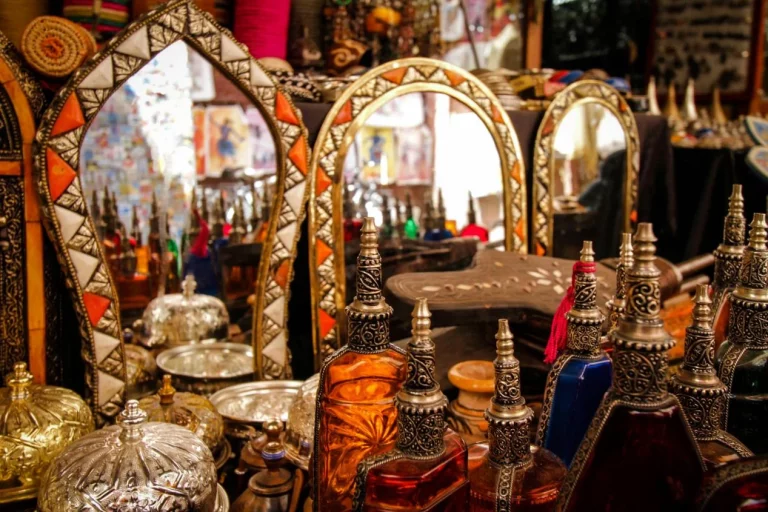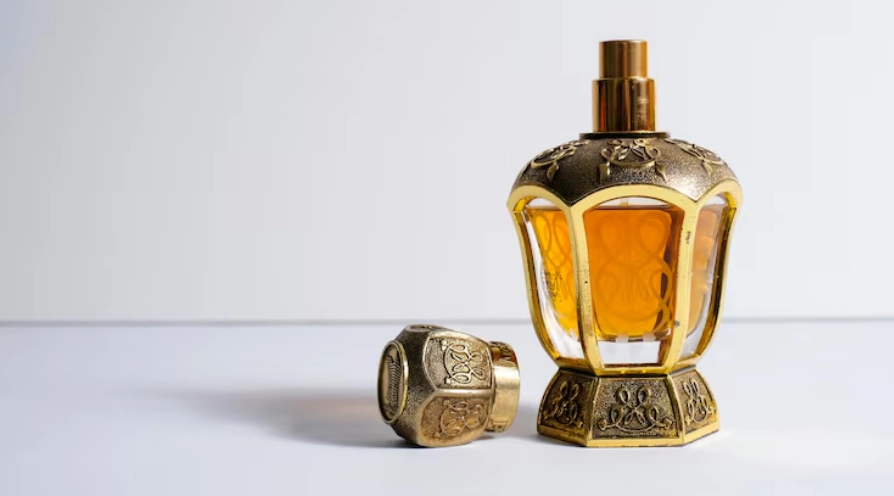
Arabic perfumes have a distinctive status in the world of perfumery. The perfumery of Arab cultures is intended not only to please the sense of smell but also to be a product of history, religion, climate, trade routes, and rituals of a given culture. In essence, when you work in this industry as a consumer, product manager, wholesaler, or brand manager, you interact with a long tradition of perfumery as presence, memory, and identity rather than mere decoration.
In this tradition, warmth is preferred to freshness, longevity is valued more than projection, and emotional richness is considered more desirable than immediate appeal. The design permeating these fragrances, their materials, and their applications creates a coherent system that sets the Arabic tradition of scents apart from the cyclical trends of the Western world. The Arabic perfume tradition is inherently associated with religious, spiritual, social, and artistic practices, and the history of perfume development is deeply rooted in the ancient spice trade that once connected the Asian, European, and African continents.
This article examines how those elements appear in materials, structure, product design, and manufacturing practice, and how you can interpret them correctly in professional contexts.
Why are Arabic perfumes deeply connected to culture rather than trends?
Arabic perfumes are shaped by function before fashion. When you evaluate them through a professional perspective, you quickly see that their role in society defines their character.
Ritual and social symbolism
In Arabian culture, fragrance is never regarded as just an accessory but is incorporated in hospitality, religious preparations, weddings, and formal events. In fact, burning agarwood to perfume clothes and interiors, and applying essential oils to the body, are common practices. This is why quality attributes such as strength and longevity become essential criteria instead of personal preference.
This cultural positioning explains why you often see compositions designed to be dense, enveloping, and persistent rather than light or fleeting.
What ingredients shape the oriental character of Arabic perfumes?
Material choice is where tradition becomes tangible. If you want to assess authenticity, ingredients provide the clearest evidence.
Oud as structural backbone
Agarwood, or “oud”, is one of the defining fragrances of Arabic perfumery. It has deep-woody and smoky notes and is used as incense as well as a skin fragrance. Its usage is not only limited to the homes or the working environment, but is an integral part of religious events as well. Due to the rarity of its fragrance and importance, it is usually kept for major events and is pure in form because of its rarity.
Resin, spice, and floral balance
The traditional fragrances also extensively use frankincense, saffron, rose, sandalwood, amber, and musk. which adds warmth, depth, and sensuality. The typical features of Arabian perfumes have been described as warm, spicy, and exotic fragrances that last longer because of the predominance of these ingredients in them. They are cherished for their depth of scent, instead of their radiance.
When you analyze these palettes, you see that oriental character emerges from material coherence rather than marketing descriptors.
How does fragrance structure reinforce the emotional depth?
Materials alone do not produce the experience, and structure determines how the perfume communicates over time.
Layered evaporation experience
The interaction between top, middle, and base notes shapes the emotional rhythm of a fragrance. Middle and base notes carry the “soul” of the perfume and define what remains on the skin hours later. Wood and amber notes have particular prominence in this stage because they help to ground the fragrance and create the release of multi-dimensional scents. This is because various notes evaporate at various speeds, which is why certain perceptions occur instantly while others appear gradually.
For professionals, this means you evaluate performance not by the opening alone, but by the long-term behavior on skin and fabric.
How can product selection translate tradition into modern consumer appeal?
Tradition provides the foundation, but product execution determines market success. What is needed is a product that both communicates oriental identity and still matches contemporary expectations.
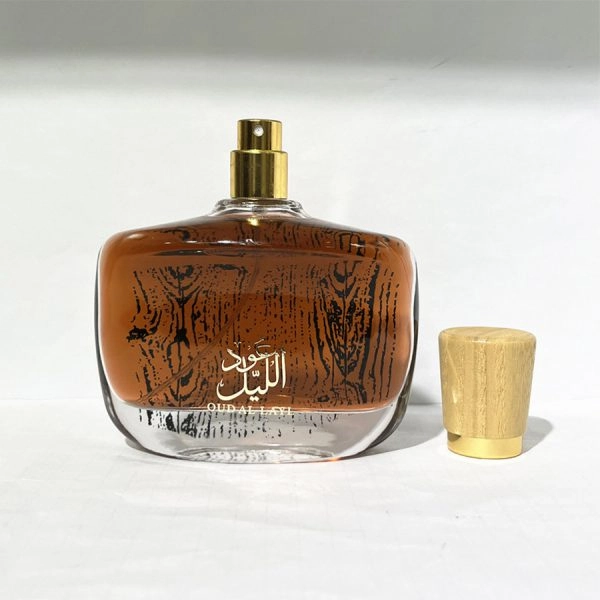
Deep woody luxury for high-end positioning
A product such as AL LAYI high-end Middle East perfume shows how traditional woody density can be presented as a refined luxury proposition. Its emphasis on woody character and lasting presence aligns with the preference for intense, long-lasting oriental profiles built around materials such as oud, amber, and spice. This type of structure naturally suits formal settings, gifting scenarios, and premium retail positioning where depth and persistence are valued.
Floral warmth adapted for wider audiences
For a broader market reach, products like YARA perfumes show how floral notes can soften intensity without losing oriental character. Rose, jasmine, and amber combinations have long been integral to Arabic perfumery, especially when balanced with woods such as sandalwood, which creates fragrances that feel warm and expressive while remaining accessible for daily wear. The balance between floral elegance and woody depth mirrors classical Middle Eastern scent construction.
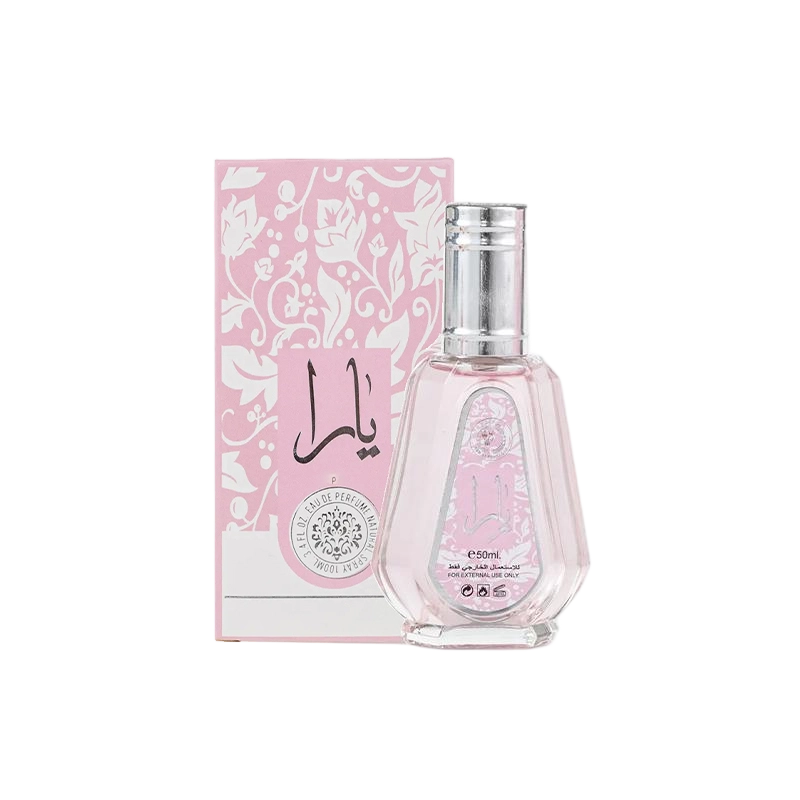
These examples demonstrate how tradition can be translated into differentiated product tiers.
Where does professional manufacturing meet oriental authenticity?
Cultural depth must be supported by technical consistency. Without controlled production, even well-designed fragrances lose credibility.
Meiqi occupies a distinctive position by bridging traditional scent architecture with organized manufacturing capability. Our company supports partners through fragrance selection, sample development, bottle coordination, filling, labeling, and packaging integration, enabling brand owners to preserve oriental character while achieving industrial consistency.
Our operational framework reflects a mature ODM pattern—personalized formula development, strict raw material selection, standardized production processes, quality control programs, and flexible packaging solutions. These elements allow collaborators to focus on market strategy while maintaining control over identity and performance. ODM practices emphasize reduced development risk, scalability, and the ability to tailor products to specific positioning strategies, which is especially relevant when working with culturally nuanced fragrance categories.
This is where authenticity becomes commercially sustainable rather than stylistically imitated.
Why does oriental fragrance still resonate with global consumers today?
Global fragrance markets increasingly reward depth, individuality, and narrative, while oriental traditions naturally align with these expectations.
Emotional impact
Perfume is used in more ways than its aesthetic aspect. Perfume is used to promote self-confidence, to convey one’s personality, and to express one’s lifestyle values. Perfume is usually an emotional indicator instead of an aesthetic component. The role of perfume may include promoting one’s appeal, reflecting one’s personality, and showing one’s quality of life. The psychologically-oriented use of perfumes is better depicted in the oriental perfumes due to their nature of being stronger and longer-lasting.
Longevity as a value perception
High concentration types, such as Parfum (20% to 40% concentration of fragrance ingredients), characterized by their deeper and longer-lasting fragrance, have a fixative life of approximately six to eight hours. These are considered premium and are more suitable for cooler climatic regions and occasions that are more formal. A perfume formulated in such a way is not only technically efficient but also a manifestation of value and solemnness.
For many consumers, this durability reinforces the tendency to view perfume as a component of self-expression rather than a temporary experience.
Conclusion
Arabic perfumes reflect the spirit of oriental scent traditions because they are constructed based on cultural continuity. Their materials, including oud, saffron, rose, resins, and woods, carry symbolic weight, their structures emphasize depth over immediacy, and their performance prioritizes longevity over lightness.
When evaluating or developing such fragrances from a professional perspective, your goals are to depend on ingredient purity, form consistency, emotional linkage, and production control, in which oriental tradition can not only turn out to be culturally valid but also economically feasible.
FAQs
Q1: Why do Arabic fragrances have a stronger and longer-lasting impact?
A: They extensively utilize dense base ingredients like oud, amber, woods, and resins, and come in higher concentration forms. The concentration of the Parfum level can be as high as 20-40%, offering a skin longevity of up to eight hours.
Q2: Are Arabic perfumes only suitable for formal occasions?
A: Not necessarily. While many traditional styles are designed for ceremonies and evening settings, floral–woody compositions using rose, jasmine, and sandalwood can be adapted for daily wear when balanced correctly. This balance has long existed within Middle Eastern perfumery practice.
Q3: What are those key ingredients that always reflect an oriental character?
A: Oud, frankincense, saffron, rose, sandalwood, amber, and musk are some of the most important markers. These materials keep appearing as the essence or framework in Arabic perfumes.