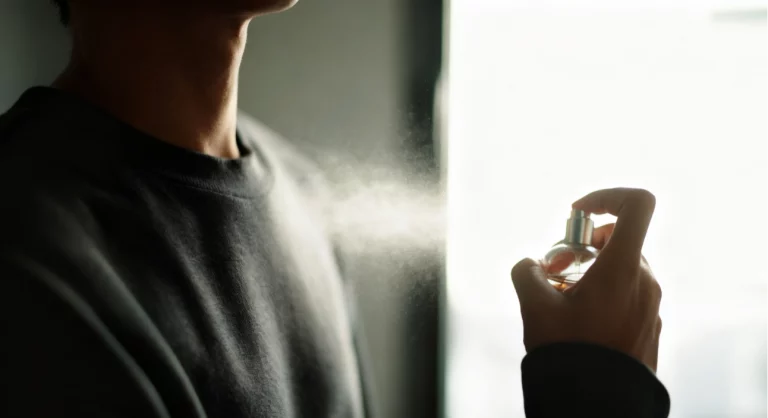
How Does Male Skin Type Directly Shape the Way a Perfume Performs on the Skin?
In professional fragrance evaluation, you do not begin with aroma preference but with substrate behavior. Male skin differs from female skin in measurable ways, which are shown in higher sebum output, thicker stratum corneum, and slower transepidermal water loss cycles. These factors transform the skin into an active carrier system rather than a passive surface. Therefore, a skin perfume is not merely worn, but also continuously modulated by the wearer’s physiology.
From a formulation perspective, skin type determines how fragrance molecules dissolve, migrate, oxidize, and persist. Volatile compounds behave differently on hydrated versus lipid-rich surfaces, and base materials anchor with varying efficiency depending on skin condition. When selecting a skin perfume for men, you are effectively selecting a diffusion model that must remain stable across hours of biochemical interaction.
How Sebum Activity, Skin Thickness, and Hydration Level Work Together to Alter Diffusion Speed and Scent Stability in Men
Sebum functions as a lipid solvent that slows evaporation while amplifying certain aromatic families. Thick male skin delays the molecular release, extending dry-down phases. Hydration, meanwhile, governs volatility in the opening stages. When these three variables align, the same perfume can exhibit entirely different projection arcs on different men.
For experts, this explains why blotter tests fail to predict real-world behavior. Only skin-based evaluation reveals how molecular weight, polarity, and carrier solvents interact under physiological conditions.
Why Should Oily Skin Be Treated as a Structural Advantage Rather Than a Limitation in Skin Perfume Selection?
In applied fragrance science, oily skin is often mischaracterized as problematic. In reality, it offers one of the most stable diffusion platforms available as long as the perfume architecture is compatible. High sebum levels enhance solubility for lipophilic base materials, allowing them to anchor gradually rather than volatilize prematurely.
Rather than suppressing oil, the expert approach is to leverage it. Oily skin supports extended base-note development and reduces scent fragmentation during wear. The risk only arises when low-density compositions are applied, as these may over-expand and lose structural clarity.
Why High-Density Woody and Resin-Based Structures Are More Predictable on Sebum-Rich Male Skin
Dense molecular frameworks, especially for those built around woody, resinous, or balsamic cores, show superior control on oily skin. Their slower vapor pressure curves align with lipid-mediated release, producing consistent evolution rather than abrupt shifts.
This is why Middle Eastern–style mixes often perform exceptionally well on sebum-rich male skin. Their structures are designed to tolerate heat, oil, and prolonged skin contact without distortion.
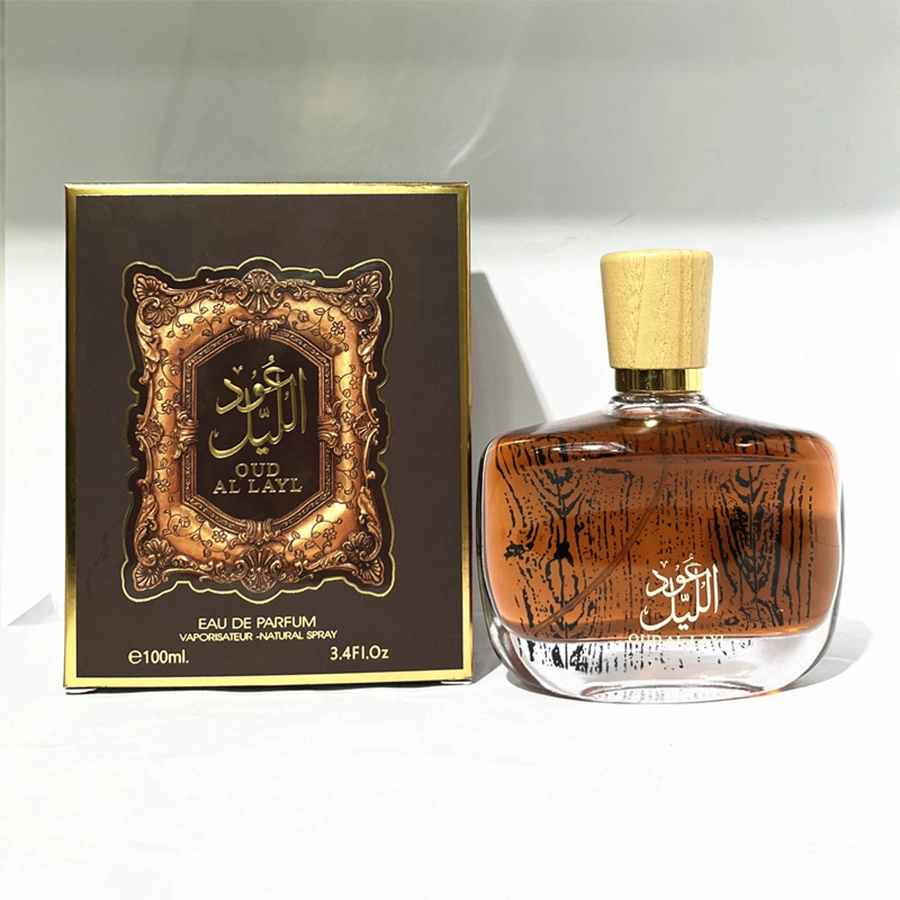
A relevant example within this category is AL LAYI Middle East perfume, whose structures prefer density and base integrity, allowing oily skin to function as a stabilizing medium rather than a disruptive force.
How Should Dry or Low-Sebum Skin Change Your Criteria When Choosing a Skin Perfume?
Dry skin introduces a different technical challenge. Without sufficient lipid content, fragrance molecules lack a sustained diffusion medium. The result is not necessarily weak performance, but uneven development—opening notes dissipate rapidly, and base notes fail to be fully released.
For dry male skin, the goal is not increased intensity, but improved internal balance. The perfume must carry its own diffusion rather than rely on the skin to provide it.
Why Balanced EDP Architectures Outperform Heavy Base-Driven Designs on Dry Male Skin
Balanced Eau de Parfum structures distribute aromatic mass across top, heart, and base phases more evenly, thus preventing early collapse and maintaining coherence over time. Alcohol-to-oil ratios, fixative selection, and molecular layering all play a role.
Dry skin responds best to formulations where mid-weight molecules bridge volatility gaps, allowing smooth transitions even in low-lipid environments. Over-reliance on heavy bases alone often results in flat or incomplete expression. Within this framework, 1-1 EDP cologne spray perfume elaborates how proportional balance, rather than sheer concentration, supports consistent wear on low-sebum skin.
Why Is Sensitive or Reactive Skin a High-Risk Variable in Men’s Skin Perfume Decisions?
Sensitive skin introduces regulatory and formulation considerations beyond olfactory design. Barrier instability, micro-inflammation, and heightened neural response mean that volatility spikes or aggressive opening phases can trigger discomfort long before scent quality is evaluated.
How Controlled Diffusion and Reduced Volatility Help Preserve Olfactory Depth Without Triggering Skin Stress
Controlled diffusion minimizes abrupt concentration changes at the skin surface. Lower volatility peaks reduce irritation risk while still allowing perceptible complexity. Gradual release profiles, restrained top notes, and stable carriers help maintain depth without overstimulation.
From a materials standpoint, this reflects principles used in cosmetic film-forming systems, where uniformity and adhesion outperform aggressive delivery in sensitive conditions.
Why Do Professionals Prioritize Skin-Driven Selection Over Trend or Note-Based Choices?
Trend-based selection assumes universality, while skin-driven selection accepts variability. For professionals, reproducibility matters more than fashion. A perfume that behaves predictably across similar skin types is far more valuable than one that aligns with seasonal trends but performs inconsistently. So skin-centric selection also improves comparative testing, allowing meaningful evaluation of formulation decisions rather than subjective reactions.
How Skin-Type Matching Improves Evaluation Accuracy and Long-Term Wear Consistency
When skin type is treated as a constant, performance differences become attributable to composition rather than noise, which enhances both research validity and real-world reliability. Over time, it also reduces reformulation pressure caused by mismatched expectations.
Who Is Meiqi and Why Is It Relevant to Professional Skin Perfume Evaluation?
Within professional fragrance supply chains, Meiqi occupies a position closer to a formulation partner than a style-driven brand. Our relevance lies in how products are structured around skin behavior rather than marketing narratives.
Meiqi’s development logic reflects principles common in cosmetic manufacturing—controlled volatility, substrate compatibility, and performance consistency. By focusing on how different skin types interact with aromatic structures, our products offer practical reference points for experts assessing diffusion models, base stability, and long-term wear behavior.
For professionals working at the intersection of skin science and fragrance design, this approach allows clearer analysis. Products can be evaluated as systems—skin plus composition—rather than isolated scents. So, if you want to acquire more related information, you can contact us by visiting our official website.
FAQs
Q1: Why should skin type outweigh scent preference in professional perfume selection?
A: Because skin variables determine diffusion, stability, and longevity. Preference cannot correct a structural mismatch.
Q2: Can oily skin cause a perfume to perform poorly?
A: Yes, if the composition lacks density. Oily skin amplifies weaknesses as much as strengths.
Q3: Is a higher concentration always better for dry skin?
A: No. Balance and internal structure matter more than absolute concentration.