Why Do Arabian Scents Carry Deeper Cultural Meaning Than Most Fragrance Traditions?
When you examine Arabian scents through an academic view, you quickly recognize that they not only function as aesthetic artifacts, but also operate as cultural instruments. Unlike many Western fragrance traditions that take priority to novelty or emotional impression, arabian scent culture is anchored in continuity, social structure, and ritual function. Scent is not optional decoration, but embedded into daily life, governance, hospitality, and spiritual practice.
Therefore, it explains why Arabian scents tend to resist rapid stylistic change as their meanings are inherited, not invented. Each material choice reflects historical memory, and each formulation signals social intent rather than personal preference.
How Did Trade Routes, Ritual Use, and Social Hierarchies Shape Early Arabian Scents?
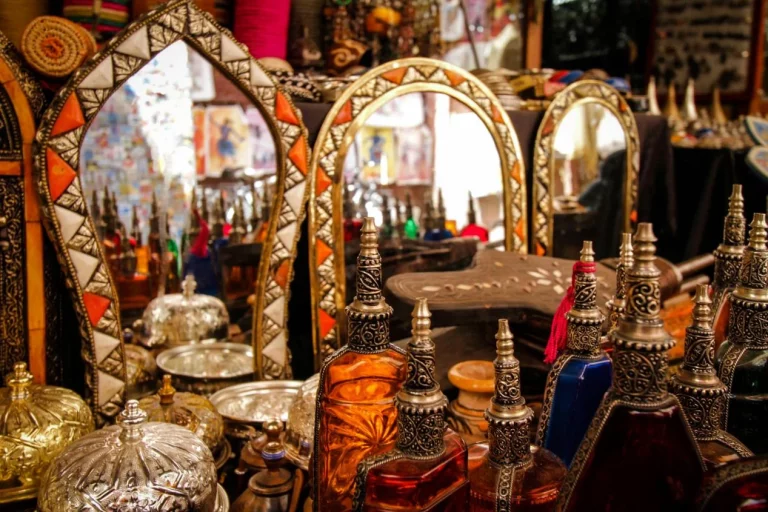
You can trace the foundations of Arabian scent culture along ancient trade corridors connecting the Arabian Peninsula with East Africa, South Asia, and the Levant. Frankincense, myrrh, spices, and later oud moved through these routes not simply as commodities but as cultural transmitters. Their scarcity created value and their longevity produced authority.
Ritual use reinforced this authority, which is demonstrated by the facts that scents are accompanied by prayer, diplomacy, burial, and domestic hospitality. In these contexts, scent functioned as a marker of respect and legitimacy. Importantly, scent strength and persistence mattered more than complexity—a fragrance that endured conveyed stability and seriousness.
Social hierarchy further refined the meaning. Certain materials were reserved for rulers, scholars, or religious leaders, which explains why Arabian scent traditions emphasize gravitas, density, and temporal presence rather than brightness or rapid evolution.
How Did Oud, Resin, and Spice Become Symbols of Authority and Identity?
As you analyze Arabian scent materials, it becomes evident that symbolic weight matters as much as olfactory character. Oud, resins, and spices became cultural signifiers precisely because they demand patience—both in sourcing and in wearing. These materials do not satisfy people instantly, but unfold slowly, which aligns with a worldview that values endurance and lineage over novelty.
Why Oud-Based Structures Remain Central to Elite and Professional Fragrance Discourse?
Oud occupies a unique position because it unites rarity, unpredictability, and temporal depth. Its formation requires biological stress and time, which reflects the cultural ideals— it represents resilience, wisdom, and authority.
From a structural perspective, oud-based compositions are often linear rather than pyramidal. You do not encounter dramatic shifts but experience gradual transformation, which supports long ceremonial or social contexts, where scent must remain coherent for hours.
Oud is not valued for shock or contrast but for continuity. When diluted excessively or masked for mass appeal, its cultural meaning erodes. Authentic structures maintain density and restraint, allowing the material to speak with minimal interference.
How Are Traditional Meanings Translated Into Contemporary Arabian Scents?
Modern Arabian scents face a structural challenge—remaining culturally valid while adapting to global usage patterns, which means that translation requires precision rather than simplification. Heritage is not preserved through replication but through controlled reinterpretation.
You see this clearly in how contemporary formulations adjust concentration, diffusion radius, and tactile softness without dismantling symbolic foundations.
How Do Modern Formulations Balance Heritage With Wearability?
Modern Arabian compositions often soften edges without weakening identity. Resin notes are refined to reduce roughness, and florals are introduced as structural buffers rather than focal points, leading to accessibility instead of dilution of cultural meaning. This approach avoids over-fragmentation. Instead of multi-layered narratives, contemporary scents preserve linear integrity. They are designed for daily proximity rather than ceremonial distance.
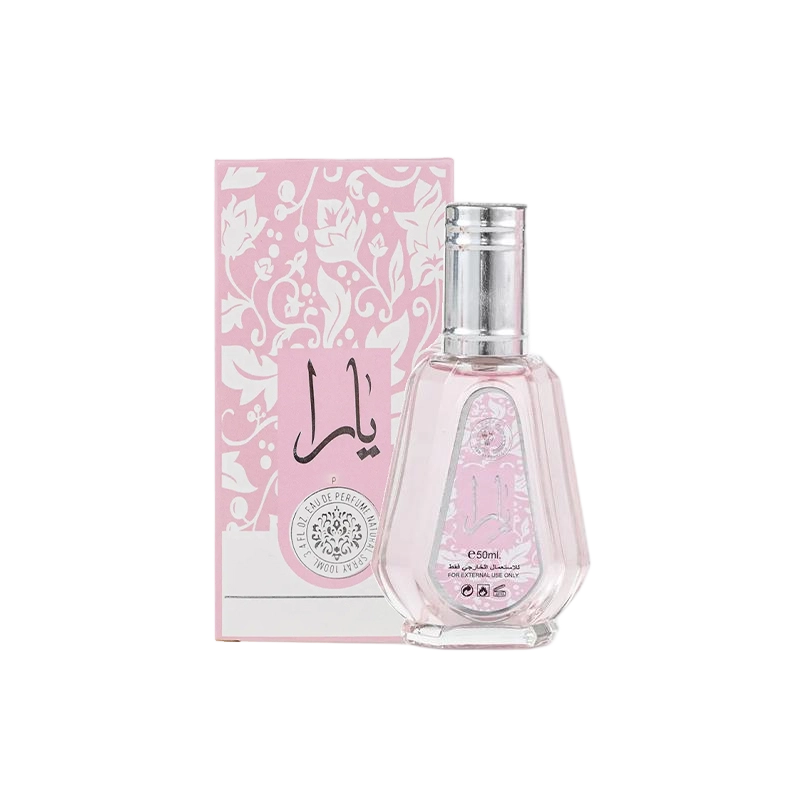
A clear illustration of this translation logic appears in YARA perfumes, where floral elements function as modulators rather than replacements, allowing traditional resinous depth to remain intact while enabling modern wear contexts.
How Does Manufacturing Discipline Influence Cultural Authenticity in Arabian Scents?
Cultural meaning collapses without material discipline. For scholars, this is a crucial but often overlooked point because authenticity is both symbolic and technical.
Raw material stability, blending precision, and process consistency determine whether a scent can sustain its intended meaning across time and geography. In fragrance systems rooted in continuity, inconsistency means cultural distortion.
Why Process Control Matters as Much as Formula Design
Arabian scents often rely on dense bases and high oil content. Without strict process control, volatility increases and symbolic persistence fails. This parallels broader cosmetics manufacturing principles, where formulation integrity and thermal stability define product credibility. Consistency allows cultural messages to survive scale. When manufacturing compromises occur, the scent may remain pleasant but loses its authority.
Who Is Meiqi and Why Does Its Approach Matter to Serious Fragrance Research?
For experts studying fragrance systems, suppliers are not neutral participants, but actively shape cultural outcomes. A technically capable manufacturer can preserve meaning, while an indifferent one can erase it.
Meiqi operates within this awareness. Rather than treating Arabian scents as stylistic exports, our development logic begins with material behavior and usage context. Formulations are constructed backward from cultural function—duration, projection, and stability—rather than trend alignment.
This approach emphasizes controlled sourcing, restrained modification, and scalable consistency, allowing traditional scent logic to function within modern distribution frameworks without structural collapse. For researchers and professionals, such a discipline provides a reliable foundation for both study and application.
Besides, Meiqi also provides the service of OEM/ODM, indicating that you can have a kind of unique perfume based on your personal conditions that include the physical and mental aspect and show your own distinctive tastes.
How Can You Evaluate Authenticity in Modern Arabian Scents?
Authenticity is not a sensory judgment alone. For experts, it is an evaluative framework. You assess whether the scent’s structure, materials, and performance align with its claimed cultural role, and this requires moving beyond marketing narratives toward measurable characteristics.
What Criteria Help You Distinguish Cultural Continuity From Surface Styling?
- Evaluate temporal behavior: Does the scent remain coherent after several hours, or does it disappear?
- Assess material transparency: Are base notes allowed to persist, or are they obscured by volatile accents?
- Consider the usage context: Authentic Arabian scents are designed for presence, not spectacle. Their spreading is intentional, not aggressive.
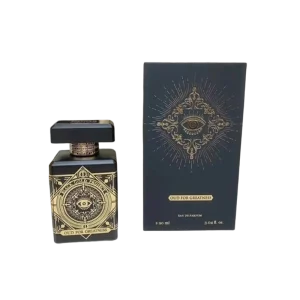
These criteria are evident in 1-1 perfume 90ml Oud Wood Men’s Perfume spray Cologne, where structural restraint and sustained density support long-form wear without sensory fatigue.
Why Long-Term Material and Cultural Consistency Will Matter More Than Trend Analysis
Trends dissolve quickly, while material systems last for a long time. For Arabian scents, cultural meaning survives only when supported by stable raw materials and disciplined formulation logic. So, experts should therefore prioritize longitudinal studies—tracking how formulations behave over time, across climates, and through scaling. Such work ensures that Arabian scents remain cultural documents rather than stylistic imitations.
FAQs
Q: Why do Arabian scents favor linear structures instead of complex layering?
A: Linear structures support long-duration coherence, aligning with cultural values of stability and continuity rather than rapid sensory change.
Q: Can modern manufacturing methods preserve the traditional Arabian scent meaning?
A: Yes, when process control, material selection, and formulation restraint are prioritized over trend-driven modification.
Q: What distinguishes scholarly evaluation of Arabian scents from consumer reviews?
A: Scholarly evaluation emphasizes structure, duration, and cultural alignment rather than immediate appeal or novelty.