Perfume smells different after thirty minutes because its materials do not evaporate at the same rate. The wet opening gives way to the heart and base, while skin temperature, moisture, body products, clothing, and weather influence what becomes noticeable. That change is usually part of the composition rather than a sign that the bottle has failed. A quick shop test captures only the opening. A longer skin test shows whether the fragrance remains comfortable once the day is under way.
The wet spray shows only the opening
The first few minutes are often the brightest stage. Citrus, mint, watery accords, light herbs, and airy fruit move quickly from damp skin into the air. Alcohol may add a brief sharp impression while the spray is still wet. The opening can feel sparkling, green, peppery, or fizzy, but some of that effect may recede within five to fifteen minutes.
The opening still matters because it sets the first impression. It simply cannot answer the whole buying question. Keep the wrists apart when comparing two perfumes and let the liquid dry naturally. Rubbing creates friction, spreads the liquid unevenly, and makes the early stages harder to compare.
Sprayer output also changes the opening. A fine mist spreads the same fragrance over a larger area, while a narrow spray leaves a wetter patch that may smell sharper at first. Use the same bottle and number of sprays when comparing two days. Otherwise, a difference in application can be mistaken for a change in the formula or the wearer’s skin.
What changes around the thirty minute mark
The heart becomes easier to notice
As lighter materials recede, rose, jasmine, orange blossom, tea, fruit, spice, and aromatic herbs may come forward. This middle stage can change a perfume from crisp to soft, clean to creamy, or casual to more formal. It often gives a better picture of how the fragrance will feel during an ordinary day.
Thirty minutes is a useful checkpoint, not a universal deadline. Some formulas reveal the heart earlier, while cool conditions or a different application amount may hold the opening longer. If a fragrance becomes too sweet, dusty, or tiring at this point, that information matters more than an attractive first minute.
The base begins to shape the dry-down
Woods, musk, amber, vanilla, patchouli, and soft resins often remain after brighter materials fade. They may have been present from the start but become easier to identify later. The dry-down can feel woody, creamy, smoky, powdery, or warm, and it may sit closer to the skin as the hours pass. A scarf or collar can hold a different version of the scent for longer.
Skin and surroundings change the result
The same bottle can smell creamy on one person and crisp on another. Skin oil, moisture, temperature, and natural scent affect how aromatic materials evaporate and combine. Sunscreen, body cream, deodorant, shower gel, and laundry products add another background. Paper strips remove most of those variables, which makes them useful for screening, but they cannot replace a final skin test.
Heat and humidity may make some materials more noticeable or shorten the bright opening, but the effect depends on the formula, skin, airflow, and application amount. Cold, dry air can also change diffusion without preserving every top note. Test a fragrance in conditions similar to the way it will actually be worn rather than treating one climate rule as universal.
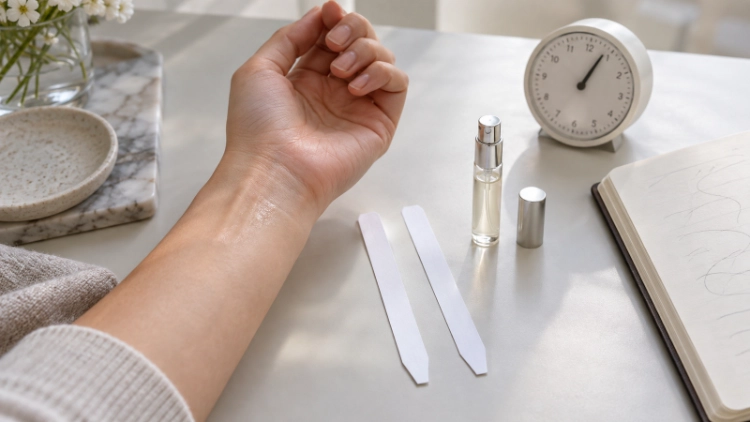
Paper and skin answer different questions. A blotter makes it easier to compare the basic structure of several fragrances without mixing them with body products. Skin shows how one finalist behaves with heat, moisture, and normal movement. Use paper to reduce a large choice to two or three candidates, then place the final options on separate areas of clean skin.
Use a short timeline instead of one quick sniff
Apply one spray of each candidate to separate wrists. Check the opening after five to fifteen minutes, the developing heart around thirty to sixty minutes, and the later dry-down after two to four hours. These windows are practical checkpoints rather than fixed promises. At each stage, note the intensity, balance, recognizable notes, and any sour, harsh, or flat change.
A wearer may stop noticing perfume because the nose has adapted; that is different from the fragrance disappearing. Ask someone nearby before adding more. Keep the spray amount, application point, room conditions, and scented products similar when comparing two trials. Buyers who need a formal sampling method can use the separate guide to large volume perfume longevity testing.
If the result changes sharply between two tests, repeat the trial on another day before rejecting the perfume. Check whether the lotion, sunscreen, laundry product, room temperature, or sprayer amount changed. A short written note is useful because scent memory is imprecise. Record plain observations such as ‘citrus faded by thirty minutes’ or ‘amber became sweeter after two hours’ instead of trying to reconstruct the whole development later.
Read the note list as a guide
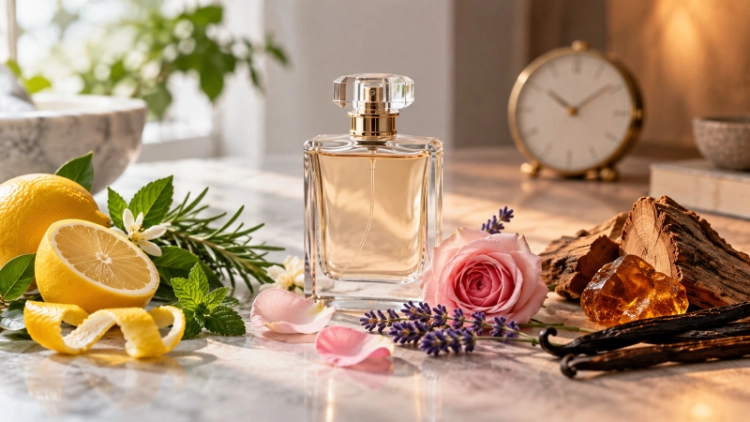
A note pyramid describes the expected direction of a composition, not the equal volume of every ingredient. Rose may smell green, fruity, powdery, or peppery depending on the accords around it. Vanilla may feel toasted, creamy, or dry. Use the list to choose what deserves a test, then write down what actually happens on skin.
A product such as Meiqi Signature Blend EDP moves from bergamot and apple into lavender and cardamom, then finishes with vetiver, patchouli, and amber. That progression is more useful to assess over time than as a single first-spray description.
Give the nose time to reset
A familiar smell can drop out of awareness quickly. Leave the scented area, get a few minutes of fresh air, and return before deciding that the perfume has disappeared. Repeatedly smelling the wrist or adding several sprays makes comparison less reliable. Coffee beans are not required; a short break in a neutral environment is simpler.
Two people may use different words for the same dry-down. Memory, vocabulary, skin, and surroundings all shape the description. A short record of the time, temperature, body products, and plain impression creates a more useful personal reference than trying to sound technical.
Conclusion
Why perfume smells different after thirty minutes comes down to changing evaporation, the movement from opening to heart and base, and the conditions around the wearer. Judge a candidate at several checkpoints, keep the test conditions consistent, and give more weight to the stage that will be present during work, dinner, or the intended occasion.
Retailers and fragrance brands can discuss samples and perfume development with Meiqi when they need to compare dry-down, concentration, packaging, or a private-label direction.
FAQs
Q1: How long should perfume dry down before judging it?
A1: Wait at least thirty minutes for the opening to settle, then check again after two to four hours when choosing an all-day fragrance. Development time varies by formula and conditions.
Q2: What are top, middle, and base notes?
A2: Top notes form the early opening, middle notes shape the heart, and base notes provide the slower character that remains later. The stages overlap rather than changing at one exact minute.
Q3: Does perfume smell different on paper and skin?
A3: Yes. Paper is useful for screening fragrances, but clean skin gives a more realistic result for personal wear because body temperature, moisture, and nearby products affect development.