A buyer can receive two perfume samples from the same fragrance family and still get very different selling results. One opens brightly but fades too fast. Another lasts for hours, yet feels too dense for office use or summer shelves. That gap is why a repeatable longevity test matters before a large volume order. For distributors, private label brands, and online sellers, scent strength affects price, customer expectations, climate fit, and reorder risk.
What Perfume Longevity Really Measures
Perfume longevity is the time a fragrance remains clearly detectable on skin or fabric after application. Detectability is not the same as keeping the original opening note. A citrus top note may fade while a woody or musky base remains; the product can still be lasting, even though the smell has changed.
The top notes generally last for 5 to 15 minutes, though there are certain formulas that make them last for 15 to 30 minutes. The middle notes may begin to manifest after the opening starts and can last anywhere from 20 to 60 minutes. Base notes can last for hours, especially if they are made up of woody, musky, amber, or resinous scents.
There are fragrances that have families. Fruity and citrus scents tend to vanish quickly, whereas woody, musky, and amber notes provide stability in the drydown. It is therefore important for a consumer to note down the quality of the drydown, not just its strength at the very first spray.
Compare Perfume Concentration Before Comparing Suppliers
Concentration describes the share of aromatic materials in the finished fragrance. It helps classify the product, but it does not work as a stand-alone quality score. Formula balance, fixatives, alcohol dilution, aging, skin chemistry, climate, and atomizer performance can all change the result.
| Concentration type | Typical oil level | Reference longevity |
| Perfume / P | 20%–40% | About 6–8 hours |
| EDP | 15%–20% | About 5 hours |
| EDT | 5%–10% | About 3–4 hours |
| EDC | 3%–5% | About 1–2 hours |
| Cologne | Usually 3%–5% | About 1–2 hours or less |
Meiqi’s Signature Blend EDP offers 18% perfume oil and EDP positioning and gives a wear time of 10–14 hours on skin and more than 48 hours on fabric, attributed to a fixative blend and fixative technology.
A supplier should state the concentration and the conditions used for any hour-based claim. Without that context, comparing a skin test with a fabric test can create a false gap between two samples.
Build a Repeatable Longevity Test for Samples
Paper strips are useful for screening many samples, but they should not decide a large order by themselves. Skin changes the way fragrance develops, and the same formula can smell brighter, sweeter, drier, or weaker after contact with body heat.
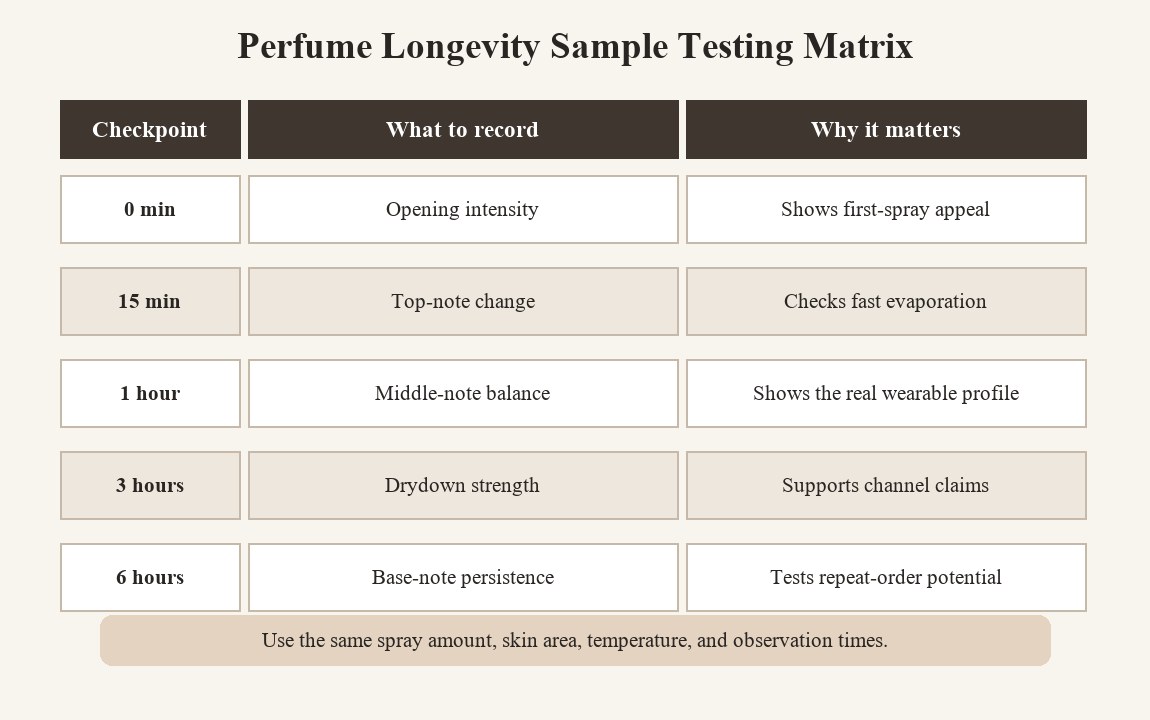
Use a clean skin area without scented lotion. Keep the spray distance, number of sprays, room temperature, and humidity consistent. Record the opening, then check the sample at 15 minutes, 1 hour, 3 hours, and 6 hours. At each checkpoint, note intensity, recognizable notes, balance, and any sour, harsh, or flat change.
Skin, blotter, and fabric results should be recorded separately. A fabric result can help evaluate packaging, wardrobe use, or gift-channel claims, but it should not be presented as the same experience as wearing the perfume on skin.
The test record should also capture the bottle size, sprayer type, sample code, and date of evaluation. These details make a later comparison possible when several versions share similar names. A buyer can then separate a formula problem from a packaging problem, such as an uneven mist or a cap that does not seal tightly during transport.
Test the Factors That Change Perfume Longevity
Skin, Pulse Points, and Application Amount
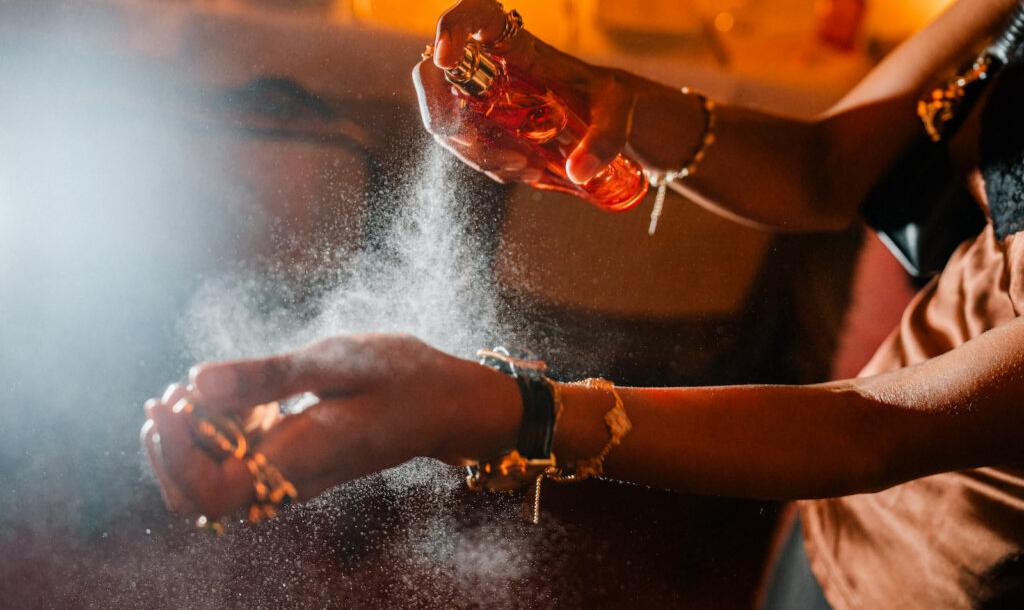
Compare the wrist or neck with a neutral area of clothing, using the same spray amount. Warm pulse points can make a fragrance last two to three times longer than a spray placed on fabric, so a test sheet should identify the application area clearly. Otherwise, a buyer may reject a good formula or approve a weak one for the wrong reason.
Fragrance Profile and Fixative Structure
Test fresh, floral, fruity, woody, musk, and amber profiles as separate groups. The key question is whether the middle and base notes arrive smoothly after the opening fades. Woody and musk materials can help hold the fragrance, while amber and resinous notes often add warmth and depth. A long-lasting cologne should still smell clean after drydown; sheer strength alone is not enough. A well-developed oud-style sample can be included as a woody comparison when the target line needs a deeper base.
Temperature, Humidity, and Storage
Repeat the test in normal room conditions and, when the destination market is hot or humid, in a warmer, controlled environment. Light, heat, and moisture can accelerate deterioration, alter the aroma, and increase the risk of settling. A practical storage check keeps finished perfume in a cool, dry, dark place. The knowledge base also places alcohol concentration above 79% as a way to reduce settling risk.
Aging and Batch Consistency
Freshly diluted perfume may need several weeks to several months of aging for the materials to blend into a smoother profile. Keep an approved sample and compare it with the pre-production and bulk batches. Differences in sweetness, alcohol sharpness, musk depth, or woody dryness can become customer complaints after repeat orders begin.
Conclusion
Perfume longevity is easier to judge when the test is controlled. Concentration, top-middle-base development, fragrance family, pulse-point use, temperature, storage, aging, and batch consistency all deserve a place on the sample record. That approach helps buyers choose a product that can actually support its channel promise. Meiqi can support fragrance development, sample confirmation, OEM/ODM production, and packaging discussions when a distributor is building a line around measurable scent performance. For sample specifications or project details, contact Meiqi.
FAQ
Q1: Is perfume concentration enough to predict longevity?
A1: No. It gives a useful starting point, but the fragrance structure, fixatives, skin, climate, storage, and sprayer can change actual wear time. Sample testing remains necessary.
Q2: How to choose long-lasting perfume for a retail line?
A2: Start with the channel and climate, then compare concentration, drydown, price, and repeat-use comfort. EDP often suits mainstream sales, while richer parfum-style products fit premium, evening, gift, or Arabic fragrance channels.
Q3: Should buyers test perfume on skin or blotter paper?
A3: Use both, but give skin testing more weight for wear-time decisions. Blotters help screen opening and drydown efficiently; skin shows how body heat and chemistry change the scent.
Q4: What should be confirmed with Meiqi before a large volume order?
A4: Confirm the final formula, concentration, test method, approved sample, packaging compatibility, production batch consistency, and the handling process for leakage or quality differences. These details protect the product promise after launch.