Walk into an interview wearing too much perfume and the room notices the scent before it notices the candidate. Keep it within arm’s reach instead. Pick a bottle that is already familiar, spray early, and let the opening settle at home. Citrus, tea, quiet florals, clean musk, and smooth woods are sensible places to look, though the final dry-down matters more than the note list. A favorite evening fragrance may smell wonderful and still feel out of place across a small table. Comfort is the test. The conversation, not the perfume, needs to hold the room.
Start With the Safest Answer: Less Is Better
An interview fragrance lives at conversation distance. It also follows the wearer through a lift, reception area, and perhaps a compact room where the air barely moves. That changes the standard. Outside, the scent may hardly register. Close the meeting-room door and it can suddenly feel much larger.
Use a smaller amount than dinner, a party, or an outdoor event would invite. With a familiar eau de toilette or eau de parfum, that could mean a single light spray. Extrait, dense amber, and forceful oud deserve an even lighter hand. Unsure about the trail? Leave the bottle capped. Fresh clothes, clean breath, and basic grooming already cover the practical side.
Check the Setting Before Reaching for the Bottle
Workplaces sometimes limit scented products because some people are sensitive to fragranced products. The rule may appear in the interview email, at reception, or in a visitor guide. Take the wording literally. A fragrance-free notice is a request to arrive without scented perfume, lotion, or hair mist.
Picture the room as well. Hospitals, clinics, laboratories, schools, care facilities, shared studios, and crowded offices leave little room for a scent trail. On a video call, of course, perfume adds nothing. An unfamiliar building creates the same practical answer: going without it beats making a blind guess.
No sign on the door can reveal how the interviewer responds to fragrance. Industry, age, and dress code offer no useful clue. Keeping the application tiny gives everyone some breathing room. More importantly, it stops a minor grooming detail from becoming the thing that lingers after the meeting.
Choose a Profile That Settles Cleanly
The opening spray is not the part an interviewer will smell. Top notes can fade quickly, while the heart and base become clearer after the fragrance has sat on skin. A bright citrus opening may turn musky. A gentle floral may reveal a sweeter amber base. Test the whole development before deciding that a perfume feels professional.
Fresh Notes Need a Soft Landing
Bergamot and mandarin can bring a crisp start. Green tea, neroli, and light herbs often keep that freshness from feeling flat. Check what happens later, though. A sharp citrus, metallic aromatic accord, or bracing marine note may cut through cool indoor air more than expected. Clean musk, pale wood, or a muted floral heart usually gives the opening somewhere softer to land.
Desert Bloom offers a useful example of why the opening cannot decide the whole impression: bergamot and green mandarin lead into rose, jasmine, light oud, then sandalwood, amber, and white musk. A fresh start can therefore become warmer and fuller later, which is exactly what an interview test wear should reveal.
Woods and Musk Can Work Without Feeling Heavy
Cedar, sandalwood, vetiver, and musk can make the base feel settled. Yet the family name tells only half the story. Smoke, leather, thick vanilla, or resinous amber may bloom after an initially quiet opening. Walk through the reception area during a test wear. If the scent follows several steps behind, it is not the subtle perfume this occasion calls for.
Test the Fragrance Like the Interview Will Happen
Do not make the first full wear the morning of the interview. Try the perfume on an ordinary day, using the same number of sprays and roughly the same clothing layers. Check it after thirty minutes, then again after two or three hours. The later result is more useful than the first minute at the atomizer.
That same dry-down check matters across the fragrance directions developed by MEIQI. A note family can suggest the starting mood, but only a full wear shows whether the fragrance stays quiet enough for a close indoor conversation.
Sit in a small room for a while. Put on the jacket or coat planned for the meeting. Notice whether fabric traps the scent and releases it strongly when moving. A trusted person can stand at normal conversation distance and say whether the fragrance is barely present, comfortable, or distracting. Asking whether it smells “good” is less useful than asking how far it travels.
Skin and clothing products change the result too. A fragranced lotion may seem faint. So may deodorant, shampoo, or fabric softener. Put all of them together with perfume and the result can be surprisingly busy. Strip the test-day routine back so the interview fragrance is the only new variable.
Apply Early and Keep the Scent Close
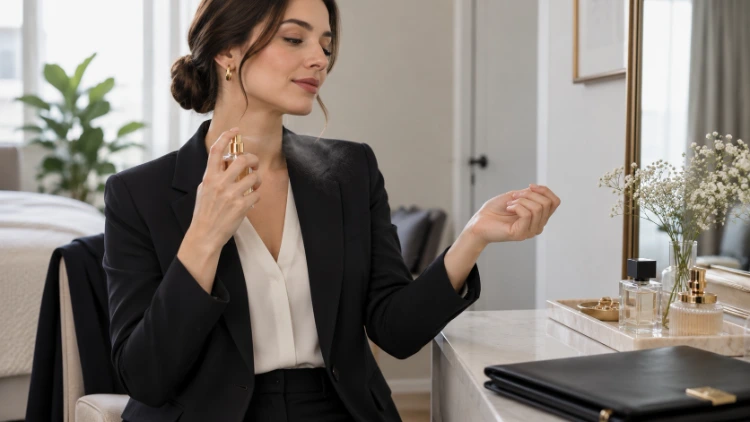
Spray at home. A car park, lift, public washroom, or reception desk is too late and too shared. The trip to the building gives the alcohol-heavy opening time to pass, leaving the quieter part of the fragrance for the actual meeting.
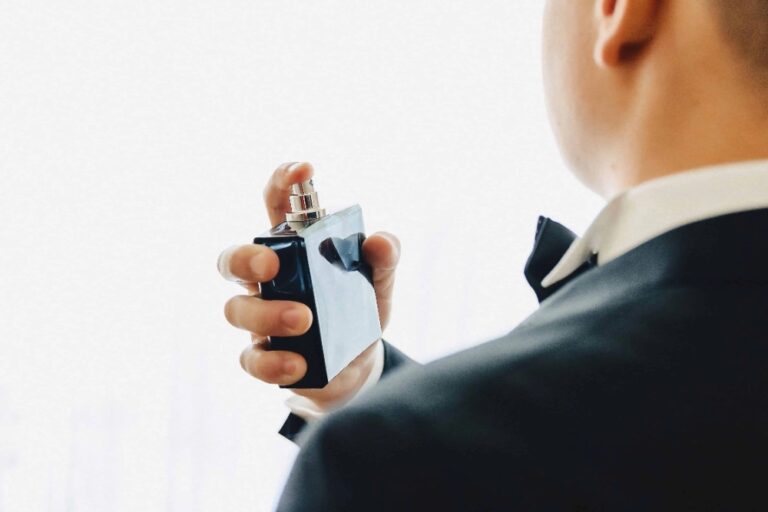
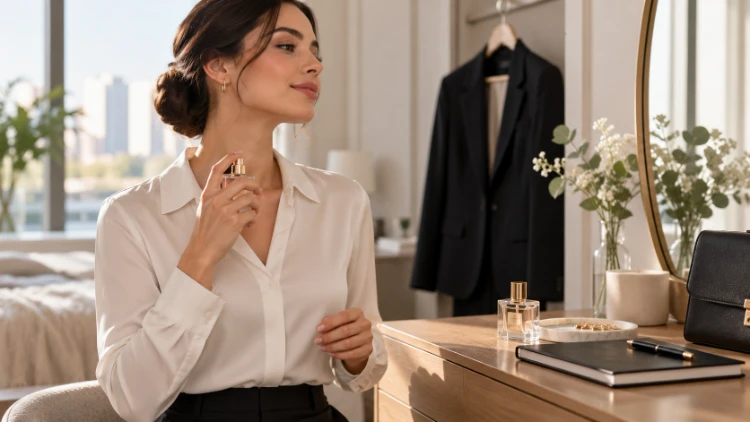
A covered spot high on the chest tends to stay closer than two sprays along the neck. For a light formula, one wrist is another option; leave it alone instead of rubbing. Fabric holds scent for a long time and some perfume marks delicate cloth, so never experiment on the interview outfit. Hair can carry and release fragrance with movement, so it is harder to keep the scent close in this setting.
Leave the travel atomizer at home. Nerves make people second-guess small details, and the nose also tunes out a smell that has been present for a while. A last-minute top-up can double the strength without seeming that way to the wearer. The tested amount is enough.
Use a Simple Final Check
On the day, ask four practical questions. Is there a scent-free request? Has this exact perfume been worn through its dry-down? Can it be noticed only at close range? Does the total grooming routine contain other scented products? Any uncertain answer points toward using less or wearing none.
The best professional perfume is not a badge of seriousness. It is simply a fragrance that does not compete with the conversation. Familiarity helps. A bottle already known to behave quietly on skin is a better interview choice than a new perfume bought for the occasion.
Building a shortlist for later? Browse the MEIQI perfume collection by fragrance profile, then wear two contrasting options on separate days. Fresh, floral, woody, musky, and warmer styles all need time on skin before one earns a place in a close indoor setting.
If you are developing a fragrance concept intended for professional or close indoor settings, build a more subtle scent profile for your project with MEIQI around projection, dry-down, and the intended wearing environment.
FAQs
Q:Should You Wear Perfume to a Job Interview?
A:There is no need to wear it. A familiar fragrance in a tiny amount may suit some workplaces. When the room, policy, or other people’s sensitivities are unknown, bare skin is the lower-risk call.
Q:How Much Perfume Should You Wear to an Interview?
A:For a familiar, close-wearing fragrance, one light spray may already be enough. Stronger formulas may need less, and a scent-free workplace calls for none. The goal is to keep the fragrance inside normal conversation distance.
Q:What Fragrance Notes Are Best for a Job Interview?
A:Try soft citrus, tea, neroli, gentle flowers, clean musk, cedar, or light sandalwood. Then ignore the note list for a while and watch the dry-down. Projection is what decides whether the scent belongs in the room.