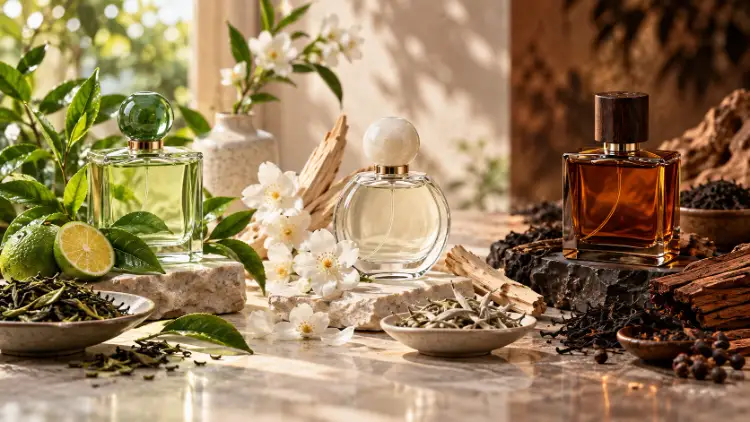
Tea perfume covers more ground than its name suggests. Green tea can be leafy and bright, with a faint bitter edge. White tea may feel airy, floral, or quietly musky. Black tea can turn dry, smoky, spicy, or darkly fruity. Think about the room and the mood first. Cool clarity and evening warmth are different jobs. The label alone cannot make that choice.
Tea accords in perfumery are creative interpretations rather than a literal cup of brewed tea.
A perfumer may combine tea materials with bergamot, jasmine, fig, iris, woods, musk, or spices. That is why two fragrances both described as green tea can smell very different on skin.
Green Tea for a Clear, Easygoing Feel
Green tea often smells like cut leaves, a little herb, and citrus peel. It can be bright without becoming sugary. Bergamot, lemon, mint, bamboo, or pale woods open it up. The effect is easygoing, though not necessarily quiet.
Green tea works especially well when a lighter, less sweet profile is preferred. It slips easily into errands, commutes, and warm afternoons, and it can also suit shared indoor spaces because the scent often reads as fresh rather than dramatic. That does not mean every green tea perfume is quiet; application still controls the trail.
If green tea feels too sharp, look for floral or musky support. Jasmine, orange blossom, rose, or white musk can round the edges. If it feels too thin, cedar, sandalwood, or a small amount of amber may give the fragrance more body.
White Tea for Sheer Softness
White tea gets called clean, transparent, delicate, or gently floral. Musk, pale woods, citrus, and linen-like notes can sit behind it. It suits a polished mood when obvious sweetness is not wanted.
The word “white” doesn’t guarantee a creamy perfume. Some formulas are cool and airy. Others are warm because of musk, vanilla, or sandalwood in the base. Test the later stage before deciding that a white tea fragrance is too light.
White tea fits a quiet morning, a book, a train ride, even a low-key dinner. It’s also easy to layer with clothing and accessories because it doesn’t demand a strong visual style. Keep the dose modest until the formula’s projection is known.
Black Tea for Depth and Contrast
Black tea usually feels darker than green or white tea. Dried leaves, smoke, tobacco, leather, wood, fruit, and spice may appear. Bergamot lifts the top; patchouli, cedar, amber, or vanilla gives the base weight.
Black tea often feels most natural on cool evenings, especially when cedar, spice, or amber gives the base more weight. The same woody black tea can feel noticeably heavier at a warm daytime lunch. The fragrance has not failed; the setting has changed.
There is a wide range within the profile. A black tea perfume may be elegant and smooth, or it may feel bitter and leathery. If smoke is not appealing, choose one supported by iris, rose, fig, or soft musk. If the scent feels too sweet, look for dry woods or aromatic herbs.
Match the Tea Accord to the Setting
For a busy daytime setting, green tea or transparent white tea can feel uncomplicated. On a quiet evening, black tea with woods or spice may feel more natural. A floral tea blend can bridge the two when softness is wanted without a sugary gourmand effect.
A room changes the answer. Amber, vanilla, and smoky woods can swell in a warm restaurant. On a cool walk they may feel just right. Start with one spray in a close room and wait. You can add a little later; pulling a cloud back is harder.
Clothing also changes the experience.
A scarf or sweater may hold tea and musk notes longer than bare skin. Test a hidden fabric area before spraying delicate or pale materials. The skin test remains the clearest way to understand the full development.
Test Tea Perfume Without Losing the Differences
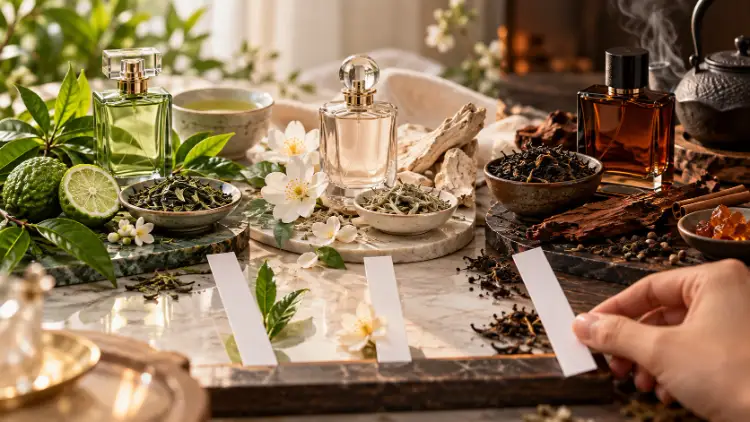
Smell each tea style on a separate blotter. Write the spray time and any first impression in plain words: leafy, airy, smoky, floral, dry, sweet, or woody. Don’t decide after one sniff.
On a rushed morning, return after twenty minutes, then again later. Green tea may become muskier. White tea may reveal woods. Black tea may lose its smoke and leave a soft amber trail. Those changes are part of the fragrance, not a flaw.
Once testing on skin, use one perfume per wrist or test on different days. Keep the application equal. Two large sprays of one scent and one tiny spray of another do not create a fair comparison.
Before narrowing the choice, browse the MEIQI perfume collection for different fresh, floral, woody, and musky directions, then use skin testing to decide which structure fits the tea mood you want.
A note list is a map, never a promise. Skin, climate, and dosage still decide the final impression.
Choose by Feeling, Not by Tea Name Alone
Tea notes can sound calm, fresh, elegant, or natural, but the supporting materials decide the personality. Green tea with citrus feels different from green tea with musk. White tea with jasmine is not the same as white tea with amber. Black tea with rose can be smoother than black tea with leather.
Think about the feeling wanted at the end of the wear. Is it a clean shirt, a quiet garden, a smoky library, a bright morning, or a warm cup beside a window? That image helps narrow the style without pretending that a note name predicts every detail.
Notice the Supporting Notes
Tea is often a bridge between other fragrance families. Bergamot and lemon make an accord brighter. Jasmine, rose, or orange blossom gives it a floral lift. Fig can add soft green fruitiness. Cedar, sandalwood, patchouli, and amber make the base feel warmer or darker, while musk can smooth the edges and keep the scent close. For project briefs, MEIQI can build a tea concept around the supporting notes and mood rather than the word “tea” alone.
If a tea perfume does not feel right, identify the supporting note before ruling out the entire tea profile.
A smoky black tea may be the problem, not the tea idea. A sweet vanilla base may be too rich, while a dry cedar version could feel comfortable. For a concrete reference to the supporting structure, MEIQI’s Desert Bloom combines bergamot and green mandarin with florals, sandalwood, amber, and white musk, showing how bright top notes and a soft musky base can shape an airy direction. Reading the full note list and testing the dry-down helps narrow the next sample.
Climate changes the balance as well. Warm air can make sweet, musky, or ambery tea blends feel fuller. Cool air may make citrus and green facets stand out. Use the first wear as information, then adjust spray count and timing rather than assuming every tea perfume behaves the same way.
Sample cards also help when shopping online. Keep them away from cooking smells, scented laundry, and candles. A clean comparison makes small differences easier to notice and reduces the temptation to choose only the loudest opening.
A three-sample comparison can make these differences easier to notice: a green tea with bergamot may feel brightest early in the day, a white tea with musk may stay close to the body, and a black tea with cedar may become smokier later. Each profile can suit a different setting, so context is more useful than a rigid best-to-worst ranking.
If you are developing a tea-inspired fragrance concept, build the right tea fragrance profile for your line with MEIQI, from the first scent brief through sample review.
FAQs
Q:What is the difference between green tea and black tea fragrance?
A:Green tea is usually the brighter, leafier option. Black tea leans darker and drier, sometimes smoky, fruity, or woody.
Q:What does white tea perfume smell like?
A:It is often sheer and airy, with a light floral or musky feel. The dry-down may add creaminess or pale woods.
Q:Which tea perfume is best for daily wear?
A:Green tea and transparent white tea make easy daytime starts. A lighter black tea works too, especially with citrus or soft woods.