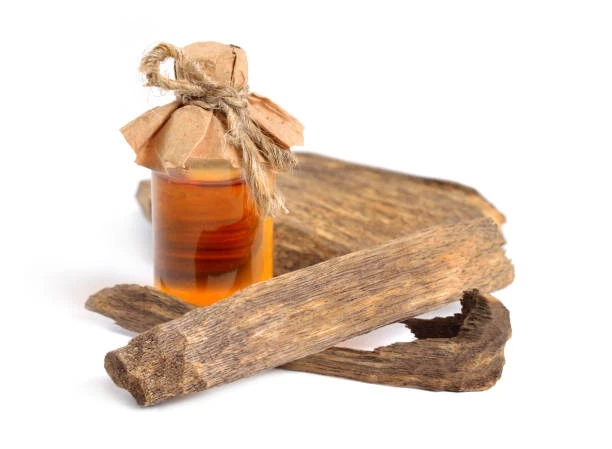
Oud can provide a fragrance with more depth, warmth or uniqueness of the woody note. It can also close up a sense of space and/or density in a composition, if the neighbouring notes do not create sufficient contrast or distance. It’s not only to intensify or tone down oud. To select what will be its role and to analyze how the whole fragrance surrounds it.
What makes an oud fragrance feel rich or heavy?
A lot of the time, “rich” is used to describe complexity, warmth and something that leaves an impression on you. The term “heavy” can refer to density that is too much, sweetness with an intensity or a composition which does not feel easy in the desired setting. These are also subjective words, so they need to be tied to facts observed during sampling and review.
Treat oud as a role in the composition
Oud can present itself as a lead player, prop up the woody structure, or act more like glue to create fullness beneath other brighter notes. It is a result of the complete formulation, not just any specific ingredient. To this end, certain briefs may want something dry and smoky or leathery; others will crave a more woody amber smoothness. What is the first that customer should see, and what will stay on later.
This is not to say that all oud fragrances smell the same. It can represent multiple scent perceptions and materials, and sometimes the complete creation will associate it with woods (woods), spice, leather/leather notes (leathery tones), amber or floral/green aspects. You should judge a sample against where it was meant to go, not what oud “should” smell like.
How can contrast keep the scent balanced?
A contrast can give a rich or dark composition more dimension. Something bright, fruity or herbaceous is lift; a dry wood feature forms base; something timidly floral or spicy moves. These are suggestions, not a recipe in stone and sit down with the perfumer to take creative directions. Whether it’s the right combination depends on your brief, target wearer & market.
Build a clear scent journey
Ask what you should experience at the opening, through heart and in later dry down. A sharp opening makes an oud perfume easier to read at first smell; when the heart warms, it can stay full-bodied as well. The end phase must be connected and linked back to the beginning instead of an entirely different scent. Sometimes a clear journey is more important than adding extra notes.
Note when a sample seems thick and where it has that impression. Is the opening already dense? Does sweetness build later? Does the dry-down lose definition? Is the overall intensity higher than is appropriate for its intended use? Each answer leads to a separate discussion with the development team. If the true problem here is a surrounding accord or proportion of the composition, perhaps “less oud” just isn’t what you need.
How should a brand evaluate oud perfume samples?
Compare under the same conditions and be sure to label each sample, review it at multiple stages. Using layman’s terms, write down the opening, heart and dry-down. In case of multiple evaluators collecting notes separately before discussing the result will also help in identifying if it is a general concern or more personal.
Give feedback that preserves the intended character
Share with the team what is working and not. To give you an example, actions like “keep the dry woody depth but just airier out of the opening” is far more useful than “lighter”. If the perfume is off in some way—as when a fragrance that otherwise might be rich turns out to be merely cloyingly sweet, your direct response should also reflect this. If the oud character is gone before you know it, say when and what hangs around.
Use a ranked priority list. Does the product need to feel original, wearable and distinctly an oud fragrance? The team must decide which one drives. Many changes at the same time is a blur of identity. Ask for one specific edit, then compare the next sample against the same brief.
Match the development direction to the customer
An oud fragrance created for a niche market may lend itself more heavily toward the character than one made for mass gifting or everyday use. Put a thought on price position, retail channel, geographic place of sales, season and presumably the customer will be familiar with oud; These are positioning decisions, not statements about the preferences of an entire market.
Use a short review scorecard
Four ratings instead of one classified assessment: how pronounced is the oud character, how sweet it becomes as the formula builds, where density starts to register on its own, and finally whether the dry-down satisfies the purchase intent. Add one plain-language note explaining each rating, especially when evaluators” comments contradict each other. A sample can feel top-heavy at the start yet rich in the base; recording each stage separately provides usable guidance. In the next iteration, vary only one priority at a time while keeping other overall qualities constant. This makes it easier to determine whether the adjustment has actually made a better balance or rather shifted away from what you expected should be Oud.
What should go into an oud fragrance brief?
Indicate the ideal consumer, application occasion, preferred out interpretation, scent references or notes/effects to avoid, product concept, format and packaging direction, and market constraints. What is the balance? Smoky/ smooth, dry / sweet or bold versus close to skin. If the brief mentions “luxury” or “long-lasting,” talk about what this means for your audience.
Meiqi is a private-label, OEM and ODM fragrance support solution company – it has scent direction & samples available on the website. Directly confirm the options available and with in project scope. Overview of Meiqi’s OEM / ODM perfume services range to shape the product discussion. For a research inquiry, reach out to the Meiqi team with your target customer, desired intensity and open sampling questions, or email saleyang@yongqigood.com.
Build the brief around an audience and use case
Your audience by specifying who will wear it, when and where they are wearing it and what impression the fragrance should leave. This is why a buyer needs that evening fragrance, or perhaps they’re looking for something lighter to wear during the day, so someone along those lines want an updated local take of it. They are directions of development, not unchanging formulas. Mark down which attributes are critical and which can be played with, and then measure each sample against that description. That provides evaluators a common reason to approve or update a version instead of the individual association with oud.
Simultaneously, establish realistic boundaries. Assuming at least 3 of these pieces for each release, record the target retail position/format/fill size along with any other numbers/launch markets that we may have expected quantity where possible For the project’s reference, if it shows woodiness/sweetness/texture/projection; do not treat a brand name as an instruction for your formula. Keep the packaging, sample code and approval record together. Altogether, those details allow the fragrance partner to react with something more on-brand and determine questions requiring a call before another sniffing session.
Conclusion
Oud is meant to be a rich component within the composition without overshadowing, but when it has its role defined and space for its character then there’s beauty. When density, sweetness or intensity trumps the intended experience it can be cloying. This actionable distinction that brands can make, they must first define the customer and map out the scent journey so each stage can be checked in order and then provide staged samples with prioritized feedback. That allows the scent to remain unique but makes its balance an intentional product choice.
FAQs
Q1: Does every oud perfume have to smell smoky or strong?
A1: No. Oud can be interpreted in different ways within a composition. The brief should describe the desired character and intensity rather than rely on one assumed oud profile.
Q2: What should I change if an oud sample feels too heavy?
A2: First identify when and how it feels heavy: opening, sweetness, overall intensity or dry-down. Preserve what works, then ask the development team to focus on the highest-priority adjustment.
Q3: Can oud work in a fragrance for everyday wear?
A3: It can be, depending on the composition, its intensity and the intended wearer. Instead of treating oud as automatically formal or bold, evaluate samples in the context of who the product is ultimately for.