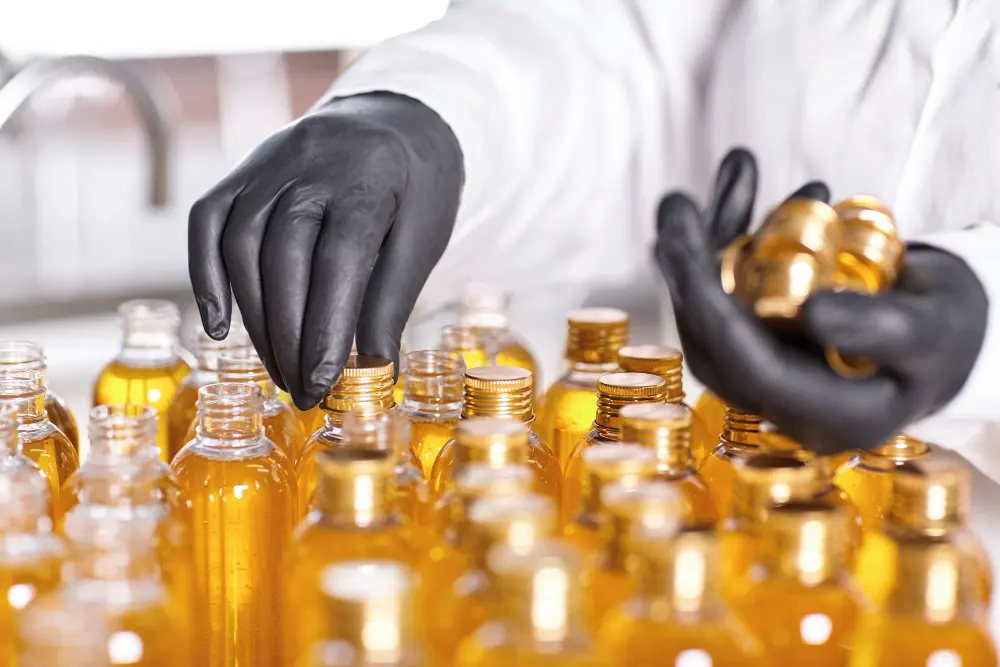
Most people meet perfume at the very end of the story. They see the bottle, test the spray, maybe notice the cap weight or the box finish, and make a decision in seconds. What they do not see is the long stretch before that moment, where the real value is built or lost. A fragrance that sells well is rarely just a nice smell. It is a formula that survives scale-up, a liquid that stays clear, a filling line that stays accurate, and a package that still works after shipping, storage, and repeated use. That matters even more now because fragrance is not a small side category anymore. Euromonitor expects fragrance to drive 23% of beauty’s absolute growth between 2024 and 2029, and Grand View Research estimates the global perfume market at nearly USD 60 billion in 2025. Buyers are paying closer attention, and factories that only look good on a product page are getting exposed faster.
How Does a Perfume Idea Become Something a Factory Can Actually Make?
This is where a lot of weak suppliers sound convincing. They talk about creativity, trends, and custom scents, which all matter, but none of that helps if the formula falls apart once the batch size grows. A fragrance is not production-ready just because it smells good in a trial bottle. It has to behave well when the raw materials are weighed at scale, when the concentrate meets alcohol or a non-alcohol carrier, and when the finished liquid has to stay stable inside a real pack. That is the point where perfumery stops being purely creative and starts becoming commercial in the best sense of the word.
What do perfumers start with before anything is blended?
They start with structure. Good perfume still follows a simple truth: the opening matters, the heart carries the identity, and the base does the staying work. Top notes are usually brighter and more volatile, heart notes shape the personality, and base notes carry depth and persistence for hours. That sounds familiar because it is the foundation of how people actually experience fragrance on skin. Raw materials follow the same logic. Citrus and light fruits often sit in the top, florals and spices take the center, and woods, musk, and amber-style materials hold the base. On the sourcing side, modern perfume work usually draws from three pools: natural extracts, synthetic aroma molecules, and older animal-derived references that are now often replaced by safer or more practical alternatives. For buyers, the useful takeaway is simple: a serious factory is not just collecting ingredients, it is building evaporation speed, projection, and wear in layers.
Why does a lab sample often feel easier than a production batch?
Because small samples forgive a lot, but scale does not. Once a perfume moves toward production, tiny shifts in ratio, mixing order, or carrier balance become much less forgiving. That is why professional OEM perfume work leans so heavily on precise weighing, controlled mixing, and early packaging decisions rather than treating them as separate stages. Quantity affects labor, line choice, even bottle selection. Bottle style matters too, because threaded and bayonet systems do not behave the same way in filling, sealing, or later use. In other words, the formula and the final pack are already in conversation long before mass production starts. Buyers who treat the bottle as decoration usually end up learning that lesson the expensive way.
How does Meiqi show that different formulas need different logic?
A useful way to read a factory is to look at how differently it builds two products in the same category. Meiqi’s Desert Bloom and Al Layi are a good example because they are not trying to solve the same job. Desert Bloom is built as a zero-alcohol perfume with 28% natural essential oils, distilled water, and natural solubilizers, then shaped around bergamot, green mandarin, frangipani, Damask rose, jasmine sambac, light oud, sandalwood, amber, and white musk. That formula makes sense for sensitive skin, halal-friendly positioning, and hotter markets where harsh alcohol bite can be a problem. Al Layi moves in another direction. Meiqi presents it as a woody scent cologne with a stronger, denser Arabic profile, built for buyers who want deeper base integrity and more traditional richness. Same factory, different architecture, which is exactly what you want to see from a supplier that claims real formulation ability.
What Actually Happens Once the Formula Moves Into Production?
This is the least glamorous part of perfume making, and it is also where a professional factory quietly earns its keep. Buyers often focus on scent description and bottle look because those are easy to compare. The harder questions sit here: does the liquid stay clean, does the batch stay consistent, does the spray stay even, does the pack survive transport, and does the scent still feel right after resting? That is the part nobody notices when it works and everyone notices when it does not.
How are concentrate and carrier brought together?
At production level, perfume is not simply “oil plus alcohol.” The concentrate has to be brought into a carrier system that supports the intended performance. In many conventional builds, concentrated fragrance oils are diluted with alcohol and sometimes water, and the ratio has to be controlled carefully because unstable balance can lead to settling or inconsistent diffusion. Some formulas then add stabilizing elements to help appearance and wear. That sounds technical, but buyers usually feel the result in a practical way: the perfume either opens cleanly and wears in an even arc, or it feels sharp at the start and tired too soon. Desert Bloom shows one workable answer for a softer, alcohol-free style, while a product like Al Layi shows the other, where a stronger woody structure is meant to hold shape in warmer conditions and over longer wear.
Why do aging, settling, cooling, and filtration matter so much?
Because freshly blended perfume is usually not finished perfume. After dilution, the mixture often needs weeks or even months to age so the materials can settle into each other rather than sitting apart like separate voices. Some factories also allow the batch to rest so waxy residues from plant materials can gather. Cooling then helps remaining sediment solidify, often below 5°C, and careful filtration removes those impurities before bottling. This is one of those steps that sounds easy on paper and shows up brutally in real products when it is rushed. Cloudiness, stray particles, rough edges in the scent, and poor visual finish tend to point back here. A well-finished perfume usually feels smoother because it actually is smoother.
Where do filling and packaging start affecting quality?
Earlier than many buyers think. Once the perfume reaches the line, storage tanks feed the liquid into automated filling stages, then sealing, labeling, inspection, and final packing follow in sequence. Accuracy matters because underfill and overfill create obvious commercial problems, but closure performance matters just as much. A beautiful bottle is not doing its job if the atomizer sputters, the seal leaks, or the collar loosens after shipping. Packaging also carries a quieter burden: it protects the scent itself. That is why experienced factories pay so much attention to bottle type, cap fit, and outer-box readiness before running real volume. Good perfume can be damaged by weak packaging long before the customer ever blames the packaging. They usually blame the perfume.
How Can You Tell a Professional Perfume Factory From a Basic Filler?
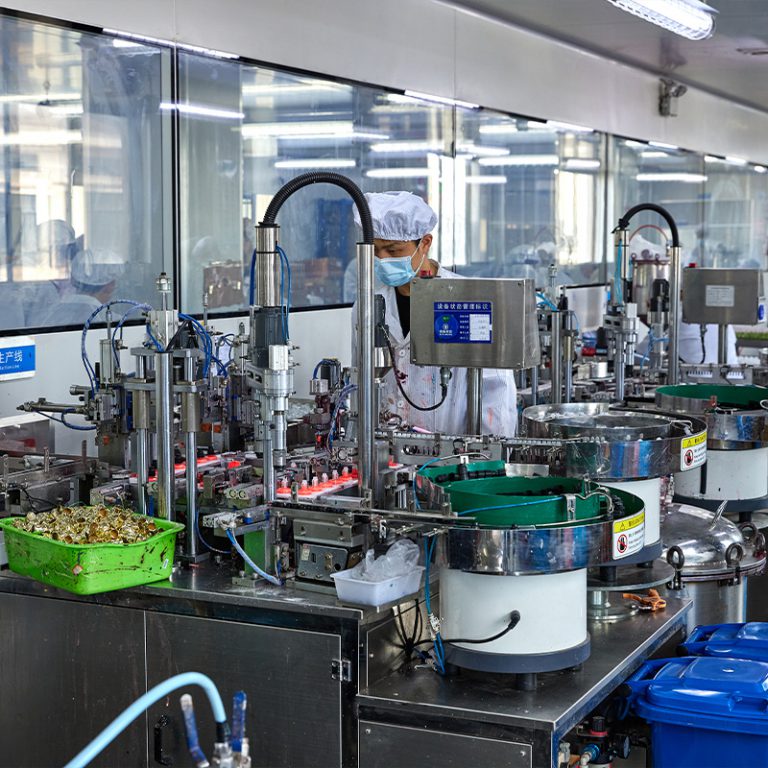
The simplest answer is that a filler can copy a liquid into a bottle, while a real factory can repeat a result. Those are not the same skill. Plenty of suppliers can produce a decent sample. Much fewer can hold the same scent profile, visual clarity, fill accuracy, and packaging performance across batch after batch without drift. Serious buyers eventually stop asking who is cheapest and start asking who stays steady. That is the more useful question.
What kind of process control should buyers actually look for?
Look for the boring details, because that is usually where the real competence sits. Milligram-level weighing equipment matters. Automated mixing matters. In-process testing matters. Clear inspection procedures for raw materials, production stages, and finished goods matter. These do not sound exciting, but they are the backbone of repeatability. If a factory can explain how it controls proportion, blending, filling, and inspection, that is a better sign than any generic promise about premium quality. The files you shared make this point very clearly: perfume OEM work depends on accurate weighing, automated stirring, efficient filling lines, and ongoing testing throughout production rather than a single check at the end.
Why do compliance and quality systems matter even for commercial fragrance lines?
Because fragrance is a regulated product category, not just a creative one. IFRA describes its Standards as the global benchmark for fragrance ingredient safety, with the power to limit, restrict, or ban certain materials where safe use is a concern. On the factory side, quality control also has to go beyond scent matching. Sensory review, chemical analysis, stability testing, and wear evaluation all play a role before a perfume is ready for market. Buyers who skip these questions sometimes assume they are buying “just fragrance,” when in reality they are buying a chain of formulation, safety, packaging, and traceability decisions. Good factories know that. Weak ones usually hide from it.
Why does Meiqi feel more like a manufacturing partner than a simple supplier?
Because the company is presenting more than a catalog. On its site, Meiqi ties product work to a 20,000 m² production base, GMPC certification, ISO9001 and EU REACH credentials, 126 quality checkpoints, a 100,000-level dust-free facility, and a business built around OEM and ODM support. It also frames production in commercial terms buyers actually care about, including low-MOQ customization, bottle design support, and volume output that reaches more than 50 countries. That matters because the stronger signal is not any single claim. It is the way the factory story, the process story, and the product story line up. Desert Bloom shows how Meiqi handles a gentler zero-alcohol build for hot-climate and halal-friendly use. Al Layi shows that it can also hold a darker woody profile with the density many Arabic-style fragrance buyers still want. That is the kind of range buyers tend to remember.
FAQs
Q: How long does perfume usually take to make in a factory?
A: Longer than the sample stage suggests. Once the scent is approved, the batch may still need dilution, aging, optional settling, cooling, filtration, filling, sealing, inspection, and packing. The exact timeline changes with batch size, bottle choice, and packaging complexity.
Q: Do modern perfume factories use only natural ingredients?
A: No, and most serious buyers would not want them to. Natural extracts bring character, but synthetic molecules are often essential for consistency, stability, and scent effects that nature cannot deliver at commercial scale. The strongest factories know how to use both well rather than pretending one category is automatically better.
Q: Why does perfume need time to rest before bottling?
A: Because freshly mixed fragrance can feel disconnected. Aging gives the materials time to blend more naturally, and cooling plus filtration help remove residues that would otherwise affect clarity and finish. The result is usually a cleaner look and a more polished wear experience.
Q: What should a buyer check before choosing a perfume factory?
A: Look beyond scent and price. Check whether the factory can control weighing, mixing, batch consistency, packaging compatibility, inspection, and documentation. Then look at whether its real products support those claims. That is usually where the answer becomes obvious.