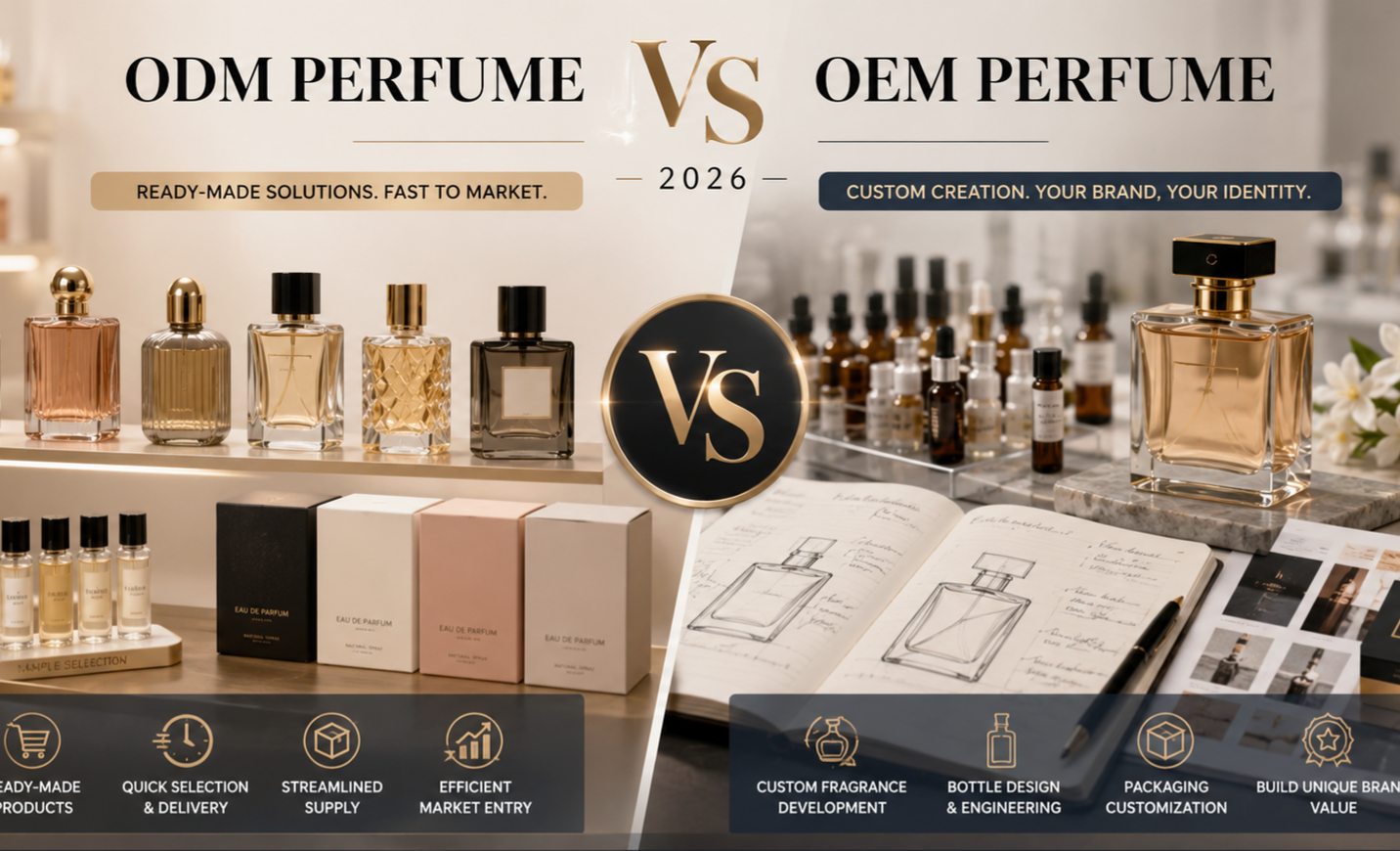
Choosing between ODM perfume and OEM perfume is one of the first decisions a buyer has to make before starting a fragrance project. It sounds like a factory term, but it affects almost everything later: sample cost, launch speed, formula control, packaging freedom, MOQ, lead time, and even how the brand can grow after the first order.
What Are ODM Perfume and OEM Perfume?
What Is ODM Perfume?
ODM perfumes are normally used where the company has pre-existing formulas of fragrances, designs of bottles, packaging structures, or ideas of products to offer. The buyer picks one of these pre-existing ideas and changes just a few aspects like the branding name, labeling design, or packaging.
It is commonly used by buyers who wish to launch into the market quickly. The buyer does not have to develop the whole product from scratch. The company has gone some way in developing the product, which means sampling will be easy to do.
What Is OEM Perfume?
OEM perfume is more buyer-led. The buyer brings a brand plan, scent direction, packaging idea, private label request, or even a formula concept. The manufacturer then helps turn that plan into a finished perfume product through sample development, bottle matching, production, filling, packaging, and delivery.
OEM perfume is better when a brand wants a signature scent, a special bottle style, a certain fragrance family, or a long-term product line that should not look the same as other products on the market.
Which Buyers Are Better Suited for ODM Perfume?
New Brands Testing the Market Quickly
A new perfume brand may not know which scent will sell first. Spending heavily on a fully custom formula at this stage can be risky. ODM perfume gives the buyer a faster route. The brand can choose a ready fragrance direction, adjust packaging, and test sales through online stores, local distributors, or gift channels.
This works well when the goal is market feedback. A buyer can test floral, woody, citrus, oud, or musk directions without investing too much in early R&D.
Distributors Needing Ready-to-Sell Fragrance Lines
Distributors often care about product range, delivery speed, and stable replenishment. ODM perfume can help them add SKUs quickly. For example, a distributor may need men’s perfume, ladies’ perfume, Arabic perfume, or unisex cologne for different channels. Ready product directions can make this process easier.
Meiqi’s product range includes Arabic perfume, oud wood perfume for men, popular women’s cologne, and genderless perfume options. For a distributor, this kind of range can be useful when building a test order across different buyer groups.
Buyers with Limited R&D Budget or Short Launch Timelines
ODM perfume is usually more suitable when the buyer has limited budget or a tight launch window. Since the scent and packaging base already exist, the project may need fewer revisions. This is also useful for seasonal sales. If a buyer needs products for holidays, gift sets, or short-term promotions, ODM can reduce the risk of missing the selling period.
Which Buyers Are Better Suited for OEM Perfume?
Brands Seeking Exclusive Formulas and Stronger Identity
OEM perfume is better for brands that want more control. A signature scent cannot usually be built by choosing a common, ready formula. The buyer may want a specific rose oud, woody amber, clean musk, or fresh citrus direction. They may also need a certain concentration, bottle size, color, box structure, or gift set style.
Private Label Buyers Requiring Deeper Customization
Private label projects often need more than a logo change. Buyers may want different bottle sizes, outer boxes, labels, caps, spray pumps, or carton packing. For premium fragrance lines, packaging details matter a lot because they affect shelf display and perceived value.
Meiqi presents itself as a one-stop customized perfume supplier and supports OEM/ODM services across scent development, production, packaging, and delivery. For private label buyers, this is useful because fragrance and packaging work need to stay connected from the first sample to bulk shipment.
Premium Fragrance Projects with Clear Market Positioning
OEM perfume also makes sense when the buyer already knows the target market. For example, a Middle East distributor may want oud and amber. A lifestyle brand may want clean musk and soft woods. A women’s perfume brand may want fruity, floral, or rose oud. In these cases, a ready ODM option may not be enough. OEM gives the buyer more room to control the scent, packaging, and price level.
When Combining ODM and OEM Perfume Makes More Sense
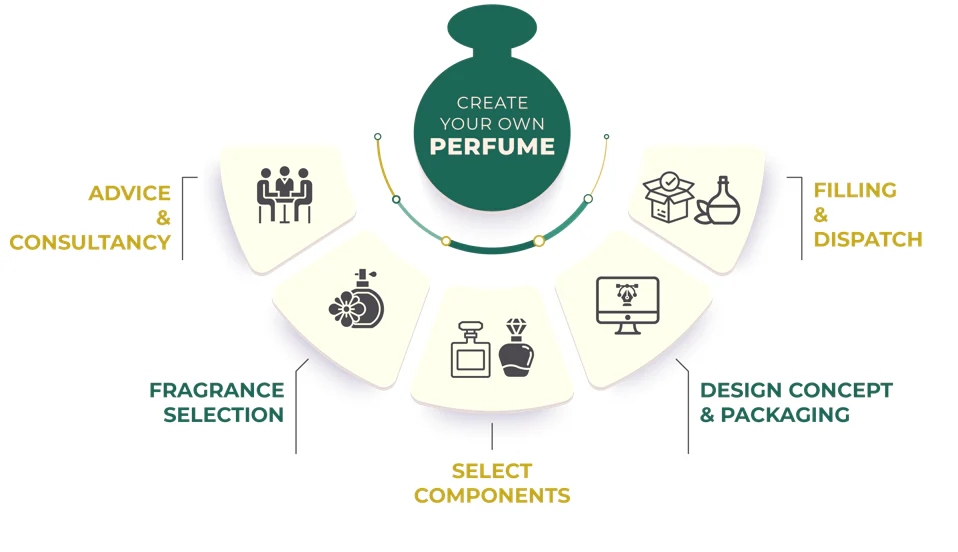
Start with ODM Perfume to Test the Market Response
Many buyers do not need to choose only one model forever. A practical route is to start with ODM perfume. This helps test fragrance family, price range, bottle style, and channel feedback.
For example, a buyer may first test a ready Arabic perfume, a ladies’ luxury perfume, or a unisex cologne. If one direction sells well, the buyer can later develop a more exclusive version.
Upgrade to OEM Perfume After Demand Becomes Clear
Once the market gives clear feedback, OEM perfume becomes safer. The buyer can adjust the scent, improve packaging, build a gift set, or create a better private label line based on actual sales results.
This path lowers early risk. It also prevents buyers from spending heavily on a custom formula before knowing whether customers want that scent direction.
Procurement and Supplier Cooperation Tips
Confirm Supplier Capability Before Sampling
Before starting samples, buyers should check whether the supplier can support fragrance development, sample testing, filling, packaging, labeling, carton packing, and export delivery. Meiqi’s website mentions a 20,000㎡ GMPC-certified production base and 38 modern production lines, which is relevant for buyers checking production scale and repeat-order support.
Clarify MOQ, Lead Time, and Revision Scope
Buyers should not only ask for the unit price. They should also confirm MOQ for each bottle, box, label, and formula option. The sample revision scope should be written clearly. Otherwise, small changes may create extra cost or delay.
Review Quality Control and Batch Consistency
Perfume quality control includes scent, color, clarity, filling level, sprayer function, cap fit, leakage risk, label position, and outer box condition. For OEM perfume, approved samples should be kept for future batch comparison.
Keep Communication Clear After Shipment
After-sales support in perfume trade usually means handling leakage claims, packaging issues, scent differences, missing parts, or reorder questions. Buyers should keep photos, batch numbers, approved samples, and packing records. A supplier with clear communication can solve these issues faster.
Conclusion
ODM perfume and OEM perfume are both useful, but they fit different stages of business. ODM perfume is better for fast testing, lower early cost, and ready-to-sell product lines. OEM perfume is better for exclusive formulas, custom packaging, stronger brand identity, and long-term product planning.
For many B2B buyers, the smarter path is not choosing one forever. Start with ODM when the market is unclear. Move to OEM when demand becomes stable. With a supplier such as Meiqi, buyers can test existing fragrance directions first, then adjust scent, packaging, and production plans when the brand is ready to grow.
FAQ
Q1: Is ODM perfume better for new perfume brands?
A1: It is often more beneficial to go for ODM perfumes when you wish to introduce your brand faster and at a reduced cost. Buyers can also try out customer reaction to the products even before going for customized products.
Q2: What parameters should buyers compare between ODM perfume and OEM perfume?
A2: Buyers should consider factors such as formula control, the concentration of fragrances, the size of the bottle, various types of packaging, MOQ, lead time for samples, lead time for bulk orders, formula ownership, batch consistency, and help to reorder.
Q3: Can Meiqi support MOQ and customization for OEM/ODM perfume projects?
A3: Meiqi offers services for OEM and ODM perfume projects, including fragrance design, sampling, choosing bottles, designing labels, selecting cartons, production, and shipment. The MOQ varies according to the formula selected, the chosen bottle, the packaging strategy, and the quantity of the order placed.
Q4: How should buyers handle maintenance, after-sales, and repeat orders?
A4: For perfume trade, maintenance mainly means checking storage conditions, packaging stability, sprayer quality, leakage risk, and batch records. Buyers should keep approved samples, confirm packaging materials, and agree on after-sales communication before shipment to make future reorder checks easier.