A perfume can make a strong first impression and still fall apart where buyers actually notice the difference. It may smell polished in a sample, then lose balance in bulk production. It may open beautifully, then fade too fast, turn rough in the dry-down, or shift from one batch to the next. That kind of problem usually does not begin at the filling line. It begins much earlier, with sourcing.
In perfume manufacturing, fragrance sourcing is not a side task handled somewhere between product planning and purchasing. It sits much closer to the center than that. It affects the smell itself, the way the formula behaves in production, how stable it stays in storage, and how confidently a manufacturer can repeat the result at scale. A fragrance may look great on paper, but paper does not have to survive production reality. Materials do. That is why sourcing has so much to do with quality in the finished perfume.
Why Does Fragrance Sourcing Matter So Much in Perfume Manufacturing?
The simplest answer is that perfume quality is shaped long before the product reaches the bottle. Once a formula moves into real manufacturing, weak material choices start to show themselves very quickly. Sometimes the scent profile drifts. Sometimes the stability is not as strong as expected. Sometimes the fragrance still smells good, but not in the same clean, controlled way the original sample promised. Buyers may not always know where the issue started, but manufacturers usually do. A lot of it comes back to the materials chosen at the beginning.
Good sourcing gives a manufacturer something more useful than access to ingredients. It gives room to make a fragrance behave the way it needs to behave. That matters even more when the goal is not just to make something pleasant, but to make something repeatable, commercially viable, and strong enough to hold its profile from development to scale.
Sourcing affects scent consistency from development to bulk production
Consistency is usually the first place sourcing proves its value. Fragrance materials, especially natural ones, do not always behave like fixed mechanical parts. Harvest conditions, region of origin, extraction method, storage conditions, and supplier handling can all influence the way an ingredient smells and performs. A rose material can lean fresh or jammy. Citrus can feel bright and crisp, or softer and more diffused. Woods can come across elegant in one lot and dusty in another if the sourcing is not tight enough.
That is why a good manufacturer does not treat fragrance sourcing as a simple buying exercise. The real question is not whether a material sounds attractive in a note pyramid. The real question is whether it supports the intended profile once it enters a full formula and then moves into production conditions.
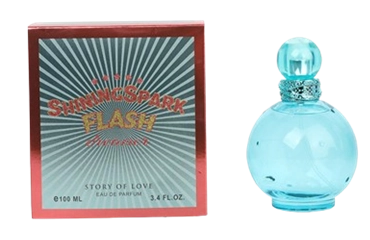
That becomes very clear in a product like Meiqi Desert Bloom. It brings together Damask rose, Arabian oud, and jasmine absolute in a zero-alcohol format, supported by natural solubilizers and micro-encapsulation technology. On the surface, that sounds like a rich, emotional product story. In manufacturing terms, though, it is a demanding build. A floral-oud profile can become heavy very quickly if the rose lacks clarity, if the jasmine feels too thick, or if the oud element pushes too hard. A heat-friendly formula also needs more than surface-level strength. It needs controlled release and a smoother balance over time. That kind of result depends heavily on disciplined sourcing from the start.
Ingredient quality influences stability, performance, and final user experience
Sourcing also affects what happens after the first spray, which is where many perfumes either earn their value or lose it. A fragrance is not judged only by the opening. Buyers notice how long it lasts, how it moves through the heart, whether the base stays smooth, and whether the overall experience feels refined or uneven. Materials that look acceptable in a simplified evaluation can become much less convincing once the product is worn in real conditions.
That is part of what makes sourcing such a practical manufacturing issue rather than a purely creative one. A material may smell attractive on its own and still be the wrong fit for the formula. It may create noise instead of lift. It may fade too quickly. It may flatten the transition between stages of the scent. These are not abstract perfume problems. They affect whether the final product feels premium, dependable, and worth repeating.
A product like Meiqi Signature Blend shows the other side of that decision-making. It combines bergamot peel, vetiver root, and lavender absolute with synthetic fragrance oils, denatured alcohol, and fixatives to build a brighter and more structured wear profile. That is a different sourcing logic from Desert Bloom, and it should be. One formula is designed around softness, alcohol-free comfort, and a richer oriental-floral expression. The other aims for a fresher opening, steadier projection, and easier everyday wear. The important point is not that one approach is superior. The important point is that fragrance quality depends on materials being sourced for the performance the formula actually needs.
What Parts of Perfume Quality Are Most Affected by Fragrance Sourcing?
This is the point where buyers usually start to look beyond the scent description and ask better questions. They want to know what sourcing really changes in the finished product. The answer is broader than smell alone. Sourcing affects odor profile, batch uniformity, shelf behavior, regulatory readiness, production control, and even the way the fragrance works with the packaging system. Once you look at it from a manufacturing angle, it becomes clear that sourcing is tied to far more of the product than most people assume.
Raw material origin can change odor profile, purity, and batch uniformity
Origin matters because ingredients carry their own character long before they are blended into a finished perfume. Citrus materials extracted by cold pressing do not behave the same way as materials obtained through other methods. Floral ingredients can shift depending on how they are processed and preserved. Some materials hold a cleaner and narrower profile, while others bring more texture, depth, or complexity. That difference is not just technical background information. It changes what the wearer smells.
For manufacturers, this has a very direct implication. If the target fragrance profile depends on brightness, delicacy, creaminess, softness, density, or a certain kind of lingering warmth, sourcing decisions have to support that exact outcome. Price alone is not a safe guide. A lower-cost material may save money at the procurement stage and then create problems later through inconsistency, off-notes, or rework. A better-suited material often protects the formula in more than one way. It helps the fragrance stay closer to target and makes scale-up less risky.
This is one reason experienced buyers pay attention to sourcing capability rather than only fragrance descriptions. A scent profile can be copied loosely. Stable quality is much harder to fake.
Supplier reliability can influence compliance, lead times, and production control
Supplier quality also matters because perfume manufacturing does not happen inside a creative vacuum. Fragrance products move through compliance checks, documentation requirements, production schedules, packaging compatibility reviews, and shipping realities. If one part of the supply chain is unstable, the problem rarely stays in one place. It usually spreads.
A supplier that cannot maintain steady material quality can affect batch control. A supplier that cannot provide clear documentation can slow regulatory work. A supplier that delivers with poor timing can disrupt planning and force substitution decisions that weaken the formula. In other words, reliable sourcing helps keep a fragrance stable not only in smell, but in operations.
That is why stronger manufacturers usually build quality control around the full process instead of treating fragrance oil as the only thing that needs attention. Raw material checks matter. In-process inspection matters. Finished product testing matters. Stability observation matters. Packaging compatibility matters too, because a fragrance that performs well in formula still has to behave properly in the actual bottle, sprayer, and storage environment. Buyers sometimes focus on the romance of scent creation, but manufacturing quality is often decided by quieter things like consistency, compatibility, and control.
How Can Manufacturers Build Better Quality Through Smarter Fragrance Sourcing?
Better sourcing usually comes from discipline rather than drama. There is rarely one dramatic move that fixes quality. What works is a more grounded process: choosing suppliers carefully, validating materials early, testing in the real formula rather than in isolation, and making sourcing choices based on end-use rather than broad assumptions about what sounds premium.
That last point matters more than people think. “Premium” is not a useful standard if it is disconnected from the product goal. A formula meant for hot-weather wear, skin comfort, and soft diffusion needs different materials from a formula built for stronger lift, brighter top notes, and wider everyday appeal. When manufacturers understand that early, the sourcing becomes sharper and the product usually becomes more convincing.
Evaluating suppliers with testing, documentation, and sample validation
A serious manufacturer does not stop at finding a supplier with the right catalog. The real work starts after that. Materials need to be evaluated in the actual context of the formula. They need to be checked for odor performance, compatibility, and repeatability. A fragrance can smell promising on a blotter and behave very differently in alcohol, in a water-based system, or inside final packaging over time.
That is especially important when the formula is doing something more specialized. An alcohol-free structure like Desert Bloom depends on the relationship between fragrance materials, the carrier system, and the release behavior. If those parts are not aligned, the result can lose elegance very quickly. A more conventional perfume structure like Signature Blend depends on a different balance. Its naturals, synthetics, alcohol phase, and fixative support all need to move in the same direction if the scent is going to feel smooth rather than sharp or scattered.
The manufacturers that handle this well tend to work in a more methodical way. They validate samples seriously. They look at documentation. They test in the intended base. They think about scale before scale becomes urgent. That does not make the process glamorous, but it does make the product more dependable.
Aligning fragrance sourcing with formulation goals and long-term production needs
The strongest sourcing decisions are usually the ones tied closely to the final use case. Not every perfume is trying to solve the same problem. Some need to feel soft and skin-friendly. Some need stronger projection. Some are built for premium positioning, while others need to balance quality with broader commercial accessibility. The sourcing should follow that reality, not fight against it.
That is why connected development matters. When fragrance sourcing, formulation, production planning, and packaging are treated as one system, the quality tends to hold together better. Problems are easier to catch early. Materials are chosen with more intention. The final product feels less like a nice idea that barely survived manufacturing and more like something designed to work from the beginning.
For buyers, that distinction matters. A perfume should not only smell attractive in a sample meeting. It should remain stable in production, repeat well in future batches, travel well through storage and shipment, and still feel like the product it was supposed to be. That is the real standard. Fragrance sourcing has a great deal to do with whether a manufacturer can meet it.
FAQs
Q: What is fragrance sourcing in perfume manufacturing?
A: Fragrance sourcing is the process of selecting and securing the materials used in a perfume formula, including natural extracts, synthetic aroma ingredients, and supporting components that affect smell, stability, safety, and repeatability.
Q: Can poor fragrance sourcing affect perfume consistency?
A: Yes. If the materials vary too much in odor profile, purity, or performance, the fragrance can shift from batch to batch and feel less controlled once it moves into larger-scale production.
Q: Why are synthetic fragrance materials still important in perfume manufacturing?
A: Because they often help with consistency, stability, and wear performance. In many modern perfumes, natural and synthetic materials work together to create a result that is both expressive and manufacturable.
Q: How does sourcing influence perfume longevity?
A: It affects how the top, heart, and base behave over time, and it also affects how the fragrance works inside the full formula. Better sourcing often leads to a smoother evolution on skin and a more reliable wear profile.
Q: What should buyers ask a perfume manufacturer about fragrance sourcing?
A: They should ask about supplier screening, sample validation, batch consistency, material documentation, stability testing, and how the manufacturer checks compatibility between the fragrance, the formula base, and the final packaging.