A perfume stability study should compare defined temperature conditions and light exposure with a protected reference sample, using the intended formula and package. The goal is to explain an observed change and its product risk, rather than collect photographs of bottles that have aged in unknown conditions.
A stability review asks whether a formula and its intended packaging continue to meet agreed quality expectations under defined conditions. It is not a single universal test that proves a product will behave identically in every climate or supply chain. Brands should begin by identifying the concern: color change, odor shift, visible haze, sediment, leakage, pump performance, or interaction with packaging. The question determines what samples to prepare, what conditions to use, and what observations to record.
A written plan helps the team distinguish screening from formal validation. An early project may compare a few formula and package combinations to identify obvious risks. A later approval may require a more structured protocol agreed with the manufacturer or the brand’s quality team. State the purpose and limitations of each exercise so that an exploratory result is not presented as a broad shelf-life guarantee.
Which production-stage sample represents the perfume?
Stability samples should represent the intended formula, fill, closure, and primary packaging. A bulk liquid in a laboratory vial cannot reveal every interaction that may occur in a finished bottle. If the cap, liner, pump, dip tube, decoration, or coating may contact the formula or affect light exposure, include the relevant components. Identify the formula revision and component lot so any observation can be traced to the sample that produced it.
Use enough replicate samples to support the observations the team intends to make. Keep a control sample under the agreed reference condition. Label each sample with its identity, condition, date placed, and orientation. If different fill levels or headspace conditions are relevant, document them rather than treating them as incidental. Clear sample management prevents confusion when several conditions are inspected over multiple time points.
Sensory evaluation, chemical analysis, stability testing, and wear assessment review different aspects of a fragrance. Stability work includes exposure to temperature and light conditions; sensory work checks whether the aroma matches the intended profile. These activities answer related questions, but a pleasant smell at the end of a short trial cannot establish a product’s whole shelf life.
Review Meiqi’s fragrance and package development process and OEM/ODM project development when defining the next sample request.
How should heat and light exposures be selected?
Temperature and light conditions should reflect the question, the product’s likely distribution, and the organization’s established quality procedures. A screening comparison may use more than one controlled condition, but buyers should not choose extreme settings just to accelerate a conclusion without understanding what the result means. Accelerated exposure can reveal a concern; it does not automatically translate into a precise real-time shelf life. The protocol should state the equipment, exposure, duration, and limits of interpretation.
Set the exposure plan before judging results
Light exposure also requires control. Direct sunlight, laboratory illumination, and protected storage are not interchangeable conditions. If the bottle is tinted or opaque, evaluate both the product packaging and any relevant exposed sample used as a comparison. Record whether samples are covered, the source of light, and their position. A small change in arrangement can create unequal exposure and make comparisons less reliable.
Perfume manufacturing moves through blending, dilution, maturation, cooling, filtration, and filling. When selecting a reference sample, ask whether it represents the stage that will actually be sold. An early development blend and a finished, filtered product may not be an appropriate comparison pair. Record the preparation stage so the study does not confuse manufacturing differences with deterioration during storage.
What changes should the review track over time?
Before testing, decide what will be inspected and how. A checklist might include appearance, color, clarity, odor, visible particles, leakage, closure condition, spray pattern, and any other product-specific measure. Use consistent lighting and background for visual comparison. Where an instrument or formal method is required, record its calibration or method reference according to the quality system. Sensory comments should identify the evaluator and should not be treated as interchangeable with an instrumental measurement.
Track sensory and physical observations separately
Define acceptance criteria before results are known. Criteria may be qualitative for a screening exercise or formally specified for release. If the team will compare against an approved reference, keep that reference under the same controlled storage and clearly identify it. Write down what constitutes a meaningful change and who has authority to approve an exception. This avoids shifting the criteria after an unexpected result appears.
Packaging can include glass, plastics, metals, seals, and nozzle components. Review the perfume with those materials for compatibility, including color change and unwanted interaction. That makes packaging compatibility part of the study design. A bottle may retain liquid without preserving every expected property of the fragrance or dispensing system.
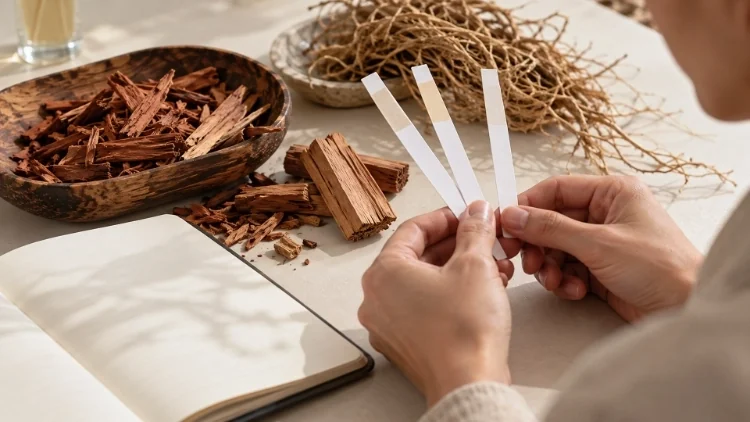
How can the package be separated from formula effects?
A stability change may arise from the formula, packaging, storage condition, or handling. If a sample changes, compare it with the control and examine whether the change appears across every package configuration. A problem limited to one closure or coating suggests a different follow-up from a change seen in all samples. Do not jump to a single cause from one observation. Record the evidence, preserve affected samples, and ask the supplier or quality team to investigate through an agreed process.
Package compatibility can include more than visible leakage. A change in odor, color, clarity, or spray behavior may require investigation even if the bottle remains intact. Conversely, a visible variation may not automatically indicate a safety or performance issue. The appropriate response depends on the product requirements and qualified assessment. Keep the technical conclusion within the evidence available and distinguish observation from confirmed root cause.
Meiqi coordinates formula direction with bottle, decoration, label, and box options. Its production reference is the buyer-approved sample plus confirmed specifications, supported by checks of incoming components, filling, assembly, and finished goods. Buyers can use that coordination to identify which formula and package versions belong in a perfume stability study, while agreeing the actual testing scope with the responsible technical team.
The quality controls for perfume production can frame the handover discussion. plan a perfume stability review before treating an open question as an accepted specification.
What evidence should the study file retain?
A useful stability record includes the protocol version, sample identifiers, formula and component revisions, storage conditions, inspection dates, measurements, photographs, deviations, and reviewer decisions. Store results in a way that connects them to the product version that may eventually be sold. If a formula or package changes, assess whether existing data remain relevant or whether additional evaluation is needed.
When communicating with a manufacturer, send the observation log and a concise description of the decision needed. Ask what further checks are appropriate and who will approve them. Avoid asking a supplier to confirm a shelf life from a short screening test. A careful record gives the team a basis for deciding whether to continue, revise the packaging, adjust the formula, or run a longer study under the applicable quality plan.
Imagine a hypothetical review led by Daniel. One bottle has sat beside a sunny showroom window; another came from a closed cabinet. Their colors differ. Daniel cannot conclude that the whole batch is unstable because storage histories differ. He records the observation, asks for matched specimens, and defines light exposure separately from the other temperature conditions. The next comparison answers a clearer question.
If a difference appears, examine the control first. Has the reference sample also changed? Was the closure opened repeatedly? Did the study use the final decorated bottle or only a plain development container? These questions do not excuse a failure. They help determine whether the finding concerns the formula, the package, sample handling, or several factors together.
Avoid assigning a universal temperature, duration, or allowable color shift from an unrelated product. The agreed protocol should state conditions, observation times, comparison method, and acceptance criteria. Where a laboratory proposes accelerated exposure, ask how the result supports the intended claim and what real-time information is still needed. A severe stress result is not automatically a retail shelf-life forecast.
The final record should explain the decision in ordinary language: what changed, under which condition, against which reference, and whether follow-up remains open. That is more useful to procurement than a bare “pass” stamp. It also helps the team judge whether a future formula or pump change requires a focused repeat check.
Conclusion
Use stability testing to make an informed product decision. Match the specimens, define storage conditions, protect the comparison reference, and record both sensory and packaging compatibility findings. Keep the limits of the evidence visible when discussing shelf life. Meiqi can help connect the selected fragrance with the bottle and packaging details that need review, so your next sampling request starts with an agreed product configuration and a clear technical question.
Email Meiqi about stability conditions with the sample reference, target market, and the decision your team needs to make next.
FAQs
Q1: Should an accelerated heat test prove the product’s full shelf life?
A1: No. An accelerated exposure can reveal changes under the selected conditions, but it does not automatically translate into a specific shelf-life period. Agree how the result will be interpreted with the responsible technical team.
Q2: Should the reference sample be taken before or after filtration?
A2: Use a sample that represents the stage intended for sale, and record whether it was matured, cooled, filtered, or filled. Comparing different manufacturing stages can confuse process differences with storage change.
Q3: Can the formula and bottle be evaluated in one sample?
A3: They can be reviewed as an assembled product, but retain a protected reference and identify the package configuration. That helps the team investigate whether an observed change is associated with exposure, the formula, or a component.