A perfume sample frequently smells quite lovely when a buyer first tries it out, yet the bulk consignment may still end up noticeably different. The flacon, as well, can appear perfectly acceptable in a sample photograph while the actual production version shows up with a swapped sprayer, a wobbly cap, a crookedly placed label, or perhaps even a packing and loading snag. When a perfume brand, importer, or distributor signs off on a sample straight away — with no means of repeating that particular review — what seemed like a promising opening can rapidly morph into a rather pricey correction.
Why Should Buyers Evaluate Perfume Samples Before Bulk Production?
In real-world practice, a sample amounts to nothing more than an initial tangible benchmark — not hard proof that each and every production element has been firmly locked down. First and foremost, the buyer has to confirm what the product is actually meant to deliver, which particular features remain unresolved, and, most crucially of all, which specific version will ultimately govern the bulk order.
Connect the Sample With the Original Commercial Brief
Start by stating what you need the product for. Describe the intended scent character — freshness or richness, woodiness, warmth, sweetness — along with the audience the fragrance is meant to serve. Where you can, record the intended occasion before even requesting a sample, and gather sales or market feedback to support the brief. After all, an attractive sample on its own may still miss the product brief.
Check the points below against the brief:
- Overall fragrance character and scent direction.
- Opening impression and development over time.
- Perceived strength and balance.
- Fit for the intended audience and occasion.
- Any noticeable difference from an approved reference.
Separate Preference From a Specification Issue
Still, not every personal preference belongs in a production requirement. Saying “I do not like this” is merely a reaction, whereas “the opening smells different from the approved reference” is an observation a development team can actually investigate. So keep both kinds of feedback on file, but separate them — otherwise optional preferences may end up hiding a critical correction.
How Should a Team Test the Fragrance Over Time?
The first spray, however, never tells the whole story of a fragrance. Many materials surface far more clearly once the opening has settled, which is exactly why a buyer should assess a sample at planned intervals rather than trusting first impressions.
Use a Consistent Application and Observation Method
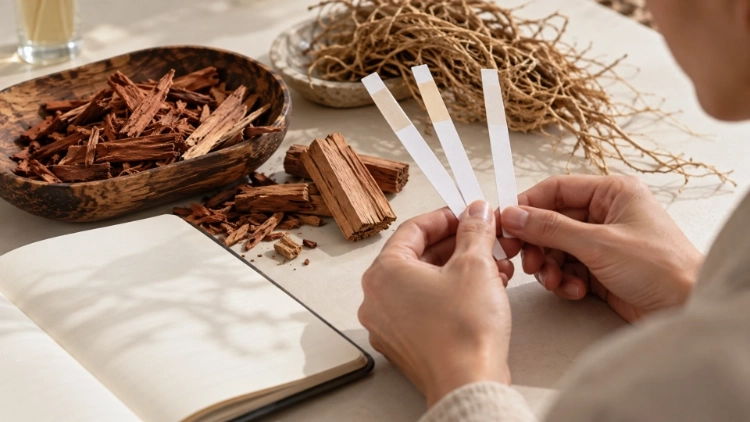
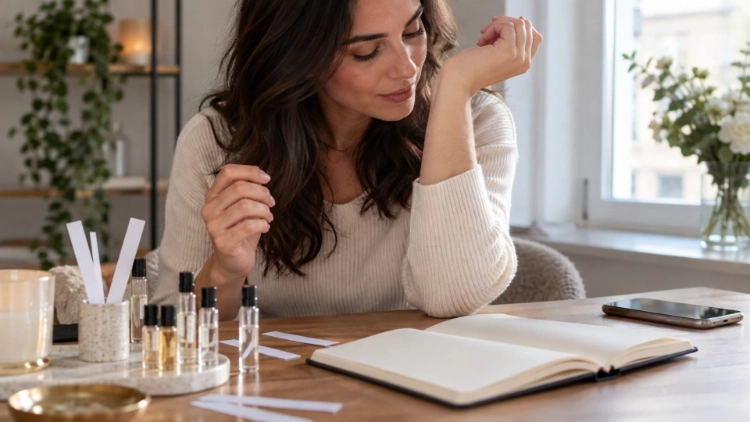
When samples are compared, the blotter type, application method, and observation timing should all stay identical. Log each sample code, evaluation date, reviewer, and testing method as you go. And if the fragrance is also tested on skin, record those observations separately, since skin and blotter results can diverge.
One practical sequence that keeps reviews comparable runs like this:
- Apply each coded sample in the same quantity and order.
- Record the opening immediately after application.
- Wait a few minutes before judging the settled impression.
- Record the later development within the same evaluation period.
Try not to test several very strong scents back to back. Overlapping fragrance tends to mask small differences, leaving reviewers less certain about what actually changed.
How Can Buyers Turn Fragrance Reactions Into Useful Revisions?
Feedback becomes actionable once it points to a specific change. A comment that bundles several unrelated impressions, without stating which stage or characteristic shifted, simply cannot be corrected reliably by any development team.
Describe What Should Change and What Should Stay
Ask precisely: is the opening too soft, does the middle fade, or is the overall impression simply low on intensity? And instead of saying only “make it sweeter”, identify the change in terms of dryness, freshness, warmth, or the balance of the base, then state where in the wear it should appear.
Log what should stay right beside what should change. The next sample then carries an obvious target — keep the crisp opening and dry edge, say, while reducing the later sweetness. In fact, a short evaluation sheet proves far more valuable than a long discussion that never reaches the project record.
Prioritize Essential Corrections Before Optional Refinements
List the changes in priority order. Essential corrections come first; refinements that barely affect the result follow, and each change applies only to the revised sample it touches. Then update the approved version record, rather than leaning on email chains or ad-hoc comments passed around to individual team members.
Typically, a version record names the sample, the requested changes, the responsible owner, and the decision status. That discipline keeps a late artwork or fragrance change from ever being mistaken for the original approved sample.
What Packaging and Usability Checks Belong in Sample Approval?
A fragrance sample is really a finished product, not merely liquid in a bottle. Bottle, sprayer, closure, and decoration all shape how the end consumer perceives value — and, just as importantly, how the product behaves in daily use.
Inspect the Bottle, Closure, Sprayer, and Decoration
Check the bottle appearance, the cap fit (no gaps once closed), and the sprayer function: it should deliver a proper mist, not a dribble or a leak creeping around the label. Then look for loose components, mismatched printing, and any spray behavior that drifts from the approved experience. If the fragrance sells as a gift set, drop the bottle into the proposed insert as well, and test fit, handling, and presentation.
Approved packaging, in the same way, should mirror the product’s commercial position. A premium fragrance needs a cohesive bottle, cap, label, and outer box — because a premium liquid inside an unfinished pack will not hold its price position.
Confirm the Reference Sample and Acceptance Criteria
The approved reference should spell out the agreed fragrance, bottle, cap, sprayer, decoration, label artwork, proposed packaging, and acceptance criteria. It also has to make one thing clear: which version is being approved, and which details are still open.
Meiqi production, for its part, follows approved buyer samples and confirmed product specifications. Incoming materials and components are checked before use; filling, assembly, appearance, and packing are monitored as production runs; and finished goods are reviewed against the signed-off acceptance criteria before shipment. When defining these checkpoints, buyers can also discuss the relevant OEM/ODM fragrance services.
How Should Buyers Release a Bulk Perfume Order?
A bulk order, then, should only be released after the buyer has recorded the decisions that control production and inspection. Such a record also helps separate responsibilities among the development, purchasing, packaging, and production teams.
Check the final record against the product version the manufacturer will use. For coordinated development, review Meiqi’s fragrance products and discuss the project through the Meiqi team.
FAQs
Q:How many perfume samples should a buyer test before ordering in bulk?
There is no fixed number here. Test enough coded versions to settle the fragrance direction and produce one identifiable approved reference; what really matters is that every revision stays clearly labelled, so the bulk order has exactly one approved version to reproduce.
Q:What is the most important part of perfume sample evaluation?
Above all, the fragrance must match the commercial brief, yet a full evaluation also covers application behaviour, packaging and usability, and the written product specifications. Fragrance fit alone, in other words, is not sufficient grounds for approval.
Q:Why is sample approval important for a bulk perfume order?
Because it creates a shared reference between buyer and manufacturer. Once the sample is approved, it fixes the fragrance and packaging direction for production, inspection, and acceptance.