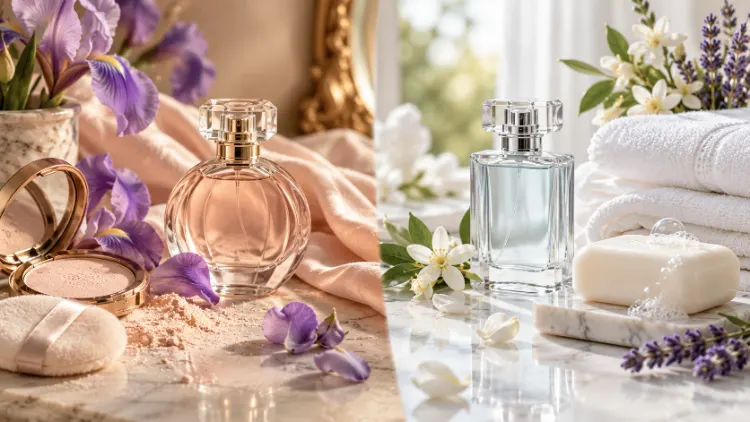
“Clean” can mean two different things at a perfume counter. One shopper reaches for a powdery perfume because it feels like a pressed compact, a soft scarf, or the faint cosmetic scent in a tidy room. Another wants soap: shampoo, fresh linen, a bar of soap, maybe the cool feeling after a shower. Both are easy to wear. They simply offer different kinds of comfort.
Powdery perfume usually feels soft, dry, and cosmetic-like, while soapy perfume feels brighter, freshly washed, and airy. The tricky part is the first spray: a floral opening can hide powder that appears later, while a sparkling soapy start may settle into smooth white musk. Read the label as a clue, then give skin, air, and time the final say.
Powdery Is Soft, Dry, and Often Cosmetic
Iris and violet often sit behind a powdery effect. Cool and dry? Sometimes a little like face powder or lipstick. Heliotrope can bring an almond-like softness, while musk, rose, vanilla, and pale woods warm the finish.
Powder does not always mean sweet. One formula may be airy and clean, almost like dust in a sunlit room. Another goes velvety, creamy, or slightly earthy. Add citrus, tea, cedar, leather, or amber and the old-fashioned cosmetic impression can move in a different direction.
The later part of the wear often tells the real story. The first spray might be peppery or floral; twenty minutes later it can sit close with a smooth, dry haze. Judging only the opening is an easy way to reject something too soon.
Soapy Has a Freshly Washed Edge
Soapy perfume leans toward the feeling of being freshly rinsed. Aldehydes can add a sparkling, airy lift. Neroli, orange blossom, lavender, rosemary, citrus, and white musk often support that clean impression.
There is no single soap smell. Some scents resemble an expensive soap in a hotel bathroom. Others suggest shampoo, clean towels, or linen dried outside. Flowers and musk soften the profile. Herbs and citrus make it brisk.
Soapy does not mean detergent. A balanced formula can smell polished and gentle. A strong aldehydic opening can seem very crisp, especially on warm skin or in a small room. The same perfume may feel softer outdoors.
Put the Two Styles Side by Side
Powdery perfume generally feels drier, smoother, and more cushioned. Soapy fragrance tends to feel lifted, bright, and freshly washed. Powder may show up after the first few minutes. Soap usually says hello straight away, then settles into musk, flowers, or pale woods.
Neither description says how strong the fragrance will be. A quiet powdery musk can stay noticeable for hours near the skin. A bright soapy spray can fill a lift for five minutes and then fade into a close clean trace. Concentration, skin moisture, temperature, air movement, and the amount applied all matter.
Powdery Fits a Softer Kind of Clean
Powdery perfume is a good direction when “clean” means calm, smooth, and put together. Iris and violet can feel tailored without becoming sugary. A close musk may suit an office, a cool afternoon, or a sweater-and-jeans day.
Look at the notes around the powder. Tea, citrus, and pale woods keep the profile light. Vanilla, amber, lipstick-like flowers, and richer musks make it rounder. On wool, suede, knitwear, or a soft blouse, that texture can feel especially natural.
Begin with one or two sprays. The point is not to make a room smell like a cosmetic counter. It is to see whether the soft finish still feels pleasant after an hour, when the opening has stopped doing the talking.
Soapy Fits a Brighter Kind of Clean
Choose a soapy fragrance when the preferred effect is fresh, open, and recently washed. Citrus, lavender, neroli, green notes, and white musk can make a morning commute feel lighter. The style can also work after a shower or whenever a neat scent is wanted without dense sweetness.
Give the dry-down a chance. Some soapy perfumes become creamy and musky. Others turn powdery, floral, or quite sharp. Rose, orange blossom, sandalwood, and soft amber can round off a clean edge that feels too austere. For a finished-product reference, MEIQI’s Exquisite Cologne Perfume Spray uses a floral-fruity structure that dries down to white musk, patchouli, and amber, showing how a soft musky base can change the finish without making the entire fragrance purely powdery or soapy.
Warm weather may make a light soapy perfume project more than expected. Start low in a car, lift, classroom, or restaurant. More spray does not make a fragrance cleaner.
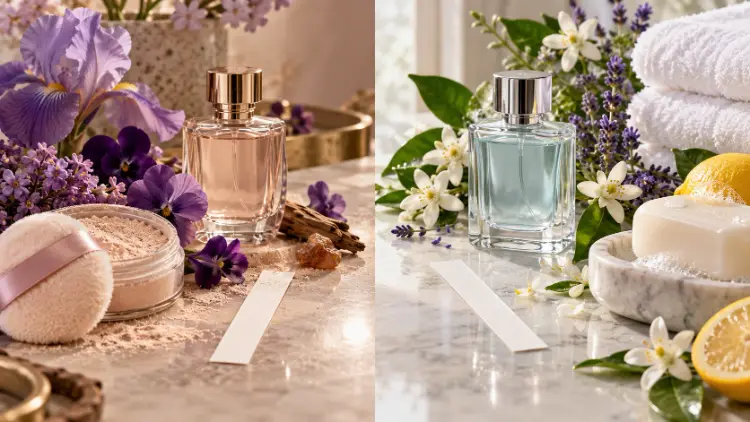
A Fair Test Takes More Than Five Seconds
Use separate blotter strips for a first comparison. Write the name and time on each strip. Instead of copying the label, write the words that arrive naturally: dry, soft, cosmetic, sparkling, linen, creamy, sharp, or fresh. Return after twenty or thirty minutes.
One powdery scent on one wrist and one soapy scent on the other can work if both formulas are light. Keep the arms apart and do not rub. Rubbing spreads the liquid and changes the opening. Use similar amounts, too. A large spray against a tiny one tells very little.
A crisp opening can soften considerably after ten or twenty minutes. A scent that first feels sharp may settle into violet, iris, or powdery musk, so the dry-down deserves as much attention as the first spray.
The room matters. A scent that feels breezy beside an open door may feel louder in a warm bathroom. Try the desk, the commute, or a short walk before making the call. A crowded counter rarely gives the same answer.
If both styles still appeal, browse the MEIQI ladies’ perfume collection to compare floral, musk, fruity, and woody directions before testing them on skin. Product labels can narrow the field, but the final texture is easiest to judge during wear.
Clean and Weak Are Not the Same Thing
A fresh-washed impression can be strong. A soft powder can be persistent. Do not use “clean” as a synonym for faint, and do not use “powdery” as a synonym for heavy.
Projection is easier to judge from normal social distance. Leave the wrist alone for a while. Ask whether the scent can be noticed from a conversation distance, not whether it is obvious when the nose is pressed against the skin. This is especially useful before wearing a perfume in an office or shared car.
When a Perfume Feels Like Both
Powdery and soapy effects often overlap. Musk, florals, and aldehydic materials can appear in both styles. One perfume may start with clean soap and finish with iris. Another may pair a cosmetic violet note with a linen-like lift.
When the category feels unclear, describe the sensation instead. Does it resemble a compact, a bar of soap, a clean shirt, a cosmetic bag, or warm skin? That vocabulary becomes more helpful with every test. It also gives a better brief when asking for another sample.
Skin can shift the balance. Iris may be velvety on one person and earthy on another. Aldehydes may sparkle on one wrist and feel sharp on another. A small test in the intended setting is more reliable than a famous name or a promise printed on a box. For project briefs, MEIQI can translate a broad word like “clean” into more specific note, texture, and dry-down choices.
If you are building a perfume concept around powdery, soapy, musky, or other clean directions, shape the right clean-scent direction for your concept with MEIQI before moving into sample refinement.
FAQs
Q:What makes perfume smell powdery?
A:Iris, violet, heliotrope, musk, rose, and some vanilla or amber combinations can create a powdery impression. The complete formula and later dry-down decide the final effect.
Q:What makes perfume smell like soap?
A:Aldehydes, neroli, lavender, citrus, white musk, and clean floral materials can contribute to a soapy effect. Different blends create different kinds of freshness.
Q:Is powdery or soapy perfume better for daily wear?
A:Either can work. Powdery suits a soft, close, cosmetic mood. Soapy suits a brighter, freshly washed feel. Test the dry-down in the space where the perfume will be worn.