The room suddenly smells like perfume. The wearer notices it too, usually a few minutes after getting dressed. No need to panic. If the liquid is still wet, lift it from the skin. If a coat or scarf carries the strongest cloud, take that layer off. Then find some fresh air.
“How many sprays was that?” does not tell the whole story. Atomizers vary. A wide pump can put down far more liquid than a tiny travel sprayer. Warm skin and a warm car can also make a quiet bedroom test feel much louder. The nose adapts while getting ready, so extra sprays may seem harmless at the time.
The Skin Is Still Wet
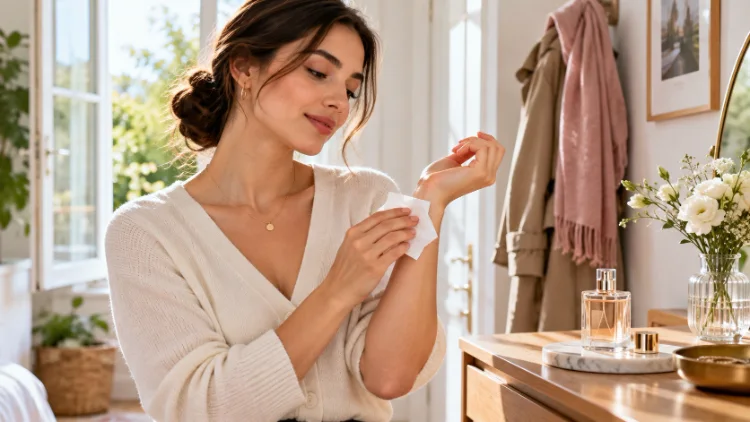
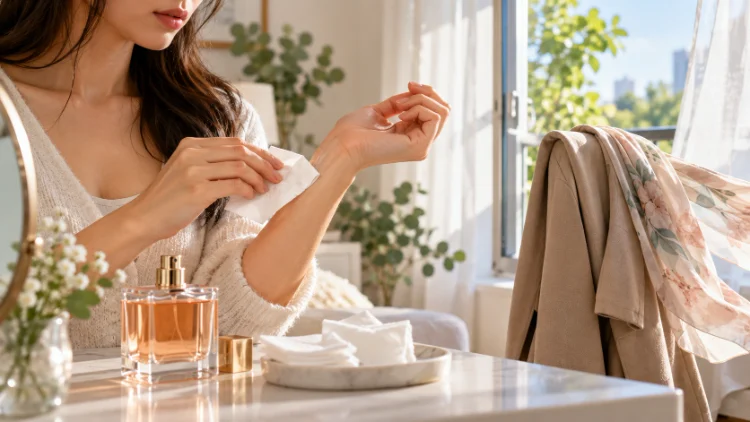
Look first. Shiny skin or a damp patch means there is surface liquid to remove. Press a clean tissue or cotton pad against it. Lift the excess. Scrubbing is likely to spread the perfume and warm the skin.
A wash with lukewarm water and mild, preferably fragrance-free soap usually gives a better reset. One gentle wash may be enough. Pat the area dry and wait a few minutes before judging again. Bright opening notes often lose their sharp edge once the surface liquid is gone.
Alcohol, sanitizer, vinegar, baking soda, and oil are common online suggestions. They can sting, leave residue, or irritate reactive skin. Burning, swelling, hives, or lasting redness means the area should be rinsed and the perfume stopped. Significant symptoms need medical advice.
The Spray Is on a Jacket or Scarf
Fabric holds aroma longer than clean skin. Take off the sprayed jacket, scarf, or sweater when that is practical and hang it somewhere airy, away from direct heat. Fresh air works slowly. It also avoids adding another smell.
Washable clothing can go through its normal care-label wash. An extra rinse may help. For a small patch, test a barely damp cloth on a hidden spot, then dab rather than rub. The goal is to keep the scented area from growing.
Silk, suede, leather, embellishments, and dry-clean-only items call for restraint. An expensive coat is not the place to experiment with water or spot treatment. A professional cleaner is safer. A closed wardrobe is not helpful either; fragrance can transfer to nearby clothes. Let the item air by itself first.
The Room Feels Too Strong
Open a window or door if weather and safety permit. A fan pointed toward an exit can move the air. Point it at another person and the cloud simply travels. A short step outdoors gives the room a break and gives the wearer a cleaner nose.
Cars need fresh-air ventilation. Recirculation keeps the same scented air in the cabin. If perfume landed on upholstery or a seat belt, check the material before using a cleaner. Air the exact surface and use only a suitable product. An air freshener usually creates another layer instead of solving the first one.
When several sprays land in the same area, blot the excess first, wash gently if needed, and give the scent a few minutes in fresh air before deciding whether more action is necessary. Adding deodorant or another fragrance usually makes the mix harder to control.
Coffee beans may alter what a shopper notices at a counter. They do not remove perfume from skin, clothes, or a room. Washing, airing, and ventilation remain the practical answer.
More Scent Is Not a Reset
Fragrance-free lotion can soften the lift from dry skin, but it does not erase every formula. Scented lotion, hair mist, fabric spray, and deodorant add a new blend. The result may be louder and harder to read.
Fresh perfume cannot cancel sweet perfume like opposite paint colours. Citrus over vanilla stays citrus and vanilla. Both can project. Spraying water over the area without washing may move the liquid around instead of removing it.
After repeated exposure, the wearer becomes a poor judge. The nose tunes out a familiar smell. Leave the room, wait, and return. Someone who has not been surrounded by the perfume can give a simple distance check.
One Spray Is Not One Fixed Amount
Output from the atomizer, concentration, materials, and fragrance style all change the effect of one pump. A bright cologne may open sharply, then quiet down, while amber, musk, and woody bases can become more noticeable on warm skin. MEIQI’s Signature Blend is an 18% EDP with bergamot, lavender, vetiver, patchouli, and amber, a useful reminder that the same spray count can feel very different when formula strength and scent structure change.
Spray counts are only rough guidance. A tiny travel sprayer and a broad pump do not put the same amount on the wrist. Learn the bottle before using it in a hurry. When comparing a new scent, the MEIQI perfume collection offers different fragrance directions to test with their own atomizers and concentrations rather than judging every bottle by one fixed spray count.
Trying a new perfume? Start with one spray on clean skin. Let the opening pass. Give the early dry-down time to appear. A quiet wrist after two minutes is not proof that the fragrance has disappeared.
A Quieter Routine Next Time
Apply perfume where the surrounding air is neutral, not already full of candles, hairspray, or other fragrances. Spray once, get dressed, and step away for a few minutes. Judge from natural distance rather than pressing the wrist to the nose.
Application points change the trail. Under clothing keeps it closer. The sides of the neck or hair make a more noticeable path. In an office, restaurant, flight, clinic, or shared car, begin with less than would be used outdoors. Add only after a real-world check.
Keep decants and travel sprays upright. A loose nozzle can coat fingers and bags without feeling like a normal spray. Wipe residue from the atomizer. Before reapplying, check a collar or ask someone nearby; the scent may still be present even when personal awareness has faded. For project briefs, MEIQI can review scent strength, presentation, and intended use together rather than treating spray count as a stand-alone target.
If a friend has overapplied, practical help is simple: offer water, a tissue, or fresh air rather than adding another scented product. If a scarf is the source, hang it separately; if the room is small, ventilate it and give people more space. The aim is comfort, not instant erasure.
For a perfume project where projection and wear strength need tighter control, balance scent strength and spray performance around your target use with MEIQI before approving the final sample.
FAQs
Q:How long does too much perfume take to fade?
A:There is no single timetable. Fresh opening notes may settle within minutes, while woody, musky, amber, and sweet base notes can stay on skin or fabric much longer. Gentle washing and ventilation usually shorten the wait.
Q:Can perfume be removed with just water?
A:Water can reduce fresh surface liquid, but mild soap is normally more effective on skin. Use one gentle wash instead of repeated scrubbing.
Q:How can someone tell whether the perfume is still too strong?
A:Leave the scented space for several minutes and return. Judge from normal social distance, or ask a trusted person who has not been exposed continuously.