If you can’t smell your own perfume after wearing it for a while, the fragrance may not have disappeared. Continuous exposure can make the brain treat a familiar odor as background information. Other people may still notice your scent, especially when you move past them or enter a room.
This experience is often called nose blindness or olfactory adaptation. It is a normal part of smell, not a reliable test of perfume performance. The useful question is not “Can the wearer smell it every second?” but “Can the fragrance still be detected at a reasonable distance, and does it smell the way it should?”
What Olfactory Adaptation Does
Smell is designed to notice change. A new odor gets attention quickly. When the same molecules remain around the nose, the response becomes less intense. The scent has not necessarily vanished; perception has adjusted.
The change is easy to notice at home. A person sprays perfume in the bedroom and smells it strongly. After getting dressed, checking a bag, and answering messages, the fragrance seems gone. Someone arriving later may immediately notice it. The wearer has been breathing the same scent for longer, so the contrast has faded.
The effect is stronger when perfume is sprayed close to the face, on the front of the neck, or on hair around the nose. A heavy application also creates a constant scent cloud, which can make adaptation happen sooner. A moderate amount placed below clothing may be less obvious to the wearer while still leaving a soft trail.
Why Others May Still Smell It
People nearby experience a different pattern. They may smell the perfume when the wearer enters the room, turns the head, or walks past. Air movement changes the concentration around them. Their noses receive the scent in short bursts rather than as one continuous exposure.
Distance matters too. A fragrance can be quiet at arm’s length yet noticeable during a greeting. A collar or scarf can hold aromatic materials and release them with movement. Warm skin, fabric, room temperature, and airflow all shape the scent trail.
This is why a wearer should avoid adding sprays simply because the personal impression has faded. The extra application may be obvious to everyone else. In a lift, car, clinic, or restaurant, overapplication is especially easy to notice.
How to Check Whether the Perfume Is Still There
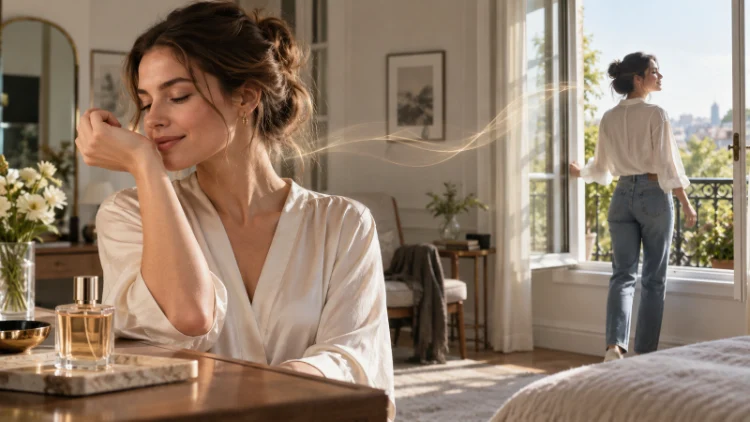
Step away from the scented area for ten or fifteen minutes. Fresh air helps restore contrast, although it does not erase the perfume instantly. Smell a clean sleeve or an unscented tissue before checking the fragrance again.
A test strip can provide another reference. Spray one strip and leave it somewhere separate from the body. Compare it later with the skin, without pressing either close to the nose. The strip shows the formula’s development, while skin shows how body warmth and natural oils influence it.
Ask one trusted person for a simple answer: “Can you smell this from normal conversation distance?” A yes or no is more useful than asking for a long review. If several people cannot detect it after a reasonable interval, the formula or application may need a closer look.
When the Scent Has Actually Faded
Olfactory adaptation is not the only possibility. A very light concentration, dry skin, strong airflow, or a hot outdoor setting can shorten the noticeable trail. Citrus and aromatic top notes often lift quickly. Woody, musky, and amber materials may remain closer to the skin after the brighter opening is gone.
The change from opening to dry-down can also feel like disappearance. A sharp bergamot start may become a quiet musk. A fruity top may give way to woods. If the wearer only likes the first five minutes, the later stage may seem absent even though the perfume is still developing.
A bottle can also change with age or poor storage. A sour smell, a marked colour shift, cloudiness, or a texture that seems unusual is different from normal adaptation. Stop using a product that irritates the skin or smells clearly spoiled.
Reset the Nose Without Overdoing It
The simplest reset is time away from fragrance. Spend part of the day without perfume, scented body products, candles, or strong cleaning products. Neutral air gives the nose a clearer baseline.
Smelling coffee beans is popular at fragrance counters, but it does not magically clean the nose. It adds another strong odor. A plain, unscented environment and a short break are more practical.
Do not test ten perfumes in one session. A few strips can become a wall of mixed notes, making every later decision less reliable. Label two or three strips, leave them apart, and return after a break. This is slower, but the comparison is clearer.
Change the Application, Not Just the Quantity
Moving the spray point can make the fragrance easier to live with. Under clothing, on the torso, or at the back of the neck, the scent stays less directly under the nose. A small amount on a scarf can create movement, but fabric should be tested for staining first.
Moisturized skin may hold perfume differently from very dry skin. Use an unscented moisturizer if it suits the skin, then allow it to settle before applying fragrance. Avoid rubbing the wrists together, which spreads the liquid and changes the opening.
The MEIQI perfume collection offers different fragrance profiles to compare. Start with one spray, wait through the opening, and judge the scent trail from the distance where other people will experience it.
Notice the Difference Between Adaptation and a Weak Spray
People often describe a perfume as “gone” when it has simply become quieter. A useful check is to move from a scented room into neutral air, wait, and then smell the collar or sleeve from a short distance. If a trace returns, the nose has probably adjusted rather than the fragrance disappearing completely.
Application can also create a false impression. A spray on the wrist is easy for the wearer to notice at first, but the hands are washed, covered, or moved constantly. A spray on the torso may be less obvious personally while remaining present around the body. A scent that seems weak on one day can feel stronger on another because temperature, clothing, and airflow have changed.
Keep a simple wear note for a new bottle: opening, thirty-minute impression, later impression, and whether anyone nearby noticed it. This small record is more reliable than repeated sniffing. It separates the perfume’s development from the nose’s changing response.
Watch for Signs That Need Medical Attention
Temporary nose blindness is not the same as losing the ability to smell in general. If smell changes suddenly, lasts beyond a normal cold, follows a head injury, or affects everyday life, medical advice is appropriate. A fragrance blog cannot diagnose anosmia or other health conditions.
Likewise, headache, wheezing, rash, swelling, or breathing trouble after fragrance is a reason to stop using it and seek suitable help. Do not keep spraying to test whether the problem is “just adaptation.”
If you are replacing an old fragrance or looking for a new scent direction, contact MEIQI to discuss available perfume options and your requirements.
FAQs
Q1: Why can other people smell my perfume when I cannot?
A1: Their noses receive the scent in brief bursts, while you have been exposed continuously. That difference can make the perfume seem stronger to them.
Q2: Does nose blindness mean the perfume has stopped projecting?
A2: No. Perception can fade while a scent trail remains. Check from normal conversation distance or ask someone you trust.
Q3: Should I spray more perfume when I cannot smell it?
A3: Not immediately. Wait, step into fresh air, and get a distance check first. Extra sprays can create an overpowering cloud.