Seasonal demand changes faster than many distributors plan for. Temperature, clothing layers, humidity, and even the kind of outing people have in mind can change how a perfume feels.
Why Season Changes Perfume Buying Behavior
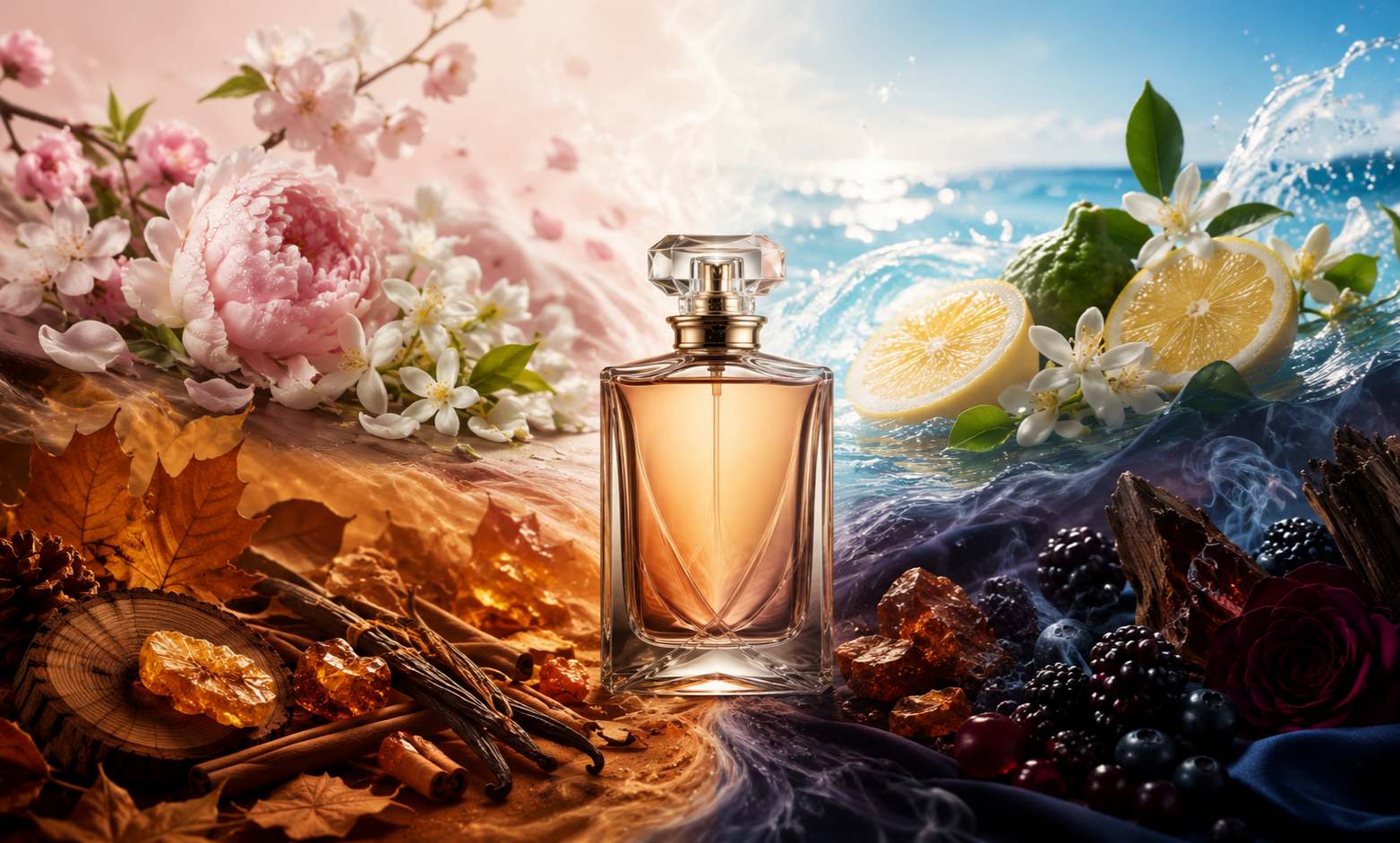
Perfume is tied to comfort as much as taste. In warm weather, people usually prefer something cleaner, lighter, and easier to wear. In cooler weather, they move toward deeper, sweeter, or woodier scents that last longer and feel more present on skin and clothing.
For distributors, that means the purchase plan should follow the weather curve. If the current season is summer, the main shelf push should stay on fresh SKUs now, while autumn samples, packaging, and reorder timing are already being prepared in the background.
The effect is not only about personal taste. Heat can make the opening of a fragrance project more strongly, while high humidity may make a dense base feel tiring during a long day. In cooler weather, the same woody, amber, or vanilla base can feel smoother and more comfortable.
What Buyers Tend to Prefer in Each Season
Spring: Fresh Floral, Soft Green, Light Fruity
Spring usually opens the door for brighter florals and airy fruit notes. Peach, berries, rose, jasmine, green notes, and clean musk work well because they feel lifted without becoming too sharp.
One useful reference is Meiqi’s Rose Oud Bloom This begins with peach and red berries, followed by Turkish rose and soft oud, with a finish that features sandalwood, vanilla, and amber. However, the elegance of this structure can easily work for spring; nevertheless, this composition does not crumble when the season changes.
For a collection of perfumes for spring, it would make more sense to choose a formula that includes a bright opening note along with a soft base note. This way, the story for the everyday wear will be simple for the retailer to sell without having a line that is too one-dimensional.
Summer: Citrus, Aquatic, Clean Musk, Airy Fresh Scent
Summer is where clean perfume usually wins. Heat tends to make scents dense. Buyers will prefer citrus, light flowers, white musk, and transparent wood. The scent profiles can easily be used in office environments, outside, and while traveling.
Desert Bloom is an ideal example. It combines bergamot, green mandarin, frangipani, rose, jasmine, sandalwood, amber, and white musk for a refreshing scent of the desert breeze.
Summer buyers should still check the dry-down before committing to volume. A fragrance that smells fresh on a strip may become sharp or overly sweet on warm skin. Samples should be tested in the market the product is meant to serve, especially when the distributor sells in a hot, humid region.
Autumn: Fruity, Amber, Warm Spicy, and Light Gourmand
Autumn is often the easiest season to prepare ahead of time. Buyers start moving toward fruity warmth, amber, cardamom, soft woods, vanilla, and light gourmand notes. The scent still needs to stay wearable, but it can carry more texture.
Meiqi’s Popular unisex perfume is a useful reference here. The woody aromatic direction with sandalwood, cedar, cardamom, violet, leather, amber, and iris feels structured, while the spicy oriental side with tobacco, tonka, vanilla, cocoa, and dried fruit fits the warmer autumn lane very well.
Autumn is also a useful transition period for testing a warmer direction without making the whole range heavy. A small first order can show whether customers respond better to fruit and amber, cardamom and wood, or a softer gourmand finish. The result gives the next winter purchase a firmer sales basis.
Winter: Woody, Oud, Oriental, Sweet Warm Notes
Winter gives more room to depth. Woody, amber, oud, tobacco, vanilla, and oriental profiles usually feel more natural once the weather cools down. People tend to want stronger presence and a more noticeable drydown.
For winter perfume selections, Meiqi’s Mysterious Woody Scent Cologne is a useful reference for buyers looking for a warmer woody direction. It opens with bergamot and lemon zest, then moves into rose, jasmine, and light oud before settling into sandalwood, vanilla, and deep agarwood. Its woody, amber-like base gives the scent more depth in colder weather.
How Distributors Should Build Seasonal Product Mixes
The practical move is simple. In summer, lead with clean and fresh products. In autumn, add warm and light fruity and gourmand styles before the weather shifts. In winter, increase woody, oud, amber, and sweet warm options. In spring, keep the line light and bright so it can bridge out of the colder cycle.
A seasonal plan should separate core stock from trial stock. Core items can carry the year-round volume, while seasonal items should begin with a controlled quantity tied to channel feedback. Before raising the order, check MOQ, remaining shelf life, bottle availability, label changes, and expected lead time. Buying too early can lock cash into slow stock; buying too late can force air freight, rushed approvals, or an incomplete launch.
The buying calendar should run one season ahead. During summer, keep fresh citrus, aquatic, and clean musk styles visible on the current shelf, but begin sampling fruit, amber, and light gourmand options for autumn. When autumn starts, confirm the winter range, packaging, and production slots instead of waiting for cold weather. This sequence gives the sales team time to test demand and gives the factory time to complete filling, labeling, inspection, and export packing.
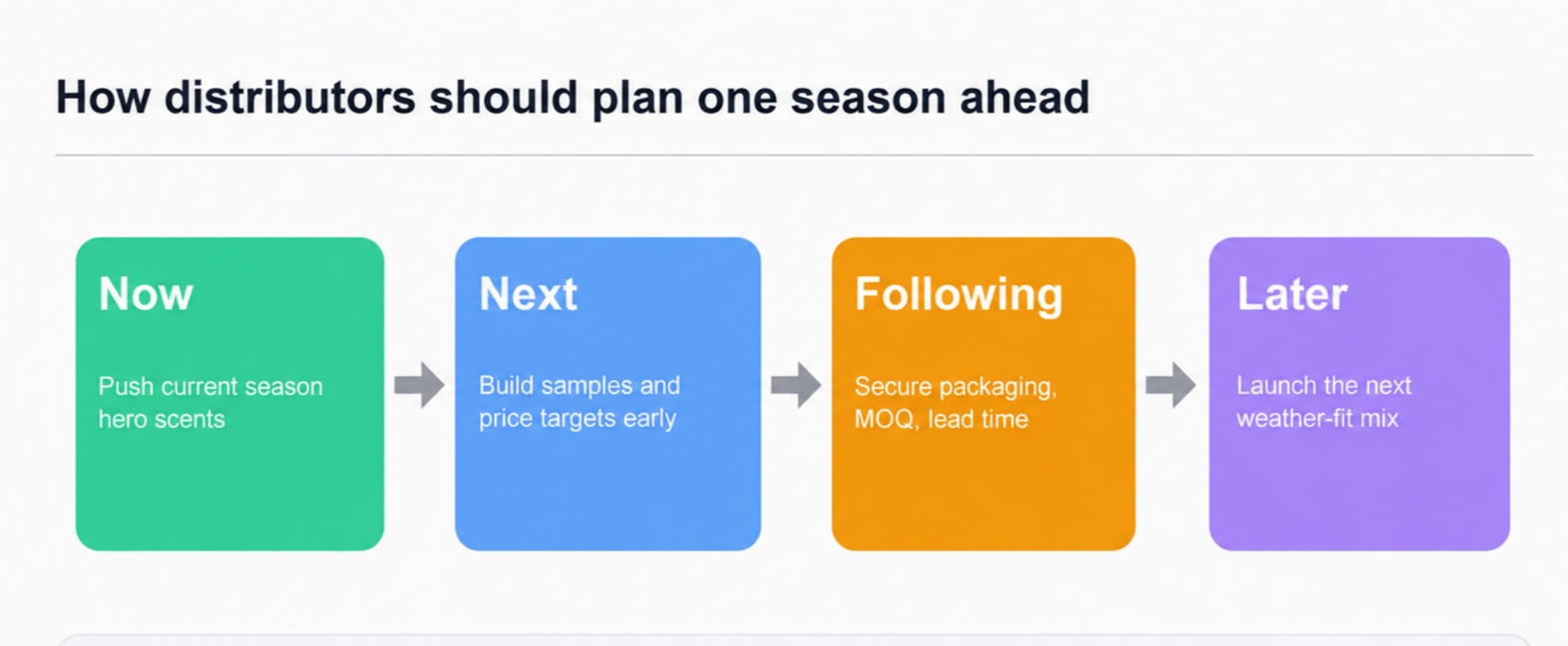
That kind of timing matters because perfume stock does not sell evenly through the year. A distributor who waits until the season has already changed is usually late. The better move is to secure samples, packaging, and delivery terms one season ahead.
This also protects cash flow. Fresh summer scents can move quickly, but autumn and winter styles need a longer runway because packing, filling, and shipping can take time. If the next season is already on the buyer’s calendar, the line can be prepared while the current season is still selling, instead of arriving after the best window has narrowed.
It also helps channel planning. Smaller bottles and simple packs often work better for summer online sales, while winter gift sets need stronger boxes and a more complete presentation. When the pack format changes with the season, the shelf story becomes easier to sell.
What Meiqi Can Support as an Example Supplier
Meiqi is useful as an example because it offers fresh, unisex, woody, and Arabic-style perfume directions. The company also describes OEM/ODM support, a 15-year perfume manufacturing background, a 20,000-square-meter production base, 1,000+ staff, 38 production lines, and export coverage in 60+ countries. That is the kind of setup distributors usually look for when they need repeatable seasonal ordering rather than one-off stock.
If the goal is to build a seasonal portfolio, the supplier should be able to keep the scent profile, bottle choice, packaging style, and reorder pace aligned. Otherwise, the line looks fine in the sample stage and gets messy when repeat orders start. For buyers who want to discuss samples, private label work, or packaging timing, the next step is to contact Meiqi directly.
FAQ
Q1: Why should distributors change perfume portfolios by season?
A1: Because temperature and wear conditions change how perfume feels. Fresh scents usually work better in warm months, while woody, amber, and sweet profiles perform better in cooler months.
Q2: What kind of perfume usually sells best in summer?
A2: Citrus, clean musk, airy floral, and light aquatic styles usually perform best. They feel less heavy in heat and are easier to position as daily wear.
Q3: What should buyers prepare before autumn starts?
A3: Autumn samples, packaging, MOQ checks, lead times, and warm fruity or gourmand SKUs. Waiting until the season has already shifted usually leaves too little time.
Q4: Can Meiqi support different seasonal perfume directions?
A4: Yes. Meiqi shows fresh, floral, woody, unisex, and oriental directions, which make seasonal portfolio planning easier for distributors and private-label buyers.