The concentration of perfume is among the primary information that buyers would like to know during the comparison of perfumes, but there are misconceptions about it. A perfume with high concentration is not necessarily a good perfume because its main importance revolves around the strength of scent, longevity, projection, price, and usage scenario.
Why Perfume Concentration Matters to Buyers
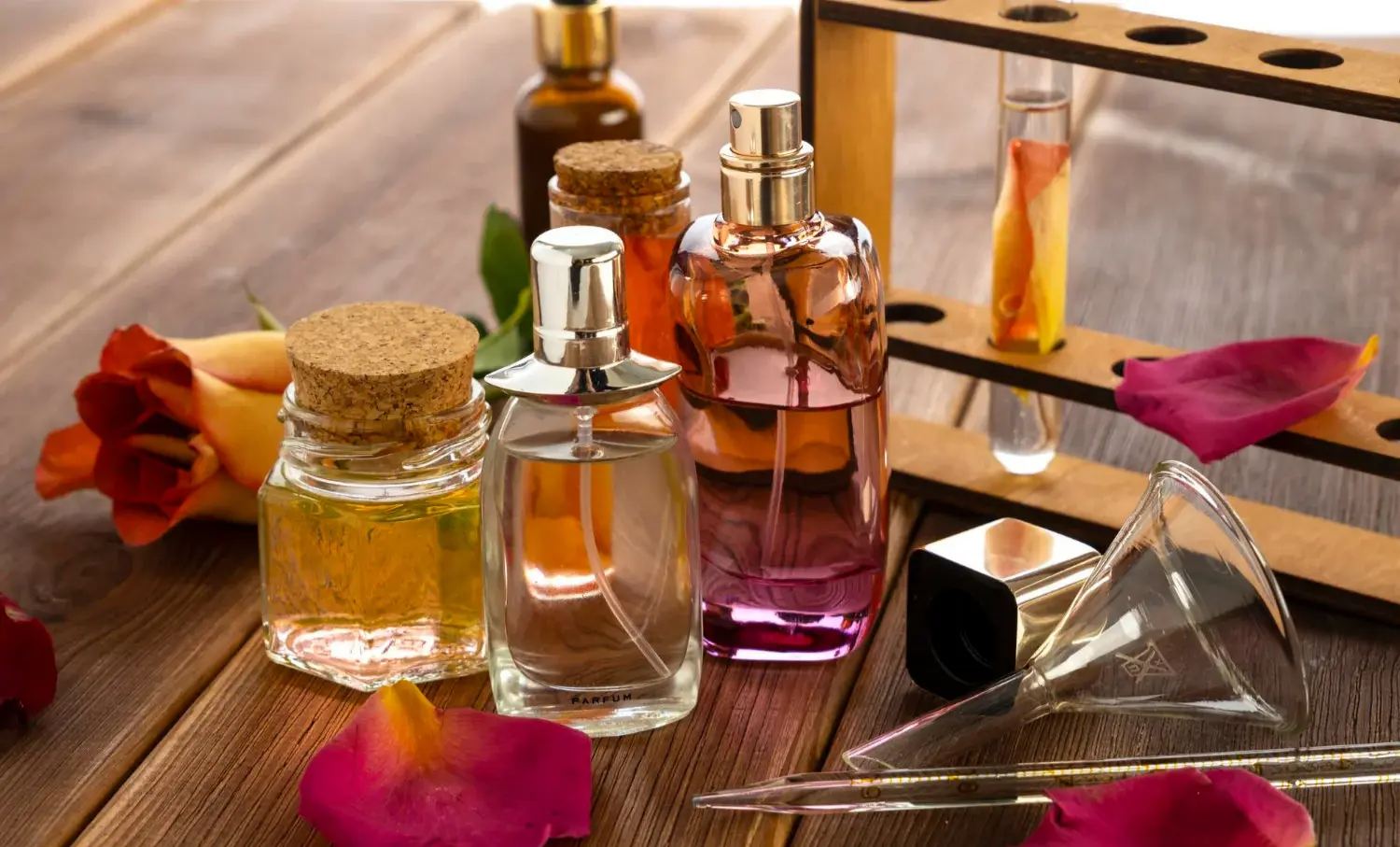
Perfume concentration refers to the share of aromatic materials in the finished fragrance. Concentrated oils are blended with alcohol and sometimes water, then refined through aging, settling, cooling, and filtration. The concentration level helps define whether the final product behaves like cologne, eau de toilette, eau de parfum, or a richer parfum-style scent.
This percentage impacts the first spray, the midnote, the drydown, and the complaint rate. When the product is lighter than its label, consumers will get to know that “it does not last.” In case the perfume is heavier than what is necessary, the sales of that product may be affected since the aroma comes off as sticky, smoky, and exhausting in warm indoor air. A consistent concentration also requires the correct dilution ratio, filtration, fixative, and packaging for alcohol resistance.
How Concentration Levels of Perfume Are Usually Classified
EDC: Light Cologne for Fresh Daily Use
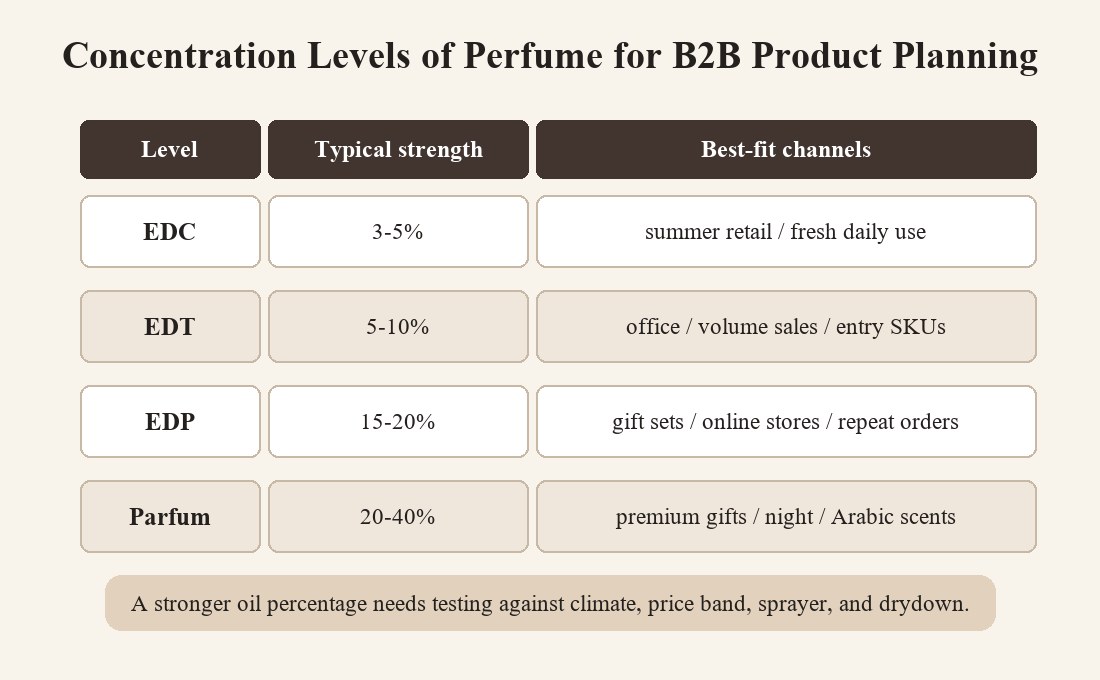
Eau de Cologne, usually called EDC, often sits around 3% to 5% fragrance concentration, with a typical lasting time of about 1 to 2 hours. Fresh citrus notes such as lemon, orange, grapefruit, and bergamot often lead the scent, with herbs such as rosemary or lavender giving it a clean lift.
This category suits hot weather, sports-related retail, travel kits, after-shower use, and younger buyers who want an easy spray. EDC should be sold as fresh, light, and easy to reapply, not as a long-lasting luxury item.
EDT: Easy-Wearing Fragrance for Summer and Mass Retail
Eau de Toilette normally sits around 5% to 10% concentration and may last about 3 to 4 hours. It has more presence than EDC but still keeps a lighter feel. Many EDT-style scents lean toward fresh, green, aquatic, soft floral, or citrus-musk profiles because these notes are easier to wear in offices, daily commuting, and warm-weather markets.
For distributors, EDT is useful when price sensitivity is high. It can support entry-level SKUs, seasonal promotions, and markets where strong perfume is not part of daily habits. A sharp alcohol opening or weak atomizer can still hurt repeat sales.
EDP: Balanced Strength for Mainstream Sales
Eau de Parfum, or EDP, is often placed around 15% to 20% concentration, with a common wear time near 5 hours. Many commercial perfume lines find their main balance here. The scent is noticeable enough for daily use, gifting, and online reviews, but it does not have to feel as dense as a formal parfum. EDP also gives more room for middle and base notes to show. The top note may create the first sale, but the drydown often decides whether customers come back. Meiqi‘s Signature Blend is a useful example, with an 18% EDP concentration and 18% perfume oil positioning. That strength can support stronger shelf language while staying close to mainstream wearing habits.
Parfum and High-Concentration Perfume for Premium Positioning
Parfum usually sits around 20% to 40% concentration and can last about 6 to 8 hours. This category feels deeper, especially with amber, musk, sandalwood, oud, rose, spice, vanilla, or resinous notes. It often suits cold seasons, evening wear, premium gifting, Middle Eastern-style collections, and boutique counters. A high-concentration perfume can give buyers a stronger selling point, but it needs careful matching. Warm climates, small offices, and daily-use channels may not welcome a dense woody or sweet base. These products work better where customers expect depth: night use, Arabic fragrance shelves, festival gift sets, or higher-margin private label lines. Meiqi has several product directions that fit this stronger side as examples.Rose Oud Bloom is positioned with a high oil concentration of 18% to 22% and 22% natural essential oils, while Desert Bloom is built around a 28% pure natural essential oil, zero-alcohol profile.
Matching Concentration to Market Channels and Usage Scenes
Fresh and Light Products for Volume Channels
Light products make sense when the buying decision is quick. Convenience retail, summer promotions, daily-use bundles, and travel-size sets often need fragrance that feels clean within the first few seconds. Citrus, aquatic, green, light floral, and soft musk profiles are easy to read quickly.
For these lighter products, the sales pitch should not pretend to be luxury-level longevity. It should speak to freshness, ease, price, portability, and repeat spraying. Small packs can help test a scent before committing to 50ml or 100ml stock.
Medium-Strength Products for Repeat Orders
Medium-strength products often carry the main business load. They are easier to sell across seasons, less risky than very strong fragrances, and still strong enough to support reviews about lasting time. This is why EDP-style products are common in online shops, boutique counters, couple gift sets, and gender-neutral perfume lines.
A popular unisex direction can work well here because it reduces SKU pressure. Clean musk, soft woods, mild amber, gentle florals, or fresh spices can sell around mood instead of gender. Meiqi Popular Unisex Perfume can be treated as a reference point for this type of broad-channel planning.
High-Concentration Perfume for Premium and Regional Demand
Higher concentration works best when the market already values stronger scent character. Middle Eastern gift channels, night fragrance collections, party perfumes, oud-focused counters, and premium private label projects often need more depth. Woody, amber, musk, rose oud, saffron-style spice, and sweet resinous notes can carry the product identity. Mysterious Woody Scent Cologne fits this channel as an example, with a 12% to 18% high-concentration direction and long-lasting positioning for skin and fabric wear. Buyers still need to test whether the drydown stays clean after several hours. Packaging should also match the concentration. A premium woody or Arabic scent needs a gift-ready bottle, cap, label, and box that can still survive export cartons and warehouse heat.
Building a Smarter Perfume Line by Concentration
A practical distributor line does not need every possible strength. It needs enough structure to cover different buying reasons. One light cologne can serve summer and casual daily use. One EDT-style item can sit in mass retail. One or two EDP products can become the main repeat-order stock. A high-concentration perfume can be reserved for premium gifting, Arabic-style demand, or night fragrance shelves. This structure also helps with inventory.
A fresh light product should not be judged by the same promise as a 28% essential oil, zero-alcohol fragrance. The label, price, bottle size, and sales copy should match the concentration. For private label work, concentration planning should happen before bottle decoration and carton printing. Formula strength, scent family, sample size, target market, MOQ, and reorder plan belong in the same discussion. OEM/ODM perfume projects can include formula development, sample testing, concentration adjustment, bottle selection, logo work, packaging design, production, and quality checks.
Early confirmation usually reduces changes once bulk filling starts. The best concentration choice is the one customers can wear, remember, and buy again. Strength helps only when it fits the market. For more information about samples, custom fragrance strength, or packaging solutions, please feel free to contact Meiqi.
FAQ
Q1: Does higher perfume concentration always mean better scent quality?
A1: No. Higher concentration can support stronger longevity and a richer drydown, but quality still depends on formula balance, filtration, aging, sprayer performance, and channel fit.
Q2: Which concentration levels of perfume are better for daily retail sales?
A2: EDT and EDP are often easier for daily retail. EDT feels lighter for warm weather, while EDP gives stronger wear time for gift sets and online stores.
Q3: When should buyers choose high-concentration perfume?
A3: High-concentration perfume is better for premium gifts, night use, Arabic fragrance lines, woody oud scents, and markets that prefer stronger scent character. It still needs drydown and climate testing.
Q4: Can perfume concentration be adjusted for OEM or private label projects?
A4: Yes. In OEM or private label work, buyers can discuss scent strength, oil percentage, sample testing, bottle choice, logo, packaging, and quality checks before bulk production.